0%

In 2026, the best Pallet Storage Racks are not simply the tallest or most heavily advertised. They are systems matched to the loads, equipment, and daily movement inside a specific warehouse. A selective rack may suit mixed inventory and frequent access, while drive-in, push-back, or pallet-flow designs can increase storage density when product rotation and handling methods allow. The right choice depends on more than aisle space. It depends on how the operation actually runs.

Small details matter. Pallet dimensions, load weight, forklift turning clearance, beam levels, and floor conditions all affect performance. A few inches can change whether a forklift enters an aisle smoothly or repeatedly pauses to reposition. Rack labels and documented load capacities also help teams use the installation consistently. They are not decoration.

This guide compares common rack types and explains where each can make practical sense. It considers storage density, selectivity, access, expansion, and the equipment already on site. It also identifies trade-offs that product descriptions can gloss over, such as reduced access in high-density layouts or added planning needs for automated systems. No single design is best for every building. Honestly, even a well-planned layout may need adjustment after real picking patterns become clear. Before purchasing, confirm load requirements and site conditions with a qualified rack supplier or structural professional. That step helps turn a promising layout into a dependable storage system.
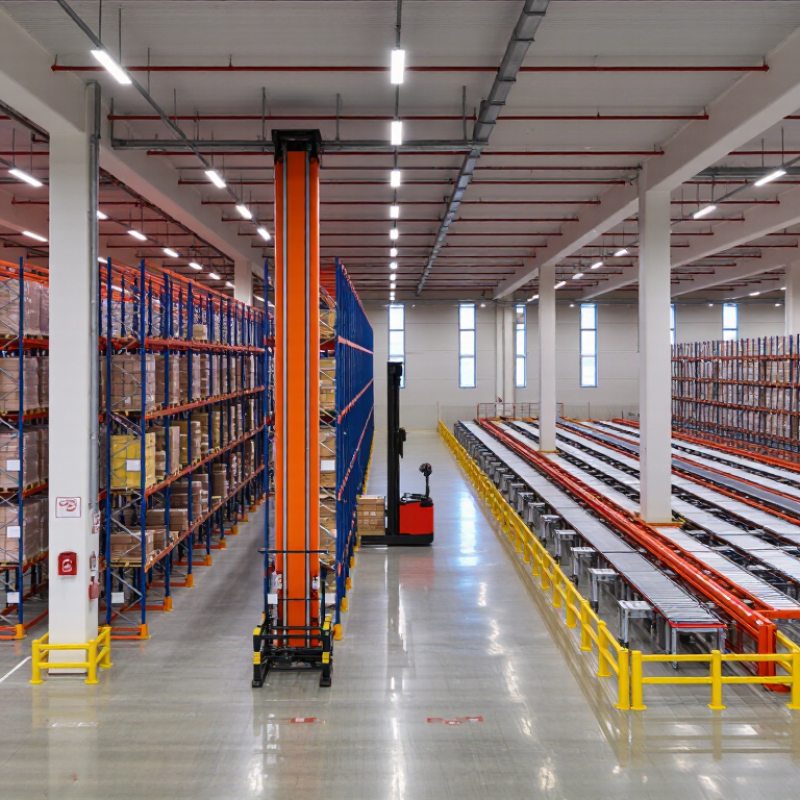
What Are the Best Pallet Storage Racks in 2026?

How Pallet Storage Racks Work and What They Are Designed to Store

A pallet storage rack is a steel structure of upright frames and horizontal beams. Forklifts place palletized loads onto each beam level, while the frames transfer weight to the floor. The basic idea is simple. The design is not. Beam capacity depends on the load, pallet dimensions, and spacing; the rack must also suit the building and handling equipment. Selective racks give direct access to each pallet. Drive-in systems store pallets deeper, but reduce access to individual loads.

These systems are designed for stable, unitized goods on pallets, such as boxed components, packaged food, or building materials. Pallet weight, overhang, and load stability matter as much as product type. MHI and Deloitte’s 2024 Annual Industry Report found that 55% of surveyed supply-chain professionals planned to increase technology investment. That makes adaptable layouts useful, but automation cannot correct poor load data. A tidy drawing may still miss a damaged pallet or an awkward forklift turn. ANSI/RMI MH16.1 provides design and use requirements for industrial steel storage racks; site-specific engineering and regular inspection remain important.

What Are the Best Pallet Storage Racks in 2026?

How pallet storage racks work—and what they are designed to store

This illustrative comparison uses a four-pallet storage unit for each rack type. Selective racks provide direct access to all four positions. Drive-in, push-back, and pallet-flow systems store pallets several deep, so only the pallet at the aisle-facing end is immediately accessible. Drive-in and push-back commonly operate on a last-in, first-out basis; pallet-flow racks commonly support first-in, first-out rotation. Actual layouts and capacities vary with rack design, pallets, and material-handling equipment.

The Main Types of Pallet Racks Available in 2026

Selective pallet racks remain the most adaptable option for mixed inventory. Forklifts can reach every pallet directly, but wide aisles consume valuable floor space. Double-deep racks fit more pallets per aisle, though they need reach trucks and reduce access to rear loads. Small details matter: measure forklift turning space before choosing a layout.

Drive-in racks suit large quantities of similar products, such as identical cartons on a single deep lane. They use fewer aisles but typically follow last-in, first-out access. Drive-through systems can support first-in, first-out handling when both ends remain accessible. Push-back racks also increase density, while pallet-flow racks use gravity rollers to move loads toward the picking face. Access matters. Flow systems need compatible pallets and regular maintenance.

Cantilever racks serve long, bulky goods rather than standard pallet loads. For conventional pallet storage, compare these designs against SKU variety, rotation needs, load dimensions, and equipment. MHI and Deloitte’s 2024 Annual Industry Report found that 55% of respondents expected to adopt robotics and automation within five years. That figure does not prescribe a rack type, but it makes aisle width and equipment compatibility worth checking early. Dense storage can look efficient on a plan, yet slow retrieval in daily use. It is an easy trade-off to underestimate.

How to Compare Pallet Racks by Capacity, Cost, and Warehouse Needs

What Are the Best Pallet Storage Racks in 2026?

Comparing pallet racks starts with the loads your warehouse actually handles. Check the rated capacity per beam level and upright frame, then compare those figures with loaded pallet weights. Include uneven loads, pallet overhang, and the number of storage levels. Capacity depends on the full rack configuration, not one component alone. Small details matter. Ask for load plaques and layout drawings that match the proposed installation, and have a qualified rack professional verify the design.

Price should include more than the rack frames and beams. Installation, guards, anchors, decking, and changes to aisle layout can affect the total. Selective racks offer direct access to each pallet, while higher-density systems may suit warehouses with many pallets of fewer product types. Measure forklift turning space and note how often each SKU moves. A compact layout can look efficient on paper but slow daily picking. I would not assume every warehouse needs the densest option; handling time and access can matter more than adding storage positions. Check floor condition and ceiling clearance, too, since either can limit a planned layout.

What Are the Best Pallet Storage Racks in 2026? How to Compare Pallet Racks by Capacity, Cost, and Warehouse Needs

Rack Type Typical Pallet Access Typical Storage Density Indicative Installed Cost per Pallet Position (USD) Capacity Considerations Best Suited For Main Trade-Off
Selective pallet rack Direct access to each pallet Low to medium $75–$200 Beam capacity is specified for each rack configuration. A planning range of roughly 2,000–5,000 lb per pallet position is common, but the rack supplier must verify the actual design loads. Warehouses with many SKUs, mixed inventory, and frequent picking Uses more aisle space than high-density systems.
Double-deep rack Access to the front pallet; rear pallet access requires a deep-reach truck Medium to high $100–$250 Loads must remain within the engineered beam, frame, and truck limits. Rear positions are less immediately accessible. Operations with several pallets per SKU and a suitable deep-reach truck Reduced selectivity and added equipment requirements.
Drive-in or drive-through rack Limited; forklifts enter storage lanes High $100–$250 Capacity depends on lane depth, pallet dimensions, upright frames, rail design, and impact protection. Deep lanes require careful load and operating controls. Large quantities of similar products, with relatively few SKUs Less direct access; damage or an inaccessible pallet can affect a lane.
Push-back rack Access from the aisle; pallets are stored several positions deep High $150–$350 Each cart and lane has a rated load. Pallet condition, load consistency, and correct loading sequence matter. Multiple pallets per SKU where faster access than drive-in is useful Higher equipment cost and less suitable for irregular pallet sizes.
Pallet flow rack Load from one end and pick from the other High $200–$450 Roller lanes are engineered for specified pallet weights, dimensions, and load distribution. Pallets must travel reliably on the selected lane design. High-throughput, first-in-first-out inventory such as date-sensitive goods Higher upfront cost and greater need for compatible, consistent pallets.
Mobile pallet rack Direct access after a movable aisle is opened Very high $250–$600+ Rack loads, moving-base loads, floor condition, and seismic requirements must be assessed together by qualified designers. Space-constrained facilities storing many SKUs with moderate access frequency Higher capital cost; access depends on moving the rack rows.

Planning note: Cost figures are broad 2026 planning estimates in USD per pallet position, not quotations. Actual costs vary with rack height, layout, local labor, installation, seismic design, accessories, and project scope; building work, fire protection, and material-handling equipment may be extra. Rack capacity is configuration-specific and should be confirmed by a qualified rack designer using the actual pallet loads, dimensions, floor conditions, and applicable local requirements.

Choosing the Right Pallet Rack System for Different Operations

What Are the Best Pallet Storage Racks in 2026?
Choosing the Right Pallet Rack System for Different Operations

The best rack system depends on how often each pallet moves, not just how many pallets fit. MHI’s 2024 Annual Industry Report found that 55% of respondents expect artificial intelligence to significantly disrupt supply chains within five years. That shift makes adaptable layouts valuable, but daily picking needs still matter more than predictions.

Selective racks suit mixed products and frequent access: operators can reach each pallet directly. For dense storage of fewer product types, drive-in racks reduce aisle space, though forklifts must enter the rack structure. Push-back systems offer better selectivity, while pallet-flow lanes support first-in, first-out rotation. That distinction matters for dated goods. It can also add maintenance needs.

Match the design to real operating conditions. Measure pallet dimensions, load weights, forklift turning paths, ceiling height, and floor capacity before choosing. Check sprinkler clearance and plan for inspections; a compact layout is not useful if it slows safe retrieval. A small caveat: forecasts can encourage overbuilding. Review actual inventory and order patterns, then test a proposed layout with operators. A few awkward turns can expose problems that a tidy drawing misses.

Safety Standards and Maintenance for Pallet Storage Racks

What Are the Best Pallet Storage Racks in 2026?

Safety Standards and Maintenance for Pallet Storage Racks

A safe pallet rack starts with a design suited to the loads, pallets, and handling equipment on site. Confirm that rated capacities are clearly posted and match the installed configuration. Changes to beam levels can affect capacity, so have a qualified rack professional review them. Anchors, upright guards, and floor conditions deserve attention, too. A small crack in concrete can become a larger concern under repeated loading.

Tips: Keep load signs visible. Train operators to place pallets squarely, avoid striking uprights, and report impacts immediately. Clear aisles matter.

Inspect racks regularly, and follow applicable local requirements and the rack supplier’s inspection guidance. Look for bent members, loose or missing connectors, damaged welds, and leaning frames. Document findings, even when nothing seems wrong; the record helps reveal recurring trouble spots. Remove damaged areas from service until a qualified person assesses them. Do not straighten or heat structural parts as a quick fix. That may hide damage rather than restore capacity. Maintenance can feel routine, and that is exactly when a careful second look helps.

FAQS

Which pallet rack type works best for mixed inventory?

Selective racks provide direct access to every pallet. They suit changing stock, but wide aisles use more floor space. Easy access matters.

When should a warehouse consider double-deep racks?

They store two pallets deep and reduce aisle space. Reach trucks are usually needed, and rear pallets are harder to reach. Measure turning room first.

How do drive-in and drive-through racks differ?

Drive-in lanes usually follow last-in, first-out handling. Drive-through lanes can support first-in, first-out when both ends stay open. Check product rotation.

What are push-back and pallet-flow racks designed to do?

Both increase storage density. Push-back systems move loads back as new pallets enter. Pallet-flow rollers use gravity to bring loads toward picking. Maintenance matters.

Are cantilever racks suitable for standard pallet loads?

They are mainly designed for long, bulky goods, such as pipes or boards. Standard pallets usually need another rack design. Fit matters.

What should be checked before selecting a rack layout?

Compare SKU variety, load dimensions, rotation needs, forklifts, and aisle width. A dense drawing may still slow daily retrieval. Easy to miss.

What safety details should pallet rack operators monitor?

Keep capacity signs visible and matched to the installed layout. Check anchors, upright guards, and floor condition. Report impacts promptly.

How should damaged racks be handled?

Inspect for bent beams, loose connectors, damaged welds, or leaning frames. Record findings and remove damaged sections from service until a qualified person assesses them. Do not straighten structural parts yourself.

Conclusion

Pallet Storage Racks help warehouses store palletized goods vertically, making better use of floor space while keeping inventory organized and accessible. The best system depends on what is being stored, how often items move, the available space, and whether workers need direct access to every pallet. Common options include selective racks for easy access, drive-in systems for dense storage, and flow or push-back designs for efficient stock rotation.

When comparing systems, consider load capacity, pallet dimensions, aisle width, installation and operating costs, and compatibility with warehouse equipment. Different operations may prioritize rapid picking, high storage density, or flexible access, so there is no single best choice for every facility. Safe use also depends on proper installation, clear load limits, routine inspections, and prompt attention to damaged components. Choosing a rack system that fits both current workflows and future needs can support efficient, reliable storage.

Amelia

Amelia

Amelia is a professional marketing specialist with a strong understanding of the company’s products and the needs they are designed to address. She regularly contributes expert articles to the company website, turning product knowledge, industry insights, and practical guidance into clear, useful......