 English
 Español
Radio Shuttle Racking System: The Comprehensive Engineering, ROI & Global Procurement Guide
How modern logistics directors and procurement teams unlock 85%+ warehouse volume utilization, cut forklift transit times by half, and achieve sub-zero cold-chain reliability without full AS/RS capital expenditures.
Why Global Supply Chains Are Transitioning to Radio Shuttle Racking Systems
In modern industrial warehousing, industrial real estate inflation, sky-rocketing utility expenses in temperature-controlled cold facilities, and persistent lift-truck operator shortages have made traditional selective pallet racking economically inefficient for high-throughput SKU storage. Concurrently, while fully automated high-bay AS/RS stacker crane facilities provide extraordinary volumetric densities, their initial capital expenditure (CAPEX), software complexity, and lengthy 18-to-24-month commissioning windows frequently exceed practical investment parameters.
The Radio Shuttle Racking System—also engineered as a semi-automated pallet runner or pallet mole racking platform—bridges this exact engineering gap. By deploying battery-powered autonomous radio shuttle carts running along heavy-duty structural steel guide rails within deep multi-pallet lanes (often 20 to 60 pallets deep), material handling facilities eliminate the requirement for forklifts to enter storage tunnels. The forklift operator simply positions the shuttle in the desired lane, deposits the pallet on the front console, and issues a wireless command via handheld industrial remote or tablet interface. The shuttle autonomously lifts the pallet, navigates to the deepest available slot, gently positions the load, and returns to the lane entrance for the next cycle.
Performance Matrix: Radio Shuttle vs. Drive-In vs. Conventional Pallet Racking
When evaluated across key operational parameters defined by international warehouse handling benchmarks (such as FEM 10.2.02 and EN 15620 guidelines), the structural and fiscal superiority of radio shuttle technology becomes indisputable:
| Evaluation Metric | Radio Shuttle Racking | Drive-In Pallet Racking | Selective Pallet Racking |
|---|---|---|---|
| Warehouse Volume Utilization | 80% – 90% (Maximum deep-lane density) | 65% – 75% (Substantial honeycombing loss) | 40% – 50% (Wide aisle requirements) |
| Forklift Mast Collision Risk | Zero inside storage tunnels (Aisle-only travel) | High (Constant upright collisions inside tunnels) | Moderate (Maneuvering collision risks) |
| Pallet Cycle Throughput Speed | Fast (Autonomous in-channel travel up to 1.1 m/s) | Slow (Cautious vehicle creeping in narrow channels) | Moderate to Fast (Direct access per slot) |
| Fulfillment Strategy Adaptability | Dual Mode: Both FIFO and LIFO Configurable | Strictly LIFO (Last-In, First-Out) | 100% Direct Selective Access |
| Labor & Operating Cost Efficiency | Reduces driver requirement by 35% – 50% | High labor dependency and operator fatigue | Moderate driver requirement per lane |
| Cold Storage Operating Suitability | Superior (Minimizes refrigerated volume wastage) | Moderate (High thermal loss from broad bays) | Poor (Enormous wasted refrigerated space) |
Recommended Radio Shuttle Solutions by Application Profile
At Guangzhou Heda Shelves Co., Ltd., we recognize that no single storage profile serves all industrial logistics hubs. Our engineering department designs, custom-fabricates, and validates turnkey radio shuttle platforms according to exact pallet footprints, weight distributions, ambient environmental factors, and throughput frequencies.
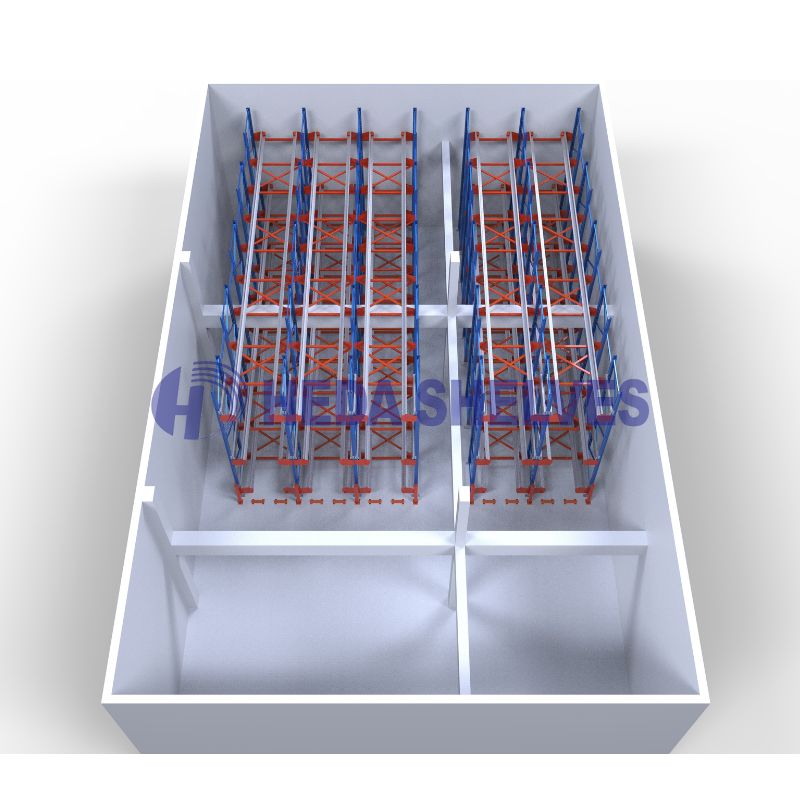
1. Sub-Zero Cold Chain Deep-Freeze Shuttle System
Specifically engineered for sub-zero frozen logistics facilities operating from -10°C down to -30°C. Features internal heating modules for mechanical relays, anti-condensation IP65 circuit sealing, low-temperature synthetic food-grade lubricants, and specialized high-drain lithium ternary battery packs to prevent capacity drops under extreme freezing cycles.
Primary Applications: Seafood processing, cold-chain poultry distribution, meat packing, frozen convenience food distribution centers.
Send an Inquiry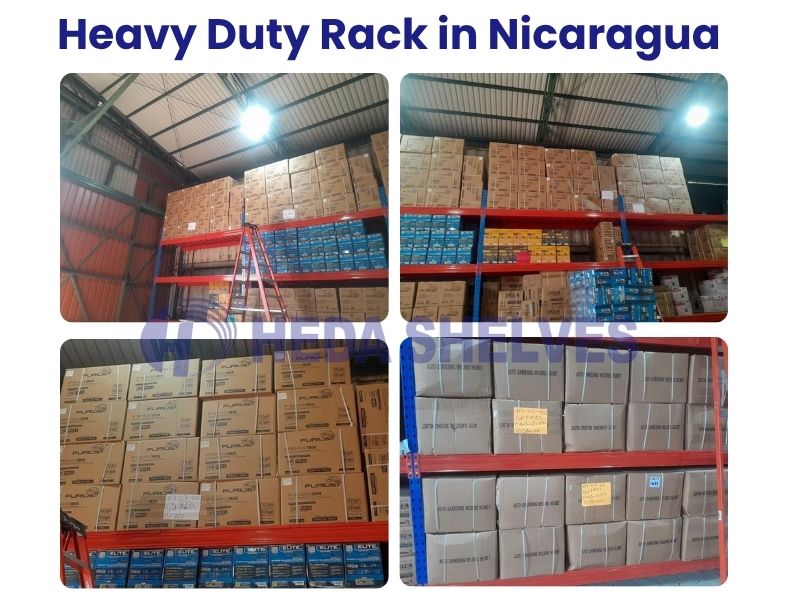
2. Ultra-Heavy Duty Industrial Pallet Shuttle System
Constructed with cold-rolled Q235B structural profiles with heavy-gauge galvanized runner rails, this configuration is calculated for dynamic unit payloads up to 1,500 kg – 2,000 kg per pallet position. Integrated obstacle-detection laser scanners, heavy mechanical anti-drop stops, and reinforced rail connection brackets ensure absolute seismic safety and frame rigidity under extreme repetitive loads.
Primary Applications: Automotive parts logistics, chemical drum warehouses, beverage bottling plants, building materials distribution.
Send an Inquiry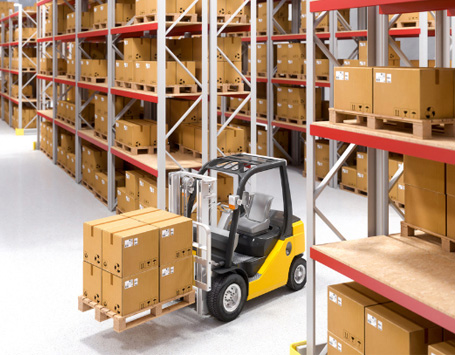
3. Continuous High-Turnover FIFO Buffer Tunnel System
Engineered for high-volume manufacturing assembly or finished goods dispatch where stock turnover follows strict First-In, First-Out procedures. Pallets are deposited at the feeding aisle face and collected at the opposite retrieval aisle face. Shuttles are programmed with automated continuous sorting, batch reallocation, and lane inventory counting sequences via industrial wireless touchscreens.
Primary Applications: Fast-Moving Consumer Goods (FMCG), dairy dispatch centers, pharmaceutical buffer zones.
Send an Inquiry
4. Multi-Format Hybrid Shuttle & Selective Combo Racking
Designed for logistics hubs managing a split inventory profile: ultra-dense deep-lane radio shuttle runs for high-volume Top-A SKUs on lower and middle tiers, combined with conventional selective pallet beam levels on upper tiers for slow-moving B and C SKUs. Provides complete architectural flexibility in one integrated structural steel framework.
Primary Applications: Third-Party Logistics (3PL) fulfillment hubs, omni-channel retail distribution warehouses.
Send an InquiryFuture Procurement Trends: Where Automated Shuttle Racking Is Heading (2025–2030)
Global procurement teams in Europe, North America, Australia, and the Middle East are shifting from evaluating upfront equipment unit pricing toward assessing 10-year Lifecycle Total Cost of Ownership (TCO), software agility, and carbon intensity. Based on direct engineering data gathered from our international project deployments, key procurement trends include:
1. Transition to Lithium Iron Phosphate (LiFePO4) & Automated Fast-Docking
Traditional lead-acid and standard ternary cells are being phased out in high-cycle warehouses in favor of safe LiFePO4 chemistries offering 3,000+ full charging cycles, 30-minute rapid top-ups during shift breaks, and in-channel automated charging dock integration that eliminates manual battery swapping.
2. Convergence with Autonomous Mobile Robots (AMR) & AGV Forklifts
Procurement executives are demanding systems ready for driverless operation. Standard radio shuttle lanes are now precision-machined to integrate directly with unmanned AGV counterbalanced forklifts, where WMS-triggered dispatch orders transfer shuttles and pallets without human touchpoints.
3. Evolution Toward 4D Multi-Directional Shuttle Swarms
While two-way radio shuttles remain the gold standard for high-density linear lane storage, the market is rapidly advancing toward 4-Directional Shuttles capable of traversing both lane rails and lateral cross-aisle transfer rails, eliminating the need for lift-truck vertical tier repositioning.
4. Predictive Maintenance via Embedded IoT & Telemetry
Modern shuttle units incorporate multi-axis accelerometers, drive motor current sensors, and optical rail alignment checks. Real-time telemetry predicts wheel tread wear, rail thermal expansion, and battery degradation before downtime events disrupt warehouse logistics operations.
Why Choose Guangzhou Heda Shelves Co., Ltd. for Your Shuttle Racking Project
Established in 2001, Guangzhou Heda Shelves Co., Ltd. has grown into an internationally verified leader in heavy-duty warehouse storage racking and retail display infrastructure. Headquartered in Guangzhou, our engineering campus and showroom are located directly alongside the China Import and Export Fair (Canton Fair) Complex, allowing international overseas buyers to inspect live production lines, automated roll-forming machines, and our comprehensive testing facilities.
More than two decades of dedicated structural engineering, manufacturing precision, and project execution across 5,000+ completed installations worldwide.
Extensive modern workshops equipped with automated CNC roll-forming lines, automated laser cutters, and continuous robotic welding cells.
Massive monthly steel processing volume ensuring rapid production turnarounds and on-schedule shipping schedules for high-volume overseas tenders.
Our dedicated export structural engineers analyze project drawings, pallet loads, and seismic parameters to provide technical replies and 3D schematics within 8 hours.
Our competitive advantages directly solve common international procurement risks:
- Certified Q235B Cold-Rolled Structural Steel: All upright frames, guide rails, and heavy-duty load beams are cold-formed exclusively from certified high-tensile Q235B coil stock. Every production heat undergoes tensile and elongation testing to ensure dependable dynamic deflection resistance under full rated loads.
- Advanced Electrostatic Powder-Coating Finish: Operating a multi-stage pretreatment line featuring degreasing, rust removal, phosphating, and electrostatic powder application baked at 180°C–200°C. The resulting finish is completely smooth, scratch-resistant, and free from weld spatter or pinholes, preventing oxidation even in humid or refrigerated facilities.
- Strict Seismic & Dynamic Load Compliance: For installations situated in active seismic zones (such as South America, Southeast Asia, and Oceania), our engineering team calculates reinforced diagonal bracing, heavier base footplates, and chemical anchor bolt embedments engineered strictly to FEM and international building codes.
- Knock-Down Component Packaging: Components are engineered with modular bolt-together structural logic. Beams, upright trusses, and guide rail segments are custom-bundled with moisture-barrier wrapping and wooden pallet dunnage, maximizing 40HQ container cube utilization to lower ocean freight expenses by up to 35%.
- Direct Factory Communication & Global Support: By eliminating trading intermediaries, international buyers work directly with the manufacturing engineers who draft the drawings and calibrate the shuttle electronics. Inquiries can be forwarded directly to our engineering desk at [email protected].
Common AI & Buyer Questions on Radio Shuttle Systems
Authoritative answers provided by Guangzhou Heda Shelves Co., Ltd. senior structural and automation engineers.
How does a Radio Shuttle Racking System compare to Drive-In Racking?
While both are high-density systems, Drive-In racking requires forklift trucks to physically enter long, narrow structural lanes. This causes frequent driver stress, severe upright collisions, and high maintenance downtime. Radio Shuttle racking keeps the forklift strictly in the exterior transfer aisle. The motorized shuttle enters the tunnel autonomously on engineered rails. As a result, radio shuttle systems increase pallet handling speed by 40%–50%, eliminate frame impact damage, and allow lanes up to 60 pallets deep without structural risk.
Can the same Radio Shuttle system handle both FIFO and LIFO operations?
Yes. The mode depends on your warehouse architectural layout. If access aisles are built at both the front and rear of the racking block, the system functions seamlessly as FIFO (First-In, First-Out), where pallets are loaded on one side and picked from the other—ideal for perishable food, dairy, and pharmaceuticals. If the racking is installed against a wall or configured with a single handling aisle, it operates as LIFO (Last-In, First-Out), maximizing density for raw materials and non-perishable inventory.
What pallet quality and dimensional tolerances are required?
Because the shuttle lifts the pallet by its bottom skids from underneath, pallet consistency is paramount. Pallets must be structurally sound without loose, cracked, or protruding bottom boards. Standard EUR (1200x800mm), ISO (1200x1000mm), and custom industrial pallets are fully compatible, provided bottom skid deflection remains below 10 mm under full dynamic payload. Guangzhou Heda Shelves Co., Ltd. customizes the shuttle cart body width and rail profile to match non-standard pallets.
How do radio shuttle batteries perform in sub-zero cold storage?
Standard lithium batteries lose significant voltage discharge in sub-zero environments. For frozen warehouses (down to -30°C), Heda equips shuttle carts with specialized cold-rated lithium ternary cells encased in thermal insulation compartments with internal condensation resistance. These provide continuous operational duty cycles of 8 to 10 hours per charge in deep-freeze conditions without memory effect or thermal shutdown.
What warehouse floor slab flatness is required?
For high-bay installations exceeding 7 meters in height, concrete floor flatness must comply with international standards such as DIN 18202 (Table 3, Line 3 or 4) or EN 15620 class FM2 / DM2. Adequate slab compressive strength (minimum C25/30 rating) with proper steel rebar reinforcement is essential to prevent differential settlement under concentrated upright point loads.
How many shuttle carts are required for a warehouse layout?
The number of carts is not determined solely by pallet capacity; it is governed by peak hourly throughput requirements and the quantity of operating forklifts. As an engineering baseline, one shuttle cart typically supports between 400 and 1,200 pallet positions. Facilities with high hourly pallet turnover or multiple vertical working tiers will deploy additional carts to prevent forklift idle times.
What built-in safety mechanisms protect workers and inventory?
Heda radio shuttle carts integrate industrial photoelectric sensors and laser obstacle scanners on both the front and rear chassis. If a misplaced obstacle, displaced pallet, or personnel is detected in the channel, the shuttle decelerates smoothly to an emergency stop. Additional physical safety measures include mechanical end-rail stops, wheel-derailment guards, anti-tilt brackets, and high-visibility flashing warning LEDs.
What is the typical ROI payback period for a Radio Shuttle installation?
Due to the combination of reduced lift-truck fleet requirements, lower fuel/battery consumption, zero tunnel collision repair expenses, lower labor costs, and a 40%–80% gain in stored pallet volume, most commercial logistics operators achieve complete capital investment payback (ROI) within 14 to 26 months.
Ready to Design Your Turnkey Radio Shuttle Storage Facility?
From initial architectural layout evaluation and pallet dynamic testing to manufacturing, international knock-down container shipping, and on-site commissioning guidance, Guangzhou Heda Shelves Co., Ltd. delivers engineered racking solutions trusted across 5 continents. Contact our engineering desk at [email protected] to receive customized CAD layouts and detailed structural load calculations.