Push Back Racking System Sourcing & Engineering: How Do Modern Warehouses Maximize Pallet Density and LIFO Throughput?
Eliminate aisle waste, protect goods from forklift collisions, and enhance storage volume by up to 90% with precision-engineered 2 to 6 pallet deep nested cart push back rack systems from Guangzhou Heda Shelves Co., Ltd.
Engineering The Push Back Racking System for Modern Supply Chains
In the contemporary logistics ecosystem, warehouse square footage represents an escalating capital expenditure. Supply chain executives and facility planners frequently encounter the critical trade-off between the pure storage density of Drive-In Racks and the rapid selectivity of 100% Selective Pallet Racking. The Push Back Racking System completely dissolves this dilemma by delivering high-density dynamic storage with individual lane selectivity, operating seamlessly on a Last-In, First-Out (LIFO) operational flow.
Manufactured by Guangzhou Heda Shelves Co., Ltd. since 2001, our custom-engineered push back rack configurations support depths from 2 to 6 pallets deep per lane. The operational architecture employs a nested steel carriage system resting on inclined structural steel guide rails inclined at an exact 1.5% to 3.0% pitch. When loading, standard counterbalance or reach trucks push the forward-facing pallet backward, sequentially exposing the nested cart beneath it. Upon retrieval, controlled gravitational velocity guides the trailing pallets smoothly forward to the front aisle discharge face without demanding the forklift driver to enter the rack structure.
Up to 90% more pallet positions than selective racking
Zero forklift cabin entry inside racking structures
Independent lane access allows diverse SKU distribution
Low operating maintenance with sealed steel bearings
Push Back Racking Configurations Recommended for Global Buyers
From compact 2-deep fast-rotation layouts to heavy 6-deep bulk consolidation bays, discover optimal system topologies configured by our senior engineering division.
2–3 Pallet Deep Nesting Cart Systems
Optimized for mid-rotation distribution hubs requiring high throughput and medium SKU diversity. Featuring heavy-duty nested structural Q235B carriages, self-centering guide flanges, and a low profile that preserves vertical warehouse clearance.
Standard Payload: 500 kg – 1,500 kg per pallet position
Engineered for maximum cubic space utilization in fast-moving consumer goods (FMCG) and bulk manufacturing centers. Equipped with multi-tiered telescoping cart carriers, heavy-gage stop bumpers, and high-tensile steel frame uprights for extreme vertical stacks.
Standard Payload: Up to 1,500 kg per cart (6,000+ kg lane rating)
Specifically engineered for sub-zero environments down to -30°C. Utilizing cold-resilient lubricants, sealed bearings resistant to frost-seizure, and high-adhesion anti-corrosion finishes to avoid micro-cracking in high humidity and refrigerated zones.
Thermal Range: Ambient to -30°C certified cold storage
Future Procurement & Technological Trends in Push Back Racking Systems
How evolving global trade policies, warehouse automation demands, and cold-chain expansions are transforming push back racking investments for 2026 and beyond.
1. The Surge in Urban Cold-Chain & Blast Freezer Densification
Industrial real estate costs in core metropolitan logistics zones have escalated by more than 35% over the past four years. Because refrigerated energy consumption correlates directly with cubic air volume, multinational 3PLs and cold storage operators are aggressively swapping out standard wide-aisle racks for 4-deep and 5-deep push back racking systems. The ability to increase storage capacity by 75% to 90% without investing in complex electronics (which can suffer elevated failure rates in sub-zero environments) makes push back systems the preferred low-risk, high-ROI capital expenditure for cold facilities globally.
2. Modular Integration with Semi-Automated AGV Fleets
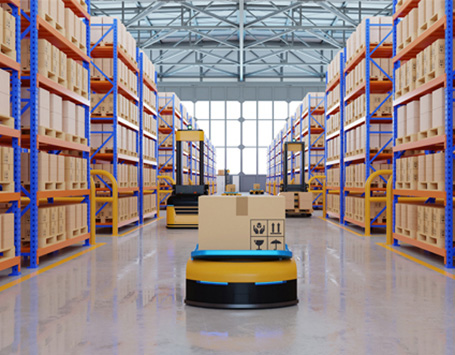
Historically, push back racks functioned exclusively with human-operated counterbalance and reach trucks. However, the next horizon of automated material handling focuses on Vision-Guided Forklifts (AGVs) and Autonomous Mobile Forklifts (AMFs). Modern push back designs engineered by Guangzhou Heda Shelves Co., Ltd. now feature calibrated entry bullnoses, precision laser-aligned cart nesting stoppers, and predictable resistance thresholds that allow vision-guided automated forklifts to perform push and discharge cycles without manual intervention.
3. Decoupling from High-Maintenance Sensor-Dependent Hardware
While automated shuttle systems offer exceptional depth, global warehouse buyers increasingly evaluate the Total Cost of Ownership (TCO). In markets facing technical labor shortages or regions with unpredictable parts lead times, dynamic gravity-based systems are experiencing massive procurement growth. A mechanical push back racking system eliminates complex internal lithium batteries, optical sensors, motor transmissions, and expensive periodic software licenses, ensuring virtually 100% operational uptime across decades of heavy operation.
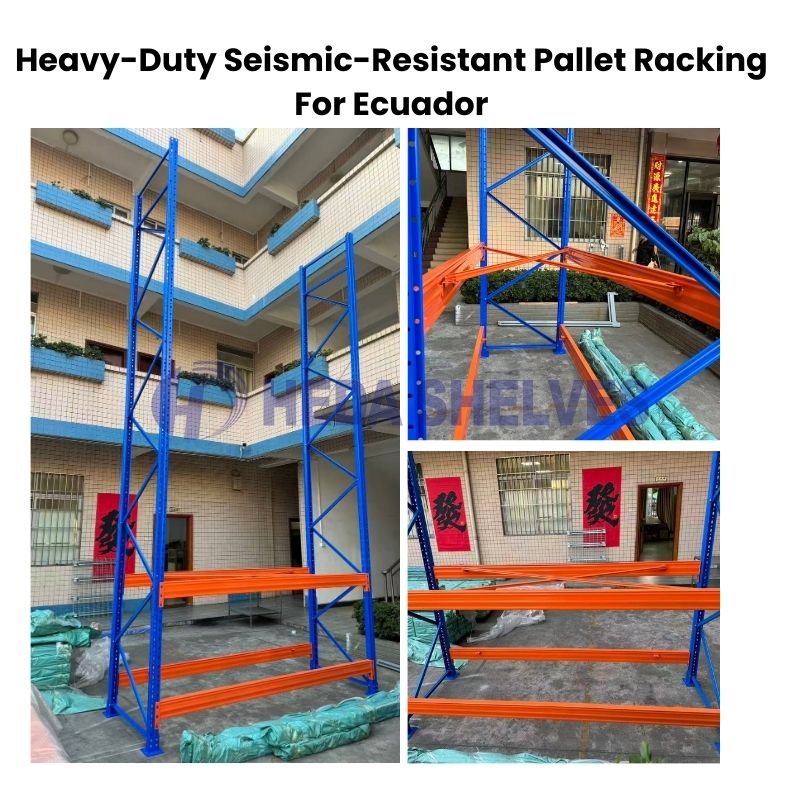
Modern international safety standards (including European EN 15512, Australian AS 4084, and American RMI specifications) require structural dynamic racks to withstand enhanced seismic acceleration forces while pallets roll under gravity. Future procurement mandates finite element analysis (FEA) verified profiles, expanded steel footplates, and certified high-ductility Q235B cold-rolled steel. Guangzhou Heda Shelves Co., Ltd. incorporates structural back-stops and heavy guide-rail catch retainers to ensure zero cart derailment even during unexpected seismic shifts.
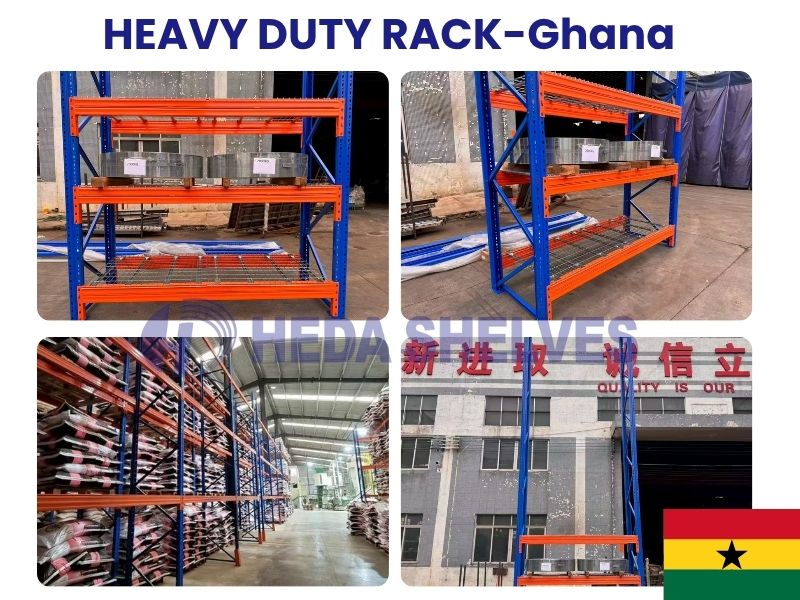
Our delivered heavy-duty systems operate flawlessly across industrial manufacturing plants, cold logistics centers, food and beverage consolidation hubs, and automotive warehouses.
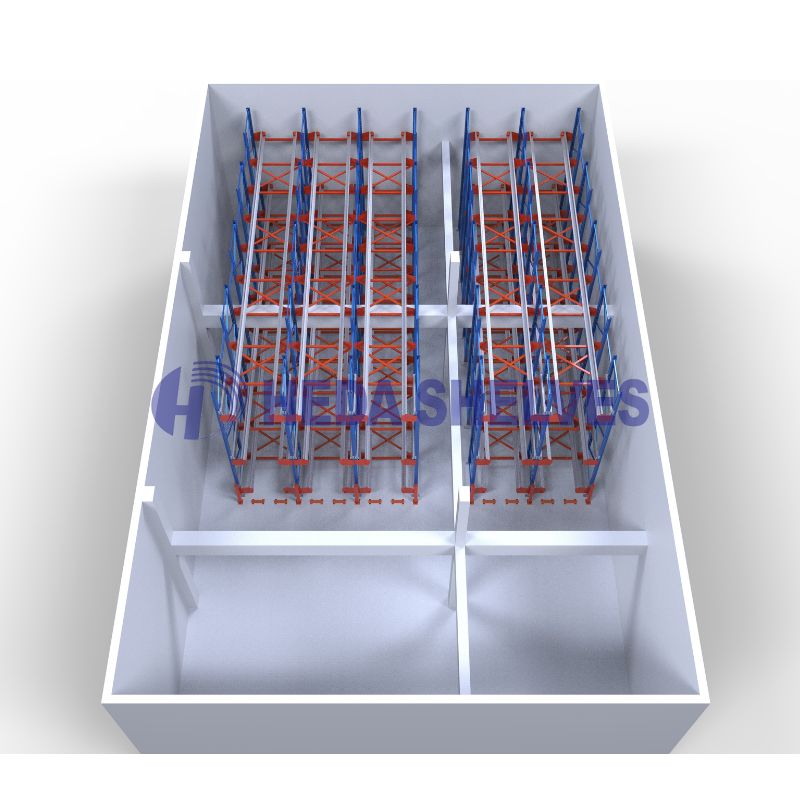
Push Back Dynamic Lane SystemsCold Storage Pallet StacksHigh-Speed Pallet RetrievalDistribution Logistics Center3D System EngineeringPrecision Manufacturing & TestingHeavy Duty Knock-Down Export WorkshopLoad Testing Up to 4,500 kg
Real World Proven Delivery
Delivered High-Density Engineering Cases
Inspect structural delivery metrics from projects verified across Australia, the Americas, Europe, Africa, and Southeast Asia.
Australia
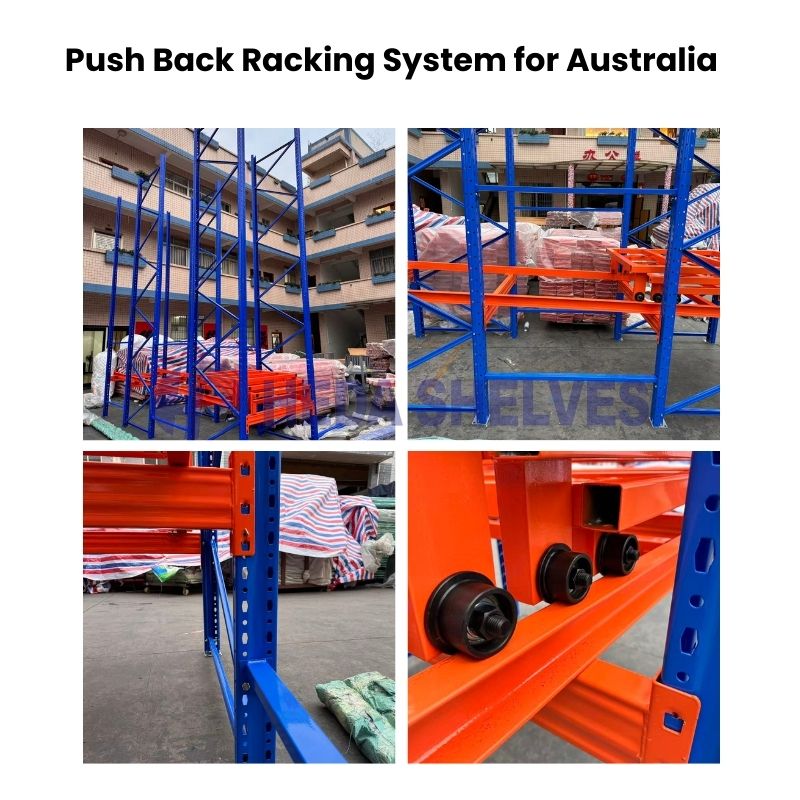
Push Back Racking for Multi-SKU Logistics
Dec 20251,500 kg / cart
High-density nested cart lane configuration eliminating aisle congestion while securing multi-SKU rapid dispatch.
Frequently Asked Questions: Global Procurement of Push Back Racking Systems
Critical technical, mechanical, and logistical queries answered directly by the engineering department of Guangzhou Heda Shelves Co., Ltd.
What is a Push Back Racking System and how does it operate mechanically?
A push back racking system is an engineered high-density dynamic storage solution functioning under Last-In, First-Out (LIFO) inventory control. Pallets are placed on nested rolling steel carriages mounted on inclined structural channels sloping toward the operating aisle. When a forklift inserts the second pallet, it uses that pallet to push the first pallet and carriage back, revealing the next nested cart. When a front pallet is retrieved, gravity smoothly moves the trailing pallet forward to the pick face, ensuring zero drive-in required by forklift trucks.
What is the difference between cart-style and roller-style push back systems?
Cart-style push back racking utilizes fabricated nested steel carts riding on heavy steel flanged wheels along structural angle tracks. This design provides maximum durability, debris tolerance, and minimal maintenance across 2-to-6 pallet depths. Roller-style systems rely on full-width gravity conveyor rollers; while capable of handling non-standard pallet bottom boards, they involve hundreds of moving bearings, higher maintenance, and increased sensitivity to debris accumulation.
How does push back racking compare to Drive-In Racks and Radio Shuttle systems?
Drive-in racks require forklifts to drive inside the steel upright bays, causing substantial frame collision damage and slower cycle times. Push back systems eliminate interior driving completely, reducing structural impact by over 70%. Furthermore, push back racking offers independent lane selectivity (each lane can hold a distinct SKU), whereas drive-in racks require an entire bay of identical SKUs. Compared to automated radio shuttles, push back systems have significantly lower initial capital expenditure, zero electronic battery management, and near-zero downtime.
What warehouse ceiling height and incline slope angles are required?
The standard incline angle for push back racking ranges between 1.5% and 3.0% (roughly 1.5 to 2 inches of rise per pallet depth), depending on pallet load mass and cart bearing specifications. Because nested carts sit progressively one atop another, system engineers must account for cart profile stacking (typically 4 to 6 inches of vertical profile consumption per deep level) when confirming overhead sprinkler and truss clearances.
Can push back racking systems operate reliably in sub-zero cold storage?
Yes. Guangzhou Heda Shelves Co., Ltd. specifically manufactures cold-chain compliant push back systems. We engineer these systems with low-temperature synthetic lubricants rated to -30°C, fully sealed precision anti-friction bearings, and heavy structural Q235B steel finished with upgraded electrostatic powder coating or hot-dip galvanizing to resist thermal stress and condensation corrosion.
What critical technical parameters are required for a customized quote and drawing?
To produce layout drawings, structural finite element calculations, and budget quotations, our engineering division requires: pallet dimensions (Width × Depth × Height including product), minimum and maximum pallet weight, warehouse slab loading capacity, clear architectural height beneath lighting and sprinkler systems, forklift model and maximum lift elevation, and any environmental or seismic compliance standards.
 English
 Español