HEDAHeavy Duty Racking
 English
 Español
EnglishEspañolExplore our flagship heavy-duty storage configurations, fabricated with premium Q235B cold-rolled steel and verified through rigorous load-bearing deflection stress analyses.
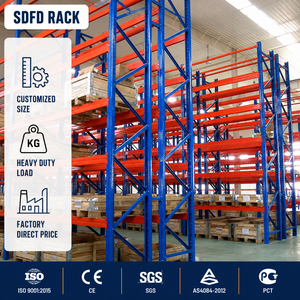
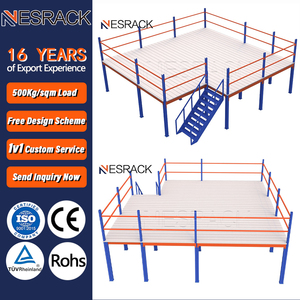
Combining over two decades of metallurgical research, modern European standards, and high-efficiency direct factory production.
Fabricated exclusively from high-tensile Q235B cold-rolled structural steel, complete with raw material mill certificates. Fully certified to CE, ISO9001, and compliant with European FEM 10.2.02 and EN 15512 safety codes.
We do not supply rigid stock sizes. Every project is configured by seasoned in-house engineers based on exact pallet footprints, reach heights, dynamic floor loading, and forklift turning radiuses, delivering complete 2D layout schematics and 3D CAD models.
Components utilize an intelligent knock-down packaging system that prevents in-transit bending, scratch hazards, and optimizes sea container cubic fill rate (CBM), cutting international ocean freight charges by up to 22% per shipment.
International industrial procurement requires rapid turnaround. Our team of dedicated export project consultants guarantees initial technical drawing evaluations, structural feasibility checks, and detailed FOB/CIF commercial quotes within an 8-hour window.
For installations in earthquake-prone zones across Latin America, Southeast Asia, and Oceania, our systems feature reinforced floor-anchorage baseplates, cold-formed cross-bracing channels, and dual locking safety pins on every beam connector.
Our continuous automated surface treatment incorporates multi-stage iron phosphating, chemical rust stripping, and cured thermosetting polyester powder coating. The resulting finish is completely slag-free, chip-resistant, and suitable for cold-store ambient extremes down to -30°C.
In the contemporary landscape of third-party logistics (3PL), bulk FMCG distribution, and cold chain warehousing, square-footage costs continue to climb at unprecedented trajectories. Industrial warehouse planners are systematically moving away from low-density selective configurations toward engineered Last-In, First-Out (LIFO) racking architectures. CE-certified heavy-duty LIFO systems—primarily encompassing Push-Back Racking and Drive-In Racking Systems—allow facility directors to recapture up to 75% of previously lost aisle space while drastically increasing total SKU capacity per cubic meter.
Unlike standard selective shelving which requires a dedicated operating aisle for every single pallet rack row, LIFO designs consolidate storage bays into deep multi-lane tracks. Pallets are loaded and unloaded from a solitary operating face, eliminating auxiliary interior aisles and consolidating forklift travel paths. This engineering whitepaper outlines the structural parameters, international load certification methodologies, and strategic selection frameworks required when sourcing industrial-scale LIFO infrastructure from certified manufacturers.
Selecting the optimal pallet storage density requires an objective analysis of throughput velocity, inventory handling characteristics, building floor capacity, and initial capital expenditure. The table below details key technical and operational parameters across common racking archetypes:
| Storage System Type | Access Principle | Floor Space Utilization | Standard Load / Pallet | Aisle Requirements | Picking Selectivity |
|---|---|---|---|---|---|
| Standard Selective Rack | FIFO (First-In, First-Out) | 35% – 40% | 500 kg – 2,000 kg | Wide (3.0m – 3.8m) | 100% Direct Access |
| Push-Back Cart Racking | LIFO (Last-In, First-Out) | 70% – 75% | 1,000 kg – 1,500 kg | Single Access Aisle | High per-lane selectivity |
| Drive-In Pallet Racking | LIFO (Last-In, First-Out) | 75% – 85% | 800 kg – 1,800 kg | Forklift Entry Lanes | Low (Batched SKU loads) |
| Radio Shuttle System | LIFO or FIFO Mode | 80% – 88% | 1,000 kg – 2,000 kg | Centralized Operating Aisle | Automated Lane-Level |
The structural integrity of a LIFO racking setup relies on tight manufacturing tolerances and metallurgical consistency. In a Push-Back Racking system, a series of nested rolling carts navigate inclined structural steel channels pitched at an engineered grade (typically 2% to 3%). When the forklift operator inserts the initial pallet, it rests on the uppermost cart. Inserting subsequent pallets forces the front pallet backwards, exposing the next nested cart underneath. Upon SKU retrieval, gravity smoothly indexes the trailing pallets forward to the pick face at a controlled speed.
Precision alignment is paramount: any minor distortion in the cold-rolled beam rails or poor wheel-bearing tolerances will lead to pallet hang-ups or unsafe sudden descent speeds. At HEDA Racking, guide channels are profiled using precision multi-roller CNC roll-forming lines, paired with heavy-duty sealed industrial bearings engineered to endure heavy repetitive loading without metal fatigue or flat-spotting.
Conversely, Drive-In Racking operates by allowing counterbalanced or reach forklifts to physically enter the storage lanes, setting pallets upon continuous cantilevered support arms. Because structural cross-beams cannot intersect the driving bay, Drive-In systems experience significant torsional and horizontal forces during loading cycles. To counteract these lateral moments, our structural design incorporates overhead longitudinal beam bracing, top-level diagonal portal frames, and heavy floor-anchored steel bollards protecting the vulnerable outer uprights from forklift impact deflection.
For European, Oceanic, and North American enterprises, procuring heavy-duty storage racks without certified structural compliance poses profound liability and occupational safety hazards. A valid CE Certificate under the European Construction Products Regulation (CPR 305/2011) indicates that structural calculation models, welding seam non-destructive testing (NDT), and component load deflections have passed rigorous engineering scrutiny.
HEDA Racking designs strictly align with EN 15512:2020 (Steel static storage systems - Adjustable pallet racking systems - Principles for structural design). Our calculations account for dead loads, vertical live loads, dynamic placement coefficients, beam deflection limits (typically span/200), and horizontal frame stability in accordance with seismic risk data. Every batch of upright columns and step-beams is rigorously monitored for steel yield point elasticity (guaranteed minimum 235 N/mm² for Q235B steel) to prevent catenary collapse risks even when operating at maximum load ratings up to 4,500 kg per level.
Driven by smart manufacturing paradigms and evolving inventory dynamics, the global procurement of heavy-duty LIFO infrastructure is undergoing rapid modernization. Importers and warehouse developers must factor the following macro developments into their upcoming 5-to-10-year facility roadmaps:
Logistics facilities are progressively upgrading purely mechanical gravity-cart LIFO tracks to bi-directional semi-automated radio shuttle systems. This reduces forklift transit distance inside the racks while preserving ultra-dense storage footprints.
International corporate ESG compliance mandates low-VOC and zero-heavy-metal manufacturing. Modern racking lines employ solvent-free electrostatic powder applications and closed-loop water treatment systems during initial steel chemical passivation.
With global cold-storage operational energy overhead surging, maximizing internal refrigeration cubic space is crucial. LIFO systems remain the premier procurement choice for sub-zero food and pharmaceutical storage due to minimal open air volumes.
Direct technical answers addressing structural calculation, delivery lead times, certification validity, and container packing optimization.
LIFO (Last-In, First-Out) systems load and retrieve pallets from the identical aisle face, making them exceptionally suited for non-perishable merchandise, industrial spares, or large single-SKU production batches where direct expiration date rotation is not critical. FIFO (First-In, First-Out) systems, like gravity pallet flow racks, separate loading and picking aisles, ensuring inventory rotates sequentially but demanding more dedicated forklift circulation space.
Every rack frame is engineered using finite element analysis (FEA) based on specific pallet dimensions, goods overhang, total unit weight, and seismic zone factors. Standard configurations accommodate 1,000 kg to 4,500 kg per beam level, with upright column sections rated past 24,000 kg total frame capacity. Each delivery includes formal structural load calculation sheets and CE conformity documentation.
Yes. For cold-chain operations running at -20°C to -30°C, we specify low-temperature resilient steel grades and specialized food-grade low-viscosity synthetic lubricants inside push-back cart bearing assemblies. Our high-adhesion electrostatic polyester powder coating resists thermal-shock flaking and prevents condensation-induced rust.
To produce an exact, cost-effective warehouse layout, our engineering team requires: (1) Architectural drawings of the facility indicating clear interior ceiling height and floor slab thickness, (2) Pallet dimensions including width, depth, overall height, and gross load weight, and (3) Operational specifications of your current forklift fleet, including maximum lift reach and minimum turning radius (AST).
Upright columns and structural beams are packed using automated bundling fixtures with high-density corrugated spacers, plastic corner protectors, and steel banding. Small components, connection pins, baseplates, and fasteners are crated in seaworthy reinforced wooden boxes. This knock-down methodology ensures zero transit abrasion while maximizing container loading capacity.
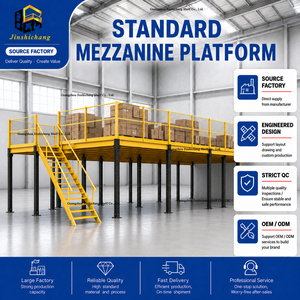
Standard export orders ranging from one to four 40-foot high-cube containers (40HQ) are fabricated within 15 to 22 business days. Complex customized mezzanine platforms or extensive drive-in installations typically require 25 to 30 days. We provide a comprehensive 5-year structural quality warranty covering manufacturing defects, weld seams, and steel profile compliance.
Connect directly with our senior racking engineering specialists. Submit your warehouse floor plan today to receive full 2D CAD layout designs, structural safety calculations, and a transparent FOB/CIF pricing proposal within 8 business hours.
Get Catalog