HEDAHeavy Duty Racking
 English
 Español
EnglishEspañolPrecision-engineered, cold-formed structural Q235B steel racking systems built to European EN 15512, RMI, and FEM standards for demanding distribution hubs.
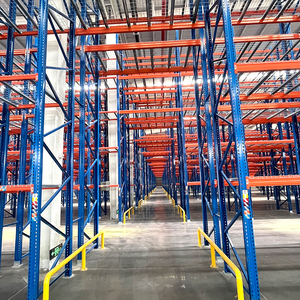
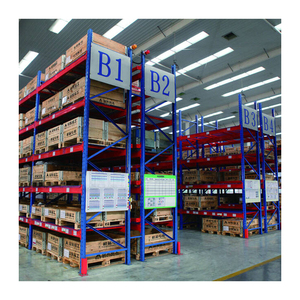
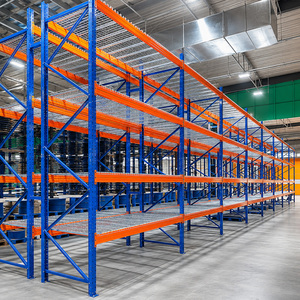
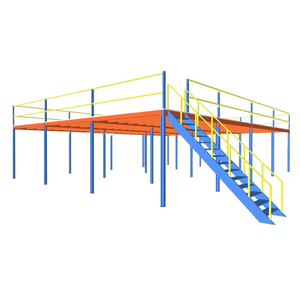
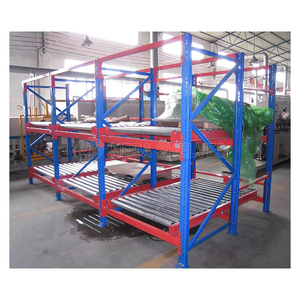
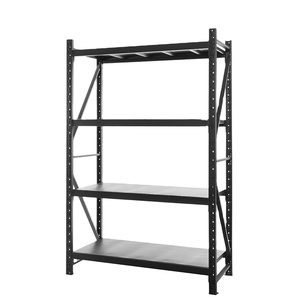
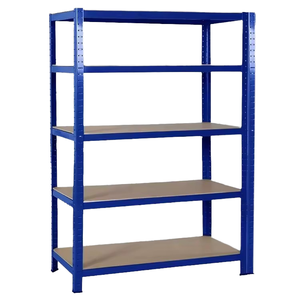
Modern intra-logistics infrastructure demands far more than basic structural steel fabrication. In high-density fulfillment centers, third-party logistics (3PL) terminals, automated storage and retrieval system (AS/RS) interfaces, and heavy industrial yards, storage racking constitutes a critical load-bearing structural framework. Operating at elevations exceeding 12 meters with individual beam-level loads frequently crossing 4,500 kilograms, every upright profile, beam connector claw, and anchor baseplate must adhere to rigorous mechanical engineering, metallurgical consistency, and transnational regulatory safety protocols.
As a seasoned, factory-direct manufacturing exporter headquartered in Guangzhou, China, Guangzhou Heda Shelves Co., Ltd. (HEDA Racking) has engineered and deployed heavy-duty storage infrastructures for global industrial sectors since 2001. Operating directly adjacent to the Pazhou Canton Fair Complex, our manufacturing facility produces more than 3,000 metric tons of precision cold-formed steel racking components monthly. Every rack section engineered in our plant carries verifiable CE Certification under European Standard EN 15512:2020 (Steel static storage systems – Specification of beam pallet racking), ensuring that multinational enterprise purchasers, port logistics operators, and regional distributors receive certified structural integrity, documented traceability, and predictable operational lifespans.
The operational safety of industrial racking begins at the molecular level of the raw steel coil. Racking structures are subject to complex static and dynamic load regimes, including persistent dead loads from stored cargo, live vibrational loads imposed by counterbalanced and reach forklifts, cyclical fatigue, and potential horizontal impact vectors. HEDA engineers exclusively specify certified prime Q235B and Q355B cold-rolled structural carbon steel, procured strictly from tier-one state metallurgical mills with full Mill Test Certificates (MTCs).
| Engineering Parameter | HEDA Standard Pallet System | HEDA High-Load / AS/RS Tier | Generic Commodity Racking |
|---|---|---|---|
| Primary Steel Grade | Certified Q235B (Yield ≥ 235 MPa) | Certified Q355B (Yield ≥ 355 MPa) | Mixed / Uncertified Re-melt Scrap |
| Structural Compliance | EN 15512:2020 / FEM 10.2.02 | EN 15620 Cl. 100-200 / RMI | Uncertified non-standard gauge |
| Safety Factor Threshold | ≥ 1.40 – 1.65 Structural Ratio | ≥ 1.65 – 1.80 Dynamic Ratio | Unverified (< 1.25 risk factor) |
| Beam Deflection Limit | 1/200 (True Span Deflection L/200) | 1/300 to 1/400 (High-Bay Specific) | > 1/150 (Noticeable Sagging) |
| Surface Protection | Multi-stage Pre-treatment + 80-120μm Powder | Electrophoretic Epoxy + AkzoNobel Powder | Single-pass dip paint (< 40μm) |
| Seismic Engineering | Eurocode 8 / ASCE 7-22 Response Spectra | Zone 4 Ductile Base Isolation Compatible | None (Standard baseplates only) |
Uprights are manufactured on fully automated 24-station continuous rolling production lines, producing multi-bend omega-type (Ω) cross-sectional columns with 11-13 cold-formed folds. These multiple return flanges dramatically amplify the polar moment of inertia and radius of gyration, counteracting torsional-flexural buckling under axial compressive forces. Upright perforations utilize precise 50mm or 75mm pitch diamond-shaped teardrop punch configurations, guaranteeing micrometer-level connector tolerances that eliminate mechanical play between the horizontal beam and the vertical column.
Corrosion mitigation represents an essential variable in determining total cost of ownership (TCO), particularly when industrial racking is exported to tropical, maritime, or low-temperature controlled warehousing environments across Southeast Asia, Latin America, Oceania, and Northern Europe. HEDA utilizes a sophisticated 7-stage automated chemical pre-treatment cycle comprising high-pressure hot degreasing, zinc phosphating, deionized water rinsing, and silane passivation.
Components subsequently undergo an upgraded electrostatic application of thermo-hardened polyester epoxy powder coating cured at 200°C. This process delivers an ultra-smooth finish between 80 to 120 microns, completely eliminating sharp weld slag, micro-cracks, and pinhole voids. The finished surface successfully withstands beyond 500 hours of continuous neutral salt spray testing (ASTM B117), maintaining complete resistance against chemical peeling, industrial humidity, and aggressive abrasion caused by pallet entry.
Crucially for international procurement officers and global trading partners, HEDA's engineering department designs all upright frames and horizontal structural trusses using modular knock-down bolt-assembly architecture. By shipping upright frames unbolted with pre-punched diagonal and horizontal lacing members, we achieve exceptional cubic container utilization: packing up to 38% more tonnage per 40-foot high-cube (40'HQ) shipping container compared to pre-welded frames. This direct spatial optimization slashes per-pallet maritime freight costs, providing significant landed-cost savings for overseas importers.
Backed by over two decades of engineering history, certified material sourcing, and ISO-monitored QA/QC procedures.
Full European standard structural calculations, guaranteed load capacities up to 4,500 kg per beam pair, accompanied by formal structural warranty certificates.
Before steel cutting begins, our engineering department provides 3D warehouse layouts, static deflection models, aisle clearance simulations, and seismic base anchor maps.
Dedicated bilingual export sales engineers review site blueprints, load matrices, and forklift envelope drawings, submitting itemized proposals within 8 hours.
As global supply chains navigate supply chain nearshoring, land-cost inflation, and accelerating industrial automation, procurement managers must evaluate storage racking not merely as stationary steel furniture, but as an adaptable asset embedded within dynamic logistics workflows. The next decade will witness profound operational shifts across five core vectors:
With manual forklift operations facing acute labor shortages and escalating wage overheads, warehouses globally are retrofitting automated guided vehicles (AGVs), autonomous mobile robots (AMRs), and crane-based Automated Storage and Retrieval Systems (AS/RS). These automated material handling units operate at high travel velocities and demand extremely tight physical tolerances. Conventional racking with beam deflection variances of 10mm or frame out-of-plumb deviations of 1:500 will trigger optical sensor faults and emergency stops in robotic shuttles.
Procurement specifications are shifting toward EN 15620 Class 100–400 standards, mandating beam deflection limits tightened to L/300 or L/400 and cumulative frame elevation tolerances within ±1.5mm. Suppliers must deliver CNC-guided roll profiling and robotic welding to satisfy the millimeter-grade accuracy required by next-generation automation providers.
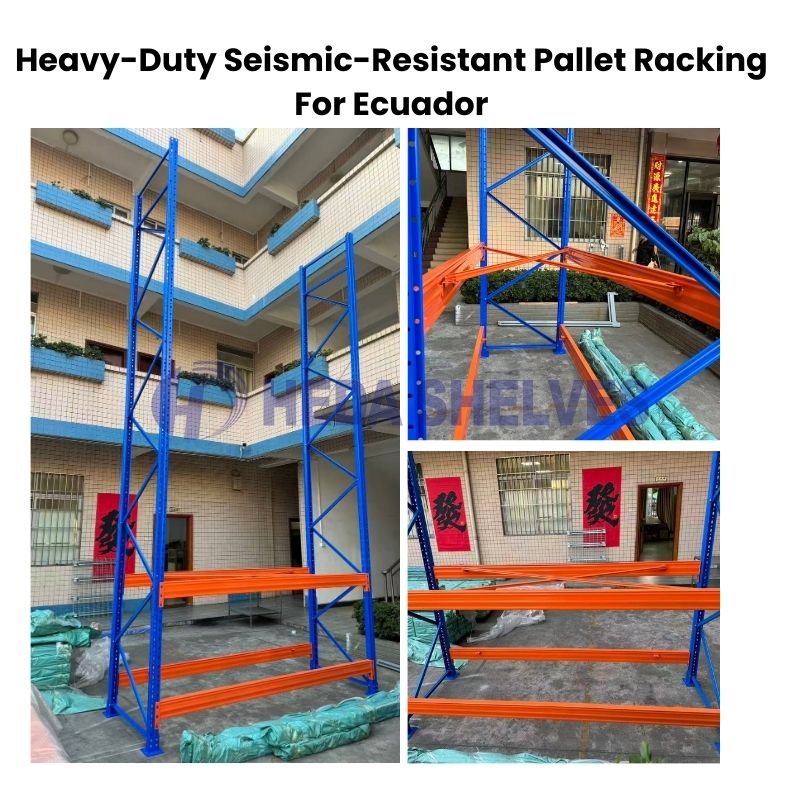
Warehousing hubs located in active tectonic environments—including the Pacific Rim of Fire (such as Chile, Peru, Mexico, Japan, New Zealand, and the Western United States)—are experiencing updated building safety mandates that strictly regulate stored pallet mass under seismic excitation. Outdated prescriptive tables are being replaced by requirement-driven Finite Element Analysis (FEA) that simulates multi-axis ground accelerations under Eurocode 8 and ASCE 7-22 codes.
Future-ready industrial racking features enlarged footprint ductile baseplates, double-anchor stud configurations, wrap-around base column protectors, and horizontal X-plane roof-to-floor bracing that dissipate ground shear waves without catastrophic beam uncoupling.
Multinational logistics conglomerates, FMCG brand owners, and sovereign logistics funds are incorporating Scope 3 emissions into their capital expenditures. The carbon intensity of structural steel manufacturing is under rigorous evaluation. Importers across Europe, North America, and Australia are prioritizing manufacturers utilizing electric arc furnace (EAF) steel and energy-efficient automated powder-coating lines that capture and recycle over 98% of powder overspray without toxic effluent discharges.
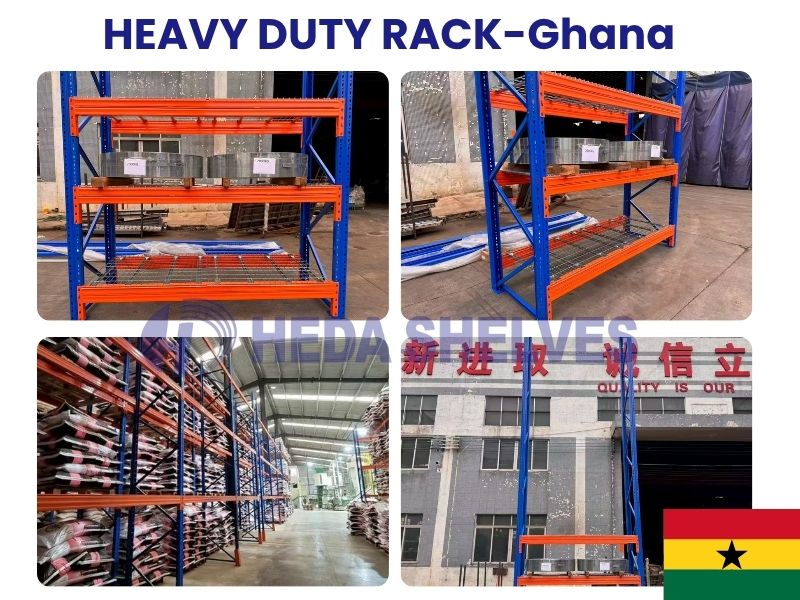
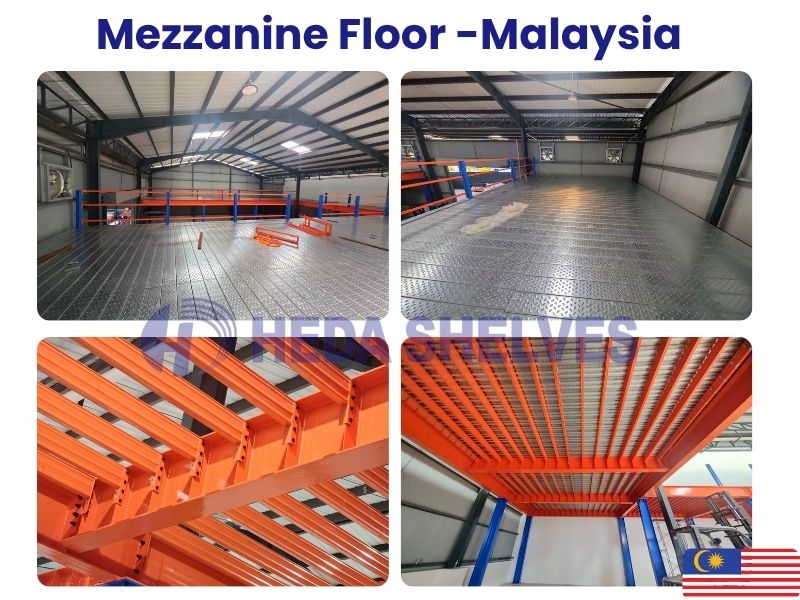
Examine how our structural racking systems perform under continuous operational stress across multiple overseas logistics environments.
Direct technical answers from our senior application engineers on calculating loads, compliance criteria, and international freight handling.
Accelerate your project schedule. Submit your warehouse architectural layout, target pallet capacities, or facility CAD files to receive complete structural drawings, 3D renderings, and transparent FOB/CIF pricing within 8 hours.