HEDAHeavy Duty Racking
 English
 Español
EnglishEspañolEngineered in cold-rolled Q235B high-tensile structural steel to exceed FEM 10.2.02 and EN 15512 global deflection standards.
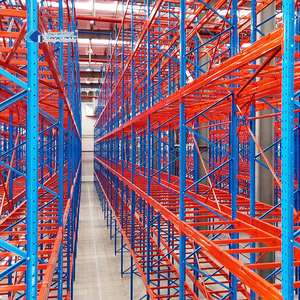
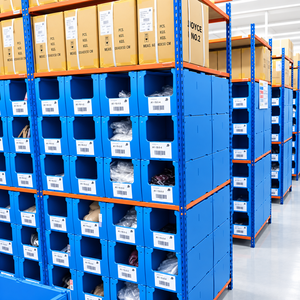
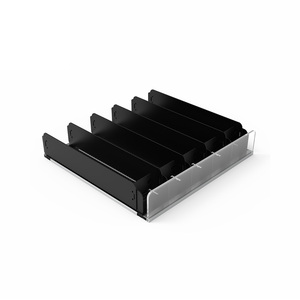
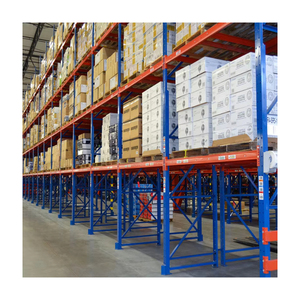
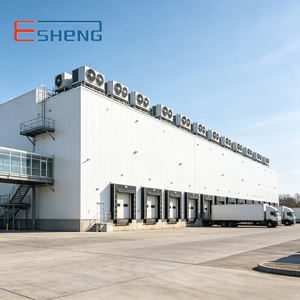
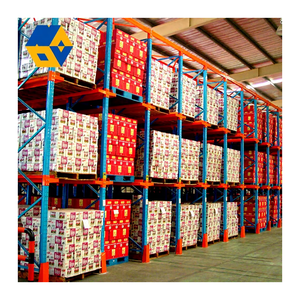
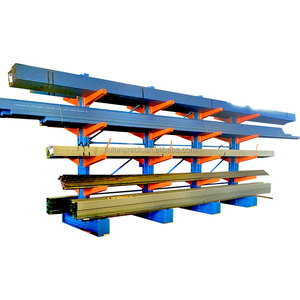
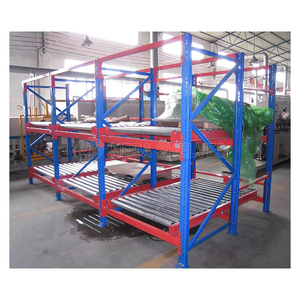
Direct OEM/ODM production capabilities from our 30,000 m² high-capacity factory in Pazhou, Guangzhou, backed by rigorous structural testing.
Operational since 2001, executing 5,000+ major racking installations across Asia, Europe, Americas, the Middle East, and Oceania.
Continuous cold roll-forming with Q235B prime structural steel. Advanced multi-stage electrostatic powder coating with zero welding slag.
Full-scale CAD layout simulation and 3D architectural renderings. Deflection calculations strictly calibrated to specific forklift dynamics.
Heavy-duty expanded base plates, vertical cross-bracing trusses, and anchor shear ratings optimized for active seismic regions worldwide.
Direct line to bilingual structural engineers. Quick structural analysis, customized load calculations, and turnkey factory-direct pricing within 8 hours.
When engineering high-bay industrial storage infrastructure, compliance with CE Marking directives, EN 15512:2020, and EN 15620 represents an essential baseline for warehouse occupational safety, structural longevity, and seismic resilience. As logistics hubs scale upward to maximize vertical cubic volume, static load calculations must integrate both dynamic forklift impact forces and localized stress distributions across upright profiles and connector assemblies.
In selective pallet racking systems, beam deflection under maximum design payload is strictly restricted to prevent operational dislodgement, localized buckling, and premature fatigue. The European Standard EN 15512 specifies a maximum allowable vertical deflection limit of δ ≤ L / 200, where L represents the clear span distance between upright columns. Under heavy industrial conditions with concentrated unit loads up to 4,500 kg per pair of box beams, HEDA conducts rigorous non-linear finite element structural simulations (FEA) to confirm safety factors greater than γ = 1.4 for static live loads and γ = 1.5 for seismic dynamic scenarios.
| Racking System Classification | Permissible Deflection Ratio (δ) | Safety Factor (Dead / Live Load) | Primary Cold-Rolled Steel Grade | Global Testing Standard | Compliance Audit Status |
|---|---|---|---|---|---|
| Heavy Duty Selective Pallet Racks | L / 200 Span Limit | 1.40 / 1.50 | Certified Q235B Cold-Rolled | EN 15512 / FEM 10.2.02 | CE Verified |
| Automated Deep-Lane ASRS High-Bay | L / 300 Span Limit | 1.50 / 1.75 | Q355B / High-Yield Alloy | EN 15620 / FEM 9.831 | TÜV / CE Audited |
| Heavy Cantilever Storage Systems | L / 150 Cantilever Tip | 1.50 / 1.60 | H-Section Heavy Structural | ANSI MH16.1 / EN 1993-1-3 | Verified Load Tested |
| Drive-In & Continuous Drive-Through | L / 250 Pallet Rail Span | 1.45 / 1.55 | Q235B High Cold-Formed | FEM 10.2.07 / AS 4084 | CE Certified |
| Structural Mezzanine Platforms | L / 300 Main Beam Span | 1.50 / 1.65 | Hot-Rolled I-Beam & Q235B Deck | EN 1090-2 / Eurocode 3 | Factory Production Control (FPC) |
The structural backbone of our racking portfolio relies on certified Q235B prime strip steel sourced from premier steel mills. Before the precision continuous roll-forming stage, the raw coils undergo strict ultrasonic flaw detection and tensile yield testing (yield strength ReH ≥ 235 MPa, ultimate tensile strength Rm 370–500 MPa). Post cold-forming, all upright punch patterns (featuring standard 50 mm, 75 mm, or 76.2 mm pitch) are produced on automated computer-controlled stamping lines to eliminate micro-cracking around load-bearing slots.
Corrosion mitigation is achieved via an environmentally responsible 7-stage chemical pretreatment line: degreasing, zinc phosphating, deionized water rinsing, and high-voltage electrostatic deposition of thermosetting polyester epoxy powder. The powder layer is baked at 180°C–200°C for cross-linking, producing an impenetrable dry-film thickness of 60–90 μm that complies with the ASTM B117 salt spray corrosion endurance standard for over 500 hours without blistering or peeling. For sub-zero cold-storage distribution warehouses (-25°C to -30°C), specialized flexible thermoset formulations are applied to eliminate low-temperature coating embrittlement and micro-spalling.
International freight costs represent a critical component in the total cost of ownership (TCO) for global supply chain managers. Standard assembled frames waste vast amounts of container cubic space. HEDA’s engineering team calculates knock-down configurations where upright columns are nested in high-density steel cradles, frame bracing channels are strapped in bundled packs, and box beams are interlaced with impact-absorbing corrugated dividers. This engineering approach increases 40ft High Cube (40HQ) container capacity by 35% to 48% compared to traditional packaging methods, directly mitigating ocean logistics expenditure while preventing transit deformation.
How logistics procurement heads, supply chain engineers, and third-party logistics (3PL) operators can future-proof storage assets.
Procurement specifications are shifting from traditional wide-aisle forklift structures to hybrid racking layouts engineered for automated AMR and AGV fleet navigation. Upright column clearances, floor rail precision tolerances, and base-plate floor flatness (DIN 18202 standards) must be factored into structural orders from day one.
With refrigeration power representing up to 60% of refrigerated warehouse OPEX, cold-storage operators are replacing static racking with deep-lane radio shuttle systems and Double-Deep ASRS. High cubic density reduces refrigerated airspace per pallet position, slashing refrigeration overhead by up to 35%.
Urban last-mile logistics demands flexible multi-tier mezzanine floors combined with carton flow rollers and polypropylene picking bins. Companies favor modular knock-down boltless racking that can be quickly dismantled, reconfigured, or relocated as SKU velocities change.
Global buyers in North America and the European Union increasingly require documented lifecycle assessments (LCA) and scrap-recyclable steel sourcing. Procuring from manufacturers with documented zero-effluent powder coating lines protects buyers from stringent carbon boundary adjustments.
Following recent high-magnitude earthquakes in the Pacific Rim, Latin America, and Southern Europe, structural insurance underwriters demand third-party verified dynamic moment-rotation ductility tests for beam-to-column connector assemblies before insuring inventory.
The integration of passive RFID tracking chips and IoT strain-gauge micro-sensors embedded into critical upright base anchors allows warehouse supervisors to detect forklift collisions, out-of-plumb verticality shifts, and structural overloads in real time, preventing catastrophic progressive racking collapses.
The global warehousing landscape is experiencing an accelerated technological migration. Industrial storage is no longer viewed as passive steel furniture; it is now evaluated as a precision-engineered structural interface connecting the facility floor with automated handling systems.
Traditional manufacturing relied on hydraulic press brakes, introducing dimensional deviations across 9-meter upright spans. Modern tier-1 factories utilize continuous multi-station roll-forming lines with online laser triangulation checks. Upright hole pitch tolerances are maintained within ±0.2 mm over an entire 11,800 mm column run. This dimensional accuracy is vital for ASRS applications, where high-speed crane sensor heads must locate beam levels without positional drift.
Pallet gravity flow racking depends on controlled incline speeds. Early systems experienced runaway pallet issues due to fluctuating pallet weights. Today’s systems incorporate magnetic induction eddy-current speed controller rollers. By using electromagnetic resistance that scales proportionally with pallet entry velocity, uniform deceleration is guaranteed across load variations ranging from 250 kg to 1,500 kg per pallet, without mechanical brake pad wear or friction overheating.
Rather than locking operations into a single operational profile, current racking designs utilize universal punch patterns compatible with selective beams, drive-in pallet rails, or shuttle guide tracks. As an enterprise scales from manual counterbalanced trucks to semi-automated radio shuttles, the core upright infrastructure remains intact, protecting long-term capital investments and minimizing upgrade downtime.
Expert answers to the most common engineering, certification, and shipping inquiries raised by international warehouse procurement teams.
In the European Union and recognized international jurisdictions, industrial storage racking falls under the scope of structural steel fabrication guidelines. While general consumer goods adhere to standard CE machinery directives, pallet racking is engineered to EN 15512 (Racking Design Code), EN 15620 (Tolerances, Deformations and Clearances), and EN 1090-1 / EN 1090-2 (Execution Class 2 - EXC2) for load-bearing steel components. HEDA’s export lines strictly comply with these structural safety limits, providing fully traceable 3.1 Mill Test Certificates for every production batch of raw steel.
Load calculation is an empirical engineering discipline. We conduct three levels of verification: First, 3D structural modeling via Finite Element Analysis (FEA) simulates dead, live, wind, and seismic loads. Second, physical prototype testing is conducted using calibrated hydraulic jacks to load beam-to-column connector assemblies to destruction, establishing actual ultimate moment capacity and spring stiffness (Cb). Third, full-bay live load testing is performed inside our facility, applying up to 150% of nominal payload (e.g., verifying 4,500 kg per level) with continuous deflection measurement using digital micrometer gauges.
Yes. Over 75% of our projects are custom-engineered. Our structural engineers tailor upright heights (up to 12 meters single-piece), beam spans, profile wall thicknesses, and footprint layout geometries to bypass roof trusses, sprinkler piping, and building stanchions. For high seismic hazard categories (such as zones in Mexico, Ecuador, Japan, or New Zealand), we engineer widened heavy-duty base plates, embed high-shear anchoring studs, and integrate vertical and horizontal cross-bracing towers that disperse earthquake shockwaves according to Eurocode 8 and AS4084 guidelines.
Q235B is an industry-standard structural carbon steel specified in Chinese national standard GB/T 700. In chemical composition and mechanical properties, Q235B corresponds directly to European standard EN 10025 S235JR and American ASTM A36. It features a minimum yield point of 235 MPa, low carbon content (0.12–0.20%), and excellent weldability without localized brittleness. For ultra-heavy high-bay installations exceeding 10 meters, HEDA utilizes cold-formed Q355B (equivalent to European S355JR), which offers a higher yield strength of 355 MPa, reducing self-weight while accommodating higher structural buckling loads.
In sub-zero walk-in freezers, ordinary powder coatings become brittle and chip, leading to under-film condensation and accelerated steel rust. HEDA employs an upgraded electrostatic thermosetting powder formulation modified with flexible polyurethane cross-linking agents. Prior to spraying, components undergo intensive micro-etch shot blasting to achieve an Sa 2.5 surface roughness profile, maximizing mechanical adhesion. This system prevents cracking during thermal contraction down to -30°C and resists corrosive scrubbing from automated defrost cycles.
To deliver an accurate layout design and quotation within our guaranteed 8-hour window, our engineering department requires: (1) Warehouse CAD drawings or internal clear dimensions (Length × Width × Clear Height under eaves); (2) Pallet specifications (Width × Depth × Total Height including goods, plus maximum unit gross weight); (3) Forklift specifications (minimum turning radius, mast lift height, and model type); and (4) Project location (to account for local seismic and wind code parameters).
All parts are designed as fully knock-down assemblies. Upright frames are either flat-packed or shipped with upright posts nested horizontally on heavy structural steel loading skids, isolated by corrugated separation layers. Beams are stacked in interlocking pairs, wrapped in UV-resistant protective stretch film, and bound with high-tensile steel straps featuring edge corner protectors. Small hardware items (safety pins, floor anchor bolts, shims, leveling plates) are packed in heavy-duty wooden crates or reinforced corrugated cartons on export pallets to prevent loss.
Yes. We provide complete step-by-step 3D exploded assembly diagrams and comprehensive video manuals for every custom order. For major distribution centers and multi-tier mezzanine floors, we dispatch experienced project managers and installation directors globally to supervise local labor, audit plumb tolerances, verify anchor bolt torque ratings, and sign off on safe commissioning.
Contact our bilingual structural engineering department in Guangzhou. Get comprehensive 3D warehouse CAD simulations, load deflection calculations, and factory-direct project pricing within 8 hours.