HEDAHeavy Duty Racking
 English
 Español
EnglishEspañolExplore factory-direct, high-rigidity stacking racks, heavy-duty pallet racking systems, and dynamic sorting platforms manufactured to international safety specifications.
A structural analysis on load calculation, steel grade dynamics (Q235B vs. Q355B), and seismic resilience for procurement managers across global supply chains.
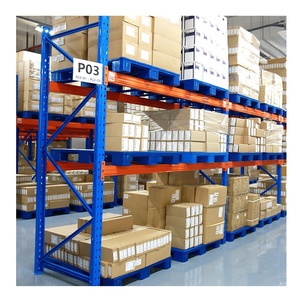
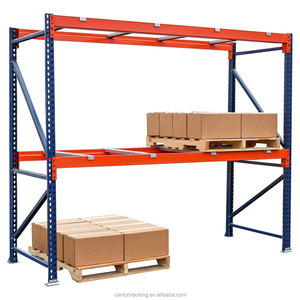
In modern industrial logistics, heavy duty stacking racks (frequently referred to as post pallets, manuracks, or nestable bulk stacking modules) serve as the bridge between standard static racking and block-stacking methodologies. Unlike conventional selective racking anchored to civil concrete slabs, heavy duty stacking racks rely on inverted cup-and-cone interlocking bases or cup-lock corner joints. This dynamic structural framework demands strict metallurgical integrity and tight manufacturing tolerances.
At Guangzhou Heda Shelves Co., Ltd., our heavy duty stacking racks are fabricated utilizing virgin high-tensile Q235B cold-rolled structural steel. For specialized multi-tier installations handling unit capacities beyond 2,500 kg per tier, optional alloy variants using Q355B low-alloy manganese steel provide higher yield strength (yield stress ≥ 355 MPa). By leveraging computer-controlled automatic cold roll forming and automated robotic MIG (Metal Inert Gas) welding cells, our corner posts preserve verticality within an exacting ±0.5 mm tolerance along the entire vertical profile. This eliminates the risk of structural deflection when stacked up to four or five tiers high under full static load conditions.
A frequent failure point among low-tier suppliers is premature surface breakdown resulting from poor de-rusting and cheap painting methods. Industrial warehouses encounter substantial mechanical abrasion from forklift tines, pallet skids, and shifting climatic conditions. HEDA implements an automated 9-stage phosphating, degreasing, and acid-pickling treatment before structural components enter the electrostatic powder-coating booth.
Our electrostatic polymer coating achieves an adhesion thickness between 65 to 90 microns (μm), curing at uniform temperatures between 180°C and 200°C. This industrial finish exceeds ISO 2409 cross-hatch adhesion class 0 standards, delivering supreme resistance against physical scratching, chemical exposure, and humidity. It makes our racks optimal for food distribution, cold chain logistics (-30°C refrigeration), and heavy mechanical foundries alike.
How smart logistics, volatile freight rates, and international seismic standards are transforming the procurement checklist for supply chain executives.
Global sea freight fluctuations demand container optimization. Procurement is shifting towards 100% knock-down, bolt-free demountable post racks that boost shipping container capacity utilization up to 300% compared to rigid welded post units.
As smart warehousing deploys vision-guided forklifts and autonomous heavy AMRs, stacking racks require laser-guided bottom positioning receivers and reflective alignment targets for sub-millimeter robotic docking without manual intervention.
Procurement teams across Latin America, Japan, and Oceania now mandate FEA (Finite Element Analysis) simulation and expanded base foot cups to resist high ground motion acceleration without tier dislodgement during earthquakes.
The industrial stacking rack has evolved from an immovable heavy iron cage to an adaptable, high-precision storage instrument. Modern production integrates modular accessory interfaces, allowing operators to transition an open-base stacking rack into a wire-mesh enclosed box pallet, a tire rack with curved cradle beams, or a textile roll dispenser within minutes. Furthermore, the integration of passive RFID microchips and serialized barcode brackets directly into the stamped base provides real-time digital inventory traceability for automated warehouse management systems (WMS).
Direct engineering accountability, Canton Fair complex proximity, and end-to-end quality validation protocols.
Every industrial project begins with structural CAD layout and 3D stress modeling. Customized post heights, cradle footprints, and reinforced bases are calculated specifically for your site's operational conditions.
Prior to dispatch, our testing center conducts 1.25x to 1.5x static overload verification on stacking corner posts and base cross-members, certifying maximum safety under operational load conditions.
We engineer modular stacking systems with demountable posts and nestable structures that compress spatial transport volume, slashing intermodal sea freight costs to worldwide destinations.
Our dedicated bilingual engineering team provides initial layout evaluations, weight distribution estimates, and budgetary quotations within 8 working hours across all time zones.
Practical engineering and logistics solutions for warehouse operations managers, commercial wholesalers, and industrial contractors.