Warehouse Lighting Series
Highbay US Stock 100 150 200 250 300 400 Watt Led Shop Industrial High Bay Linear Light For Shopp Mall Garage
100W–400W
IP65 Optical Grade
 English
 Español
Custom-fabricated in Pazhou, Guangzhou to withstand rigorous seismic, sub-zero cold storage, and intense material handling workflows. Explore our high-volume industrial inventory configurations below.
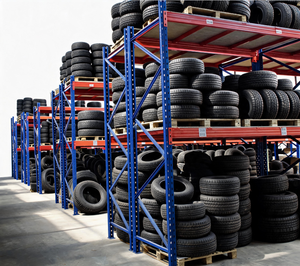
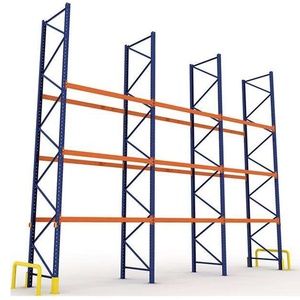
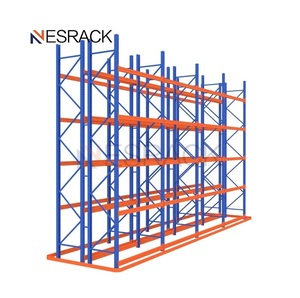
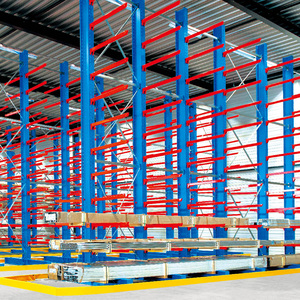
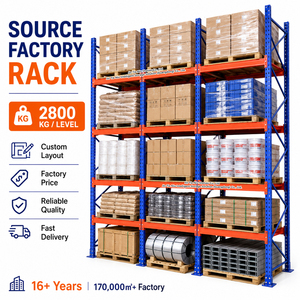
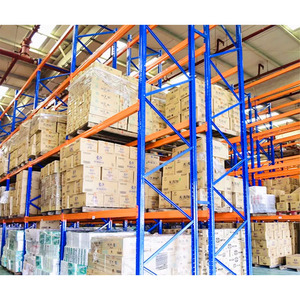
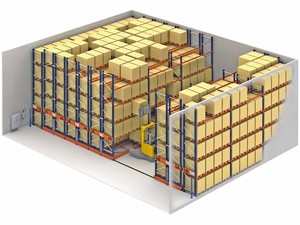
When engineering high-volume logistics infrastructure, the fundamental differentiation between budget storage and institutional-grade industrial racking lies in the metallurgical properties of the steel profiles and finite element structural modeling. As a dedicated China heavy duty structural steel racking factory and exporter, our production lines utilize continuous cold-roll forming of certified Q235B and high-tensile Q355B coil steel. These structural alloys feature yield strengths ranging from 235 MPa to 355 MPa, providing exceptional modulus of elasticity under sustained static and dynamic pallet loadings.
Our upright profiles are perforated via synchronized multi-station mechanical punches, delivering a uniform 50mm or 75mm teardrop and hexagonal pitch. This geometric precision ensures that beam end-connectors (featuring 3 to 5 claw hooks with integrated spring-loaded safety locks) achieve a zero-clearance, interlocking friction grip. Even under accidental upward forklift snagging loads up to 1,000 kg, connection integrity remains 100% stable, eliminating catastrophic dislodgement risks.
| Structural Parameter | Standard Commercial Grade | HEDA Heavy-Duty Structural Spec | Impact on Logistics Operations |
|---|---|---|---|
| Steel Grade Standard | Commercial Q195 / Scrap Mix | Certified Prime Q235B / Q355B | Guaranteed yield limit; prevents micro-buckling under overload conditions. |
| Upright Column Depth | 1.2 mm – 1.5 mm | 1.8 mm, 2.0 mm, 2.5 mm to 3.0 mm | Increases vertical load tolerance up to 24,000 kg per upright bay frame. |
| Surface Protection | Air-sprayed Wet Enamel | Electrostatic Thermoset Polymer (80-120μm) | Resists impact chipping, forklift abrasions, and high-humidity corrosion. |
| Beam Welding Process | Manual Spot Stitching | Automated Robotic Submerged Arc / Dual CO2 | 100% penetration weld along entire box-beam connector bracket. |
| Seismic Footplate Options | Thin Single Anchor Plate | Heavy Reinforced Baseplate with Dual Chem-Anchor | Complies with UBC Zone 4 and Eurocode 8 seismic ground acceleration criteria. |
Moreover, modern logistics requires specialized cold chain adaptations. Operating at temperatures down to -30°C introduces extreme low-temperature brittleness in inferior steels. By sourcing killed carbon structural steel with controlled manganese and silicon concentrations, our cold chain racking systems maintain robust Charpy V-notch impact toughness values, safeguarding refrigeration distribution operations throughout North America, Northern Europe, and Australasia.
Established in 2001 adjacent to the Pazhou Canton Fair Complex in Guangzhou, our integrated manufacturing plant blends two decades of structural design heritage with digital DFM workflows.
Operating since 2001 with more than 5,000 turnkey projects delivered across 130 countries. We bridge mechanical architectural engineering with rapid export execution.
Proprietary component nesting reduces container cube losses by up to 38%. Uprights, beams, and diagonal braces are bundle-strapped with edge guards for ocean transit.
Direct communication with certified structural engineers. Send your warehouse AutoCAD DWG layout, and receive beam deflection reports, 3D renders, and BOM costing in 8 hours.
Zero slag, 7-stage pre-treatment with zirconium passivation and electrostatic cure creates a weather-resistant finish.
Engineered baseplates, back-to-back ties, and cross-bracing certified for dynamic seismic acceleration in earthquake zones.
Full destructive batch testing, weld ultrasonic examination, and raw mill material MTC sheets accompany every export container.
Located next to the Canton Fair Complex. International procurement agents can audit production lines and review 1:1 scale mockups.
Industrial warehousing is undergoing an aggressive structural shift driven by urbanization, skyrocketing industrial land costs, and the convergence of robotics with racking hardware. As supply chain directors plan multi-million-dollar capital investments for 2025–2030, procurement strategy must anticipate three transformative trends:
Traditional selective racking with 3.5-meter forklift aisles is rapidly giving way to 4-way radio shuttle lanes and automated storage and retrieval systems (ASRS). Structural steel racks must now be built with deflection tolerances under 1.5mm to allow automated optical guide shuttles to run without jamming.
Global logistics REITs and multinational corporations now evaluate suppliers on embodied carbon. Procurement criteria prioritize factories utilizing Electric Arc Furnace (EAF) recycled scrap steel, low-VOC closed-loop powder recovery systems, and recyclable knocked-down steel transport pallets.
Forward-thinking supply chain operators are embedding wireless strain gauge sensors and impact telemetry into critical upright columns. Racking frames are mapped to 3D Building Information Modeling (BIM) digital twins to warn maintenance teams of forklift collision damage in real time.
For international buyers, moving from standard commercial catalog procurement to bespoke engineering specifications is critical. Factoring in Total Cost of Ownership (TCO)—which accounts for floor space yield, installation downtime, freight density, and structural longevity—proves that precision-engineered Q235B/Q355B structural systems deliver significantly higher return on investment over a 15-year facility lifecycle.
Detailed technical, regulatory, and logistics answers compiled directly from our structural engineering and export departments.
Connect directly with our export engineering desk in Guangzhou. Share your warehouse floor dimensions, ceiling clearance, and pallet specifications to receive full CAD layouts, structural calculations, and competitive FOB/CIF quotation within 8 hours.