HEDAHeavy Duty Racking
 English
 Español
EnglishEspañolCustom fabricated by Guangzhou Heda Shelves Co., Ltd. utilizing structural Q235B steel, modular nested cart designs, and advanced electrostatic powder-coat finishes rated up to 4,500 kg per level.
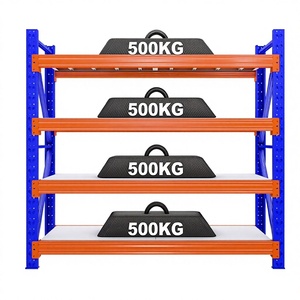
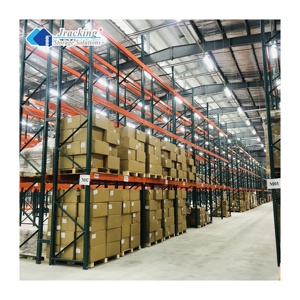
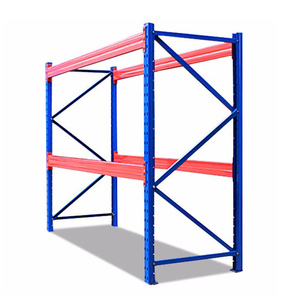
In modern high-throughput intralogistics, space productivity and storage density dictate operational profitability. Industrial warehouse operators are constantly challenged by the trade-off between the high accessibility of pure selective racking and the floor-utilization efficiency of deep-storage configurations. As a leading China rack push back manufacturer and direct factory, Guangzhou Heda Shelves Co., Ltd. provides high-density dynamic storage architectures that bridge this operational gap through precision nested cart mechanical engineering.
Push back racking operates on a dynamic Last-In, First-Out (LIFO) material handling principle. Unlike drive-in racking systems—which require material handling equipment (such as counterbalance or reach trucks) to physically traverse inside storage lanes—a push back system utilizes a series of nested, telescoping steel carts moving along inclined structural steel channel rails. When an inbound pallet is loaded by a forklift, it rests securely on the outermost nested cart. As the next pallet arrives, the forklift operator uses the incoming unit load to gently push the previous cart back along the track incline (typically graded between 1.5% and 2.5%), uncovering the subsequent nested cart underneath. This engineering eliminates equipment incursions into the rack depth, drastically lowering column collision hazards, protecting structural integrity, and compressing handling cycles by up to 40% compared to traditional drive-in setups.
Engineering Core Insight: A push back racking installation increases warehouse floor footprint utilization by 50% to 75% compared to selective pallet configurations, all while preserving multi-lane SKU selectivity across individual vertical levels and lane bays without aisle expansion.
Dynamic push back performance hinges entirely on cold-formed metallurgy, bearing performance, and rail inclination calculus. At HEDA Racking, every structural beam, column upright, and rolling carriage is fabricated using high-yield Q235B cold-rolled structural steel. Structural rigidity is verified using finite element stress analysis (FEA) to ensure zero deflection under maximum load limits reaching up to 1,500 kg per pallet cart, spanning up to 6 pallets deep.
Selecting the ideal dense storage solution requires evaluating cycle speed, SKU multiplicity, operational forklift requirements, and capital expense amortizations. The following engineering matrix highlights how push back configurations compare against competing high-density frameworks:
| System Parameter | Push Back Racking | Selective Pallet Rack | Drive-In Racking | Radio Shuttle Racking |
|---|---|---|---|---|
| Inventory Flow | LIFO (Last-In, First-Out) | FIFO / LIFO Access | Strict LIFO | FIFO or LIFO Selectable |
| Storage Density | High (Up to 6 Deep per Bay) | Low (Single / Double Deep) | Very High (Up to 10+ Deep) | Maximum (Up to 30+ Deep) |
| Lane Selectivity | 100% per Lane Face | 100% Total Pallet Access | Low (Entire Bay per SKU) | High per Rail Level |
| Forklift Penetration | None (Operates in Aisle) | None (Aisle Access) | High (Drives Inside Rack) | None (Automated Shuttle) |
| Structural Risk Index | Extremely Low | Low | High (Mast Collision Risk) | Low (Requires Battery Maintenance) |
| Loading Speed | Fast (Continuous Cycle) | Standard | Slow (Internal Navigation) | Semi-Automated High Speed |
Global industrial supply chains are transitioning toward automated synergy, cold-chain resilience, and standardized safety compliance.
Global buyers increasingly prioritize knock-down modular components over pre-welded sections. By packaging nested carts and upright frames in compact bundles, container loading efficiency jumps up to 40%, directly offsetting volatile transoceanic freight rates while facilitating faster on-site assembly.
Cross-border logistics hubs across earthquake-prone jurisdictions (such as the Americas and the Pacific Rim) require seismic engineering verification. Procurement teams demand expanded floor load footings, enhanced base plates, and heavy-duty frame bracings certified to withstand seismic acceleration shears.
Procuring straight off physical catalogs is obsolete. Modern supply chains demand verified structural load certifications, complete 3D warehouse simulations, and forklift turning radius clearances delivered before production begins to prevent costly retrofit errors in the warehouse.
How advanced metallurgical treatments, hybrid cold-chain capabilities, and hybrid automation integrate into modern dense storage.
Cold storage facilities (-25°C to -30°C) suffer high condensation and grease viscosity failures. Modern push back development incorporates synthetic low-temperature lubricants and stainless steel encased sealed bearings that prevent cart freezing and stick-slip motion in cold logistics.
As automated guided vehicles (AGVs) take over pallet movements, push back systems are engineered with optical laser reflectors and precision funnel alignment guides at the pick face. This enables driverless AGVs to gently push carts without human micro-adjustments or mast shocks.
Industrial durability requires advanced steel pre-treatment. Automated high-pressure degreasing, multi-stage phosphate baths, and upgraded electrostatic epoxy powder curing eliminate welding slag and pinhole micro-voids, providing corrosion and impact protection across corrosive facilities.
Based in Pazhou, Guangzhou, next to the Canton Fair Complex, HEDA delivers end-to-end manufacturing and engineering support for global logistics distributors and warehouse developers.
Over 20+ years of deep engineering and continuous manufacturing history across five continents.
Every beam, upright, and nested cart undergoes load-deflection and welding integrity checks before export.
Our multilingual export sales engineers deliver technical feasibility reviews and quotes within 8 hours.
Pallet, cantilever, radio shuttle, mezzanine floors, push back, and retail supermarket solutions under one roof.
Bespoke cart depths, seismic base plates, specialized powder coat RAL branding, and OEM/ODM readiness.
Everything international project managers, logistics consultants, and distribution contractors need to know.
Our push back systems are custom engineered to handle pallet weights from 500 kg up to 1,500 kg per pallet position. Standard designs accommodate 2, 3, 4, 5, and 6-deep configurations per bay. Structural column heights and beam sections are calculated based on your clear ceiling height and forklift mast limits.
Precision rail slope calculus (typically 1.5% to 2.0%) combined with high-grade sealed wheel bearings governs cart descent. The mechanical slope ensures that once the front pallet is retrieved, remaining carts move forward at a controlled pace. Heavy-duty mechanical safety stops at the front face halt the cart securely.
Yes. This is a primary mechanical advantage over pallet flow (roller) systems. In a push back rack, the pallet rests solidly on a structural welded steel cart frame rather than on small rollers. As long as the pallet does not exceed the cart perimeter dimensions and load limits, minor board damage or deflection does not cause lane jams.
All structural components—including uprights, box beams, and nested cart frames—are formed from certified high-tensile Q235B cold-rolled steel. Every component passes through automatic degreasing and phosphating lines before electrostatic epoxy polyester powder-coating, producing a durable, slag-free finish.
No. Standard counterbalance forklifts, reach trucks, and deep-reach trucks can service push back racks without specialized attachments. Because the forklift never drives inside the rack bays, standard mast widths and tire profiles are fully compatible with normal aisle clearances.
All nested carts, tracks, and upright components are built as modular knock-down units. Dynamic carts and precision wheel assemblies are securely crated and steel-strapped with protective corner boards. Upright frames and beams are nested to eliminate transit rubbing and maximize container cubing.