HEDAHeavy Duty Racking
 English
 Español
EnglishEspañolEngineered structural pallet rack configurations direct from our 3,000m² manufacturing facility, designed for seamless compatibility with reach trucks, double-deep pantographs, and automated shuttle systems.
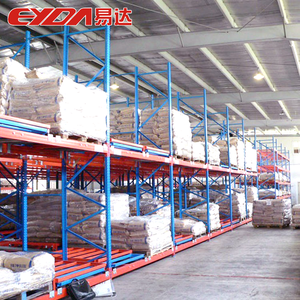
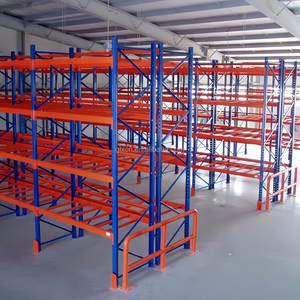
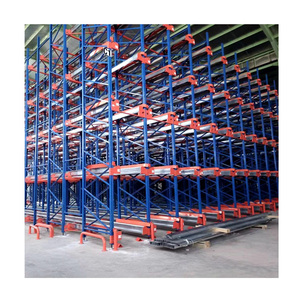
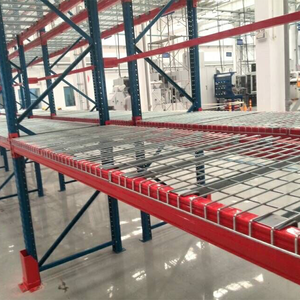
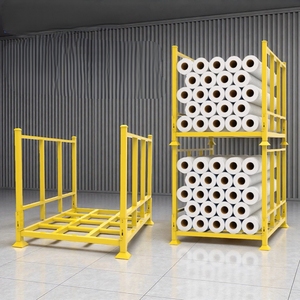
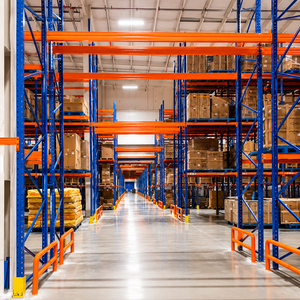
A rigorous structural analysis detailing how double-deep configurations achieve a 50% increase in storage volume over standard selective racking while maintaining optimal picking speed and forklift cycle times.
Industrial double deep racking stores pallets two positions deep in a four-rack back-to-back layout, effectively eliminating two out of every five access aisles required by traditional selective pallet racking systems. This engineering topology strikes a calculated equilibrium between high-density compact storage (approaching drive-in capabilities) and operational SKU selectivity (maintaining 50% immediate pallet access). However, deployment requires specialized material handling equipment—specifically specialized reach trucks equipped with dual-pantograph scissor mechanisms or telescopic reach forks.
Our upright columns are roll-formed from premium certified Q235B structural grade steel, featuring 75mm or 50mm pitch adjustability. Beam sections utilize continuous automatic twin-C seam welding technology, mitigating micro-cracking risks under dynamic cyclic loadings in ambient, refrigerated, or deep-freeze cold storage settings.
| Racking Topology | Floor Footprint Utilization | Direct Selectivity | Forklift Compatibility | Relative Pallet Position Cost |
|---|---|---|---|---|
| Standard Selective Pallet Racking | 40% – 45% | 100% Immediate | Standard Counterbalance / Reach | Baseline 1.0x |
| Double Deep Industrial Racking | 60% – 68% | 50% Direct (FILO Pairs) | Pantograph Reach / Telescopic Fork | 1.15x – 1.25x (High ROI) |
| Drive-In / Drive-Through Systems | 70% – 80% | 10% – 15% (Batch Strict LIFO) | Standard Narrow Counterbalance | 1.30x – 1.45x |
| Automated Radio Shuttle Racking | 80% – 88% | Automated Batch Selectivity | Standard Forklift + Radio Pallet Runner | 2.20x – 3.00x |
Data-driven logistics operations require racking systems that bridge traditional structural steel durability with intelligent real-time IoT integration and seismic sustainability.
Global pharmaceutical and frozen food cold chains face escalating cubic refrigeration costs. Double deep racking maximizes refrigerated cubic storage by 30% compared to single selective systems without demanding the excessive capital expenditure of fully automated robotic AS/RS installations.
Modern procurement directors are deploying double deep systems paired with intelligent warehouse management system (WMS) slotting algorithms. Fast-moving SKUs are paired sequentially to virtually eradicate double-handling inefficiencies common in historical legacy operations.
Global importers are shifting from initial unit-cost acquisition toward lifetime structural resilience. High-durability thermosetting epoxy-polyester electrostatic powder coating (tested to ASTM B117 salt spray ratings) is now a decisive requirement to mitigate abrasion and warehouse humidity corrosion.
How metallurgical advancements, hybrid automation retrofitting, and seismic finite element simulation are reshaping the next generation of industrial racking.
Next-generation double deep configurations feature precision laser target locators and floor-level magnetic guide rails. This enables autonomous reach forklifts (AMRs) to navigate aisles with millimeter accuracy, removing operator blind spots during rear-slot pallet placement.
With high seismic activity across the Pacific Rim, modern double deep structures incorporate oversized engineered footplates, heavy-gauge base anchorages, and horizontal portal bracings designed to absorb cyclical seismic energy without progressive catastrophic structural failure.
By moving toward micro-alloyed structural steels, engineers can down-gauge dead rack weight while boosting torsional rigidity. This reduces containerized shipping weights, cuts ocean logistics carbon footprints, and delivers a higher strength-to-weight structural profile.
Founded in 2001 in Pazhou, Guangzhou, Heda Shelves combines 20+ years of structural steel engineering with turn-key export logistics, delivering factory-direct integrity across 5,000+ completed projects worldwide.
Established in 2001 with 5,000+ global warehouse and retail projects successfully completed.
Double deep, drive-in, radio shuttle, cantilever, mezzanine, and complete supermarket equipment.
Precise beam lengths, height calculations, multi-tier levels, powder coating RAL colors, and OEM branding.
Certified Q235B cold-rolled steel, non-slag continuous welding, and rigorous certified physical load testing.
Dedicated bilingual engineering sales staff providing turnkey CAD layout solutions within 8 hours.
Detailed technical, engineering, and logistics answers compiled by our senior structural team to de-risk high-bay pallet racking project specifications.
Double deep racking requires specialized material handling trucks equipped with deep-reach attachments. Common configurations include pantograph-style reach trucks (utilizing a scissor-action reach mechanism) or reach trucks fitted with hydraulic telescopic forks. Operators frequently rely on fork-mounted wireless cameras and laser height indicators when handling upper levels exceeding 6,000 mm to ensure safe, damage-free rear pallet placement.
Double deep systems operate under a First-In, Last-Out (FILO) logic for each pair of pallet positions. If the front pallet contains a different SKU or production batch, it must be staged temporarily to access the rear pallet. For warehouses operating with 2 to 4 pallets per SKU, consolidated inventory batches, or standardized cold storage distribution, this trade-off is minor compared to gaining 50% more floor storage capacity.
Standard beam levels are engineered for safe working loads ranging from 1,000 kg up to 4,500 kg per pair, custom-matched to your pallet configurations. Guangzhou Heda Shelves manufactures roll-formed step beams and box beams from high-yield Q235B steel. Every system includes safety locking pins per connector and conforms to international deflection standards (typically L/200 or L/250).
Yes. Our engineering division produces full structural CAD layout drawings and 3D architectural renderings before manufacturing begins. We analyze your floor plan, column grid spacings, ceiling clear heights, sprinkler clearances, and floor slab load-bearing capacities to optimize aisle widths and pick efficiency.
All structural uprights and beams undergo a multi-stage pre-treatment wash (degreasing, acid pickling, and phosphating) followed by an upgraded electrostatic thermosetting epoxy-polyester powder coat baked at 180°C. For sub-zero blast freezers down to -30°C or high-moisture facilities, we provide specialized cold-resistant powder formulations or hot-dip galvanized finishes for lasting corrosion protection.
Components are manufactured in a knockdown modular configuration. Upright frames can be shipped flat-packed or pre-assembled based on container utilization goals. Upright bundles and beams are wrapped with corrugated board, heavy-gauge protective plastic strapping, and corner guards to eliminate metal-on-metal friction. This space-efficient packing maximizes 40ft High Cube container cube volume to minimize international ocean freight costs.