HEDAHeavy Duty Racking
 English
 Español
EnglishEspañolDirect factory supply from Guangzhou Heda Shelves Co., Ltd. Every system is finite-element analyzed, cold-roll formed, and calibrated to international FEM, EN 15512, and RMI standards.
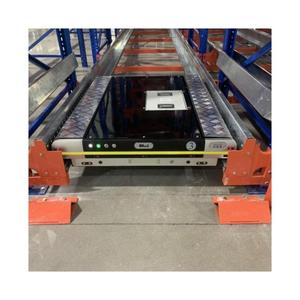
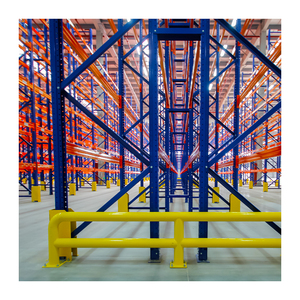
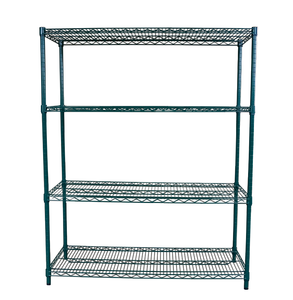
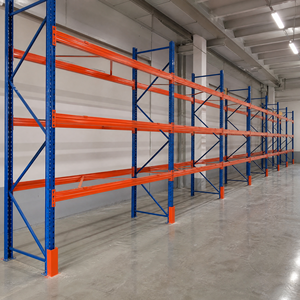
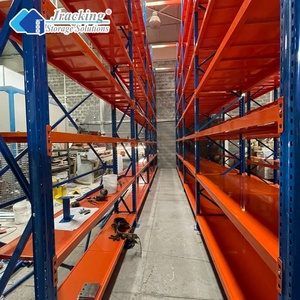
In modern industrial logistics, warehouse floor space represents one of the most critical operational expenditures. Industrial drive-in pallet racking systems—engineered with high-precision cold-rolled steel profiles—provide the optimal structural solution for facilities handling homogeneous inventory with low SKU differentiation and massive batch volumes. By eliminating operating aisles required by traditional selective pallet racks, a properly configured drive-in or drive-through array elevates warehouse floor area utilization to 75%–85%, cutting cubic footprint overheads dramatically.
As a leading Chinese supplier and exporter, Guangzhou Heda Shelves Co., Ltd. applies rigorous structural engineering standards to drive-in frameworks. Unlike standard selective racking where loads rest on horizontal cross beams connecting vertical columns, drive-in systems operate on continuous cantilevered load rails running along the storage lane depth. Pallets rest on these side brackets. Forklift trucks drive directly into the racking cubes to deposit or retrieve unit loads. This unique cantilevered rail architecture induces substantial horizontal lateral forces and torsional stress on the upright frames, demanding advanced structural stabilization mechanics.
To resist dynamic lateral impact and the cumulative gravitational forces of deep-lane multi-tier storage (typically 3 to 7 tiers high and 4 to 12 pallets deep), Heda utilizes cold-rolled structural steels compliant with Chinese Q235B and high-yield Q355B standards (equivalent to European S235JR and S355JR under EN 10025). The structural ecosystem consists of five synchronized sub-assemblies:
Fabricated in 90x70mm, 100x70mm, and 120x95mm cross-sections with material gauges ranging from 1.8mm to 2.5mm. Multi-bend cold roll forming generates continuous stiffening ribs that withstand critical axial buckling under loads exceeding 15,000 kg per upright bay.
Heavy-duty cantilever arms stamped from 3.0mm–4.5mm steel plates hook securely into upright slots without bolt shearing vulnerability. Designed with a forward-tapered entry geometry to guide forklift pallets smoothly onto horizontal resting surfaces.
Because inner forklift aisles lack longitudinal cross-beams, frame stiffness is secured via robust top transverse portal beams and rear diagonal cross-bracing. In drive-through formats, structural stability is maintained through reinforced overhead portal ties.
When engineering high-volume logistics centers, facility managers must benchmark Drive-In systems against alternative high-density architectures such as Radio Shuttle, Push-Back, and Gravity Flow systems. The comparative metrics below highlight the trade-offs in investment density, operational throughput, and capital expenditure (CAPEX):
| Storage System Type | Space Utilization | Inventory Protocol | SKU Selectivity | CAPEX per Pallet | Forklift Entry Required |
|---|---|---|---|---|---|
| Drive-In Racking | 75% – 85% | LIFO (Last-In, First-Out) | Low (Bulk Homogeneous) | Low to Moderate ($) | Yes (Enters Lane) |
| Drive-Through Racking | 70% – 80% | FIFO (First-In, First-Out) | Moderate (Dual Access) | Moderate ($$) | Yes (Enters Both Ends) |
| Radio Shuttle Racking | 80% – 90% | LIFO & FIFO Automated | High per Lane | Moderate to High ($$$) | No (Shuttle Cart Operates) |
| Push-Back Racking | 65% – 75% | LIFO (Gravity Cart) | Moderate (2–6 Deep) | Moderate ($$) | No (Aisle Accessible) |
| Standard Selective Rack | 40% – 50% | 100% Random Access | Maximum (Every SKU) | Lowest ($) | No (Aisle Accessible) |
The global industrial warehouse landscape is experiencing rapid modernization. Driven by astronomical land valuations, energy conservation mandates in cold storage, and the pervasive rollout of automated guided vehicles (AGVs), the requirements for sourcing drive-in and high-density pallet racking from China are shifting. Overseas engineering contractors and procurement directors are no longer purchasing raw steel frames; they are securing comprehensive, life-cycle-guaranteed intralogistics infrastructure.
Procurement teams increasingly specify dual-purpose rail profiles capable of supporting manual forklift drive-in operations today while offering drop-in compatibility for semi-automated 4-way radio shuttles tomorrow. This brownfield upgradability prevents future capital obsolescence as automation costs decline.
With sub-zero energy tariffs surging, drive-in systems remain the gold standard in deep-freeze facilities (-25°C to -30°C). Upcoming procurement demands hot-dip galvanized finishes (>65µm zinc thickness) and high-impact structural ductile steel variants that prevent brittle-fracture failure under severe cryogenic stress.
International building codes across earthquake-prone jurisdictions (such as the Pacific Rim, Latin America, and Southern Europe) require supplier-certified seismic calculation sheets. Procurement contracts mandate non-linear pushover FEA modeling, extended heavy-duty baseplates, and high-tensile anchor assemblies.
Beyond metallurgical specifications, international buyers are prioritizing suppliers who guarantee reduced ocean-freight footprints. Heda's knock-down modular engineering allows complete deconstruction of upright frames, support rails, and tie-bars. By optimizing component packing densities inside 40ft High Cube containers, international logistics managers realize a 20% to 35% reduction in maritime freight costs per pallet location. Combined with certified electrostatic powder coating lines that resist salt-mist degradation across 500 hours of ASTM B117 testing, Chinese manufacturing continues to solidify its competitive advantage in heavy-duty logistics infrastructure.
Established in 2001 in Pazhou, Guangzhou—directly adjacent to the renowned Canton Fair Complex—Guangzhou Heda Shelves Co., Ltd. has spent over two decades engineering, manufacturing, and commissioning warehouse storage racks, heavy-duty mezzanine floors, cantilever systems, and automated racking solutions. With more than 5,000 projects completed across Southeast Asia, Europe, the Americas, Africa, and Oceania, our integrated production lines deliver factory-direct engineering integrity.
Over two decades of precision manufacturing with deep engineering competence in international FEM and RMI racking design standards.
One-stop supply covering drive-in, radio shuttle, cantilever, multi-tier mezzanine floors, and steel pallet containment systems.
Fully bespoke column profiles, bracket lengths, electrostatic powder shades, and custom beam calculations verified by 3D CAD modeling.
Dedicated international export engineers analyze warehouse drawings, CAD plans, and project RFPs within 8 business hours.
Quality control at Heda is embedded directly into our production workflow. From optical spectrometer chemical verification of raw cold-rolled steel coils to automated multi-stage pre-treatment phosphating lines and electrostatic epoxy powder-coating booths, each production run undergoes strict visual, dimensional, and loading validation. Weld seams undergo ultrasonic testing to prevent micro-fissuring, ensuring structural stability under cyclical dynamic forklift impacts.
Key technical, structural, and commercial inquiries addressed by Heda's senior structural engineers for international procurement officers and warehouse operations directors.
Because forklift trucks physically enter the storage lanes, clearance tolerances are critical. Standard international design standards (such as FEM 10.2.07) require a minimum nominal clearance of 75mm to 100mm between each side of the forklift chassis/load and the pallet support rails. Ground floor guide rails (typically 100x75x6mm hot-rolled steel angles or heavy circular steel tubes bolted to the concrete floor) are strongly advised to physically guide forklift operators and prevent accidental collisions with upright columns.
Traditional Drive-In racking operates on a LIFO (Last-In, First-Out) principle because it possesses a single entrance/exit point per lane. However, if your warehouse configuration permits a Drive-Through configuration with dedicated entry and exit aisles at opposite ends, true FIFO logistics flow can be realized. Note that Drive-Through configurations eliminate rear structural vertical X-bracing, necessitating top overhead portal frames to maintain systemic structural equilibrium.
While Drive-In systems can theoretically reach heights of 11 to 12 meters, operational safety and driver visibility typically optimize between 6 meters and 9 meters (equivalent to 4 to 5 pallet tiers). For lane depth, 5 to 8 pallets deep is standard for LIFO operations. Exceeding 10 pallets deep increases the cycle time of the forklift driver inside the structure and elevates collision risks, at which point an automated Radio Shuttle Racking System becomes significantly more cost-effective.
Drive-In uprights transmit high concentrated point loads to the warehouse concrete slab due to the absence of mid-span floor beams. Concrete slabs must exhibit a minimum compressive strength of 25–30 N/mm² (C25/30) and a minimum floor thickness of 180mm–250mm depending on total bay weights. Floor flatness must comply with DIN 18202 Table 3 Line 3 or ASTM E1155 F-min 50 standards to avoid forklift tilt at elevated mast lift heights.
To mitigate forklift impact risks, Heda equips every drive-in installation with multi-layered protective accessories. These include heavy-duty U-shaped upright column protectors formed from 5.0mm structural steel, heavy floor-mounted continuous guiding angles running the length of the lane, reinforced bull-nose entry guides at the lane mouth, and double-anchored corner bollards at aisle intersections.
All upright frames are pre-assembled or flat-packed as knock-down units depending on container space economics. Pallet rails, tie beams, and bracing members are bundled with non-slip steel strapping, cushioned by corrugated buffer sheets, and secured with corner edge protectors to eliminate transit abrasion. Hardware components (bolts, anchor pins, levelling shims, clips) are vacuum-packed in waterproof wooden crates with desiccant packs to prevent maritime moisture corrosion.