HEDAHeavy Duty Racking
 English
 Español
EnglishEspañolDirect-from-factory racking systems manufactured with Q235B high-tensile cold-rolled steel, compliant with European FEM 10.2.02, American RMI MH16.1, and AS4084-2023 international load standards.
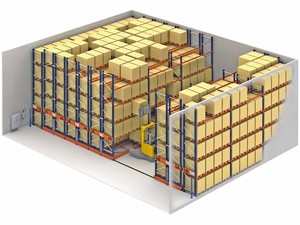
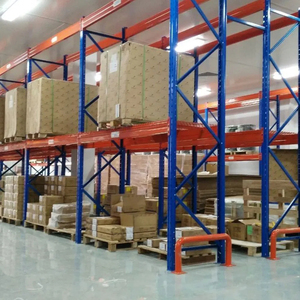
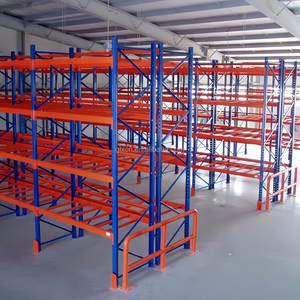
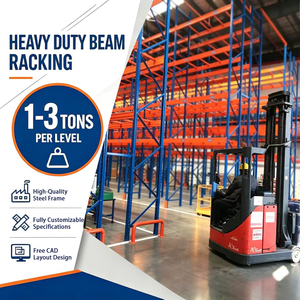
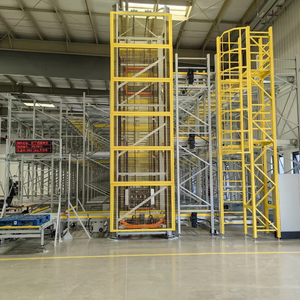
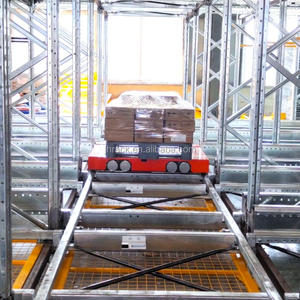
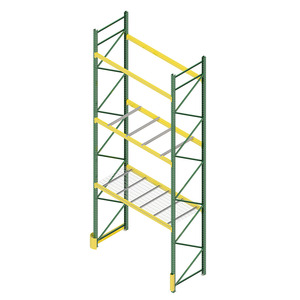
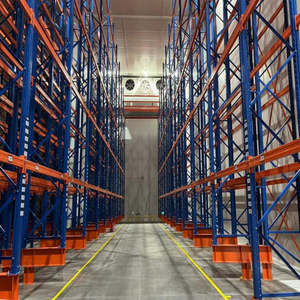
In the contemporary supply chain environment, international distribution centers, 3PL logistics hubs, and cold-chain fulfillment operations require structural racking systems that merge maximum cube utilization with absolute mechanical safety. Sourcing directly from an established China wholesale pallet rack systems manufacturer & exporter offers significant economies of scale, yet successful enterprise procurement demands a rigorous understanding of structural metallurgic integrity, dynamic seismic calculations, automated manufacturing tolerances, and international compliance standards including FEM 10.2.02, EN 15512, and ANSI/RMI MH16.1.
At Guangzhou Heda Shelves Co., Ltd. (HEDA Racking), our manufacturing philosophy is rooted in engineering calculation rather than generic catalog distribution. From our specialized industrial base situated in Guangzhou—adjacent to the China Import and Export Fair (Canton Fair) Complex—our engineering team calculates bending moments, shear stresses, and column buckling safety coefficients based upon real pallet load specs, clear floor heights, mast tolerances, and local seismic acceleration zones. Utilizing high-tensile hot-rolled strip steel slitted and precision cold-rolled into Q235B and Q355B profiles, our upright frames and box beams undergo continuous mechanical testing to mitigate risk across high-bay applications ranging from standard selective pallet racks up to 30-meter high automated storage systems.
A five-pillar industrial execution model designed to de-risk high-volume overseas steel pallet racking procurement.
Over 20 continuous years dedicated exclusively to heavy-duty storage racking, retail shelving, and integrated logistics equipment fabrication since 2001.
One-stop manufacturing covering selective racks, 4-way shuttles, electric mobile racking, cantilever, drive-in, mezzanine floors, and steel storage cages.
Tailored upright punch patterns (diamond, teardrop, hex), bespoke steel gauges, seismic footplates, and custom electrostatic powder-coat color codes.
Continuous spectrometer raw steel analysis, tensile yield checks, weld seam non-destructive inspection, and complete mock-up physical load verification.
Direct technical collaboration with dedicated bilingual export structural engineers, providing preliminary 2D warehouse cad designs and pricing within 8 hours.
Selecting the appropriate heavy-duty racking archetype requires balancing storage density against pallet selectivity, handling velocity, and total installed structural cost.
| Racking Architecture | Pallet Selectivity | Space Efficiency | Typical Max Load / Level | Standard Steel Grade | Forklift Compatibility | Best Application Scenarios |
|---|---|---|---|---|---|---|
| Selective Pallet Racking | 100% Immediate | Moderate (35–40% Cube) | Up to 4,500 kg | Q235B Cold Rolled | Standard Counterbalance / Reach | Multi-SKU Distribution, FMCG, Spare Parts |
| Double Deep Racking | 50% (2 Pallets Deep) | High (55–60% Cube) | Up to 3,000 kg | Q235B / Q355B | Deep-Reach Pantograph Truck | Medium SKU, Dry Grocery, Staged Buffer |
| Narrow Aisle (VNA) | 100% Immediate | Very High (65–70% Cube) | Up to 4,000 kg | Q235B Cold Rolled | VNA Turret Truck / Wire Guided | High-Ceiling Logistics, E-commerce, Pharma |
| Electric Mobile Racking | 100% (Dynamic) | Extreme (80–85% Cube) | Up to 36,000 kg / Bank | Structural Channel + Q235B | Standard Counterbalance / Reach | Cold Storage Facilities, High-Value Archives |
| 4-Way Pallet Shuttle AS/RS | FIFO / LIFO Automated | Maximum (85–90% Cube) | Up to 1,500 kg / Shuttle | Precision Laser Q355B Track | Autonomous Robot + Hoist Elevator | Mega Fulfillment Centers, Frozen Logistics |
Send your warehouse architectural drawings (DWG/PDF), floor slab concrete specs, and pallet dimensions. Our structural engineers produce 2D layouts and comprehensive quotation packages within 8 hours.
How material science, automation readiness, and international cold chain expansion are transforming global wholesale storage purchases.
Global warehouse operators are pivoting away from purely static drive-in racks toward automated 4-way pallet shuttle systems. By integrating precision cold-formed guide rails directly into heavy-duty upright frames, facilities eliminate forklift mast collisions inside deep channels, accelerating cycle times while slashing worker safety liabilities in high-density facilities.
As frozen food delivery, biopharmaceuticals, and refrigerated logistics encounter soaring operational energy expenses, facilities are mandating high-cube electric mobile racking and automated compact shuttle solutions. These systems reduce refrigerated air volume waste by up to 50%, guaranteeing structural steel ductility and impact toughness at continuous -30°C conditions.
Importers across seismic hazard zones—such as the Pacific Rim, Latin America, and Southern Europe—are elevating structural compliance mandates. Procurement specifications now routinely require verified finite element analysis (FEA) under dynamic horizontal loading, oversized floor anchorage plates, cross-diagonal back-bracing systems, and certified drop-pin shear capacities.
Escalating industrial land costs have positioned multi-tier shelving-supported mezzanines and heavy-duty structural I-beam platforms at the forefront of supply chain retrofits. Enterprise clients are combining ground-level heavy pallet palletizing with upper-level e-commerce piece picking, utilizing steel bar grating decks rated for 800 to 1,000 kg/m² uniform distributed loads.
Global sustainability mandates have rendered obsolete traditional volatile organic solvent paints. Leading Chinese exporters now exclusively operate automated continuous pretreatment washing stations followed by heavy metal-free thermosetting epoxy-polyester powder coating lines. This delivers a uniform 60–80 micron thickness without welding slag, pinholes, or hazardous emissions.
Ocean freight volatility requires clever structural knock-down engineering. High-volume exporters utilize modular bolted upright truss configurations rather than fully welded frames. This engineering adjustment expands container packing volume by 35–45%, directly cutting ocean transit expenditures per pallet position for overseas wholesale distributors.
An unvarnished engineering look at how upright profile forming, roll forming beam geometry, and load-safety ratios prevent warehouse rack catastrophic failures.
The structural integrity of any industrial storage warehouse begins with the metallurgic consistency of raw coils. High-grade Chinese wholesale pallet racks are manufactured primarily from Q235B and Q355B low-carbon structural steel. Q235B delivers a nominal yield strength of 235 MPa with excellent elongation ductility (≥26%), making it the premier material for roll-forming complex multi-bend upright sections without inducing micro-fractures along cold-worked bend radiuses. For ultra-high-bay systems exceeding 12 meters, Q355B alloy steel is deployed to sustain higher vertical buckling stresses without necessitating prohibitive increases in column profile deadweight.
A critical differentiator in factory capability lies in roll-forming equipment precision. At HEDA Racking, upright columns are profiled through a continuous 24-station automated cold-roll forming line with an automatic punching die pitch controlled to within ±0.1mm tolerance. Upright punch designs (such as teardrop patterns for the North American market, or diamond/hexagonal configurations for European and Australian standards) permit continuous vertical beam pitch adjustments at 50mm or 75mm increments. When paired with heavy-duty boxed step beams manufactured by seam-welding dual C-profiles together, the resulting composite section modulus ($W_x$) guarantees that beam deflections under maximum safe working load (SWL) strictly remain below the international allowable limit of L/200 (deflection ≤ 1/200th of clear span length).
Surface preparation represents the final defense against environmental degradation. Components pass through automated five-stage pre-treatment chemical tunnels encompassing degreasing, water rinsing, acid rust stripping, phosphate passivation, and demineralized rinsing before entering the electrostatic powder application chamber. Cured in curing ovens at 180°C to 200°C, the thermosetting epoxy coating achieves superior hardness (≥2H pencil test), zero peeling during cross-cut adhesion testing (ISO Class 0 / ASTM D3359 Method B), and salt-spray resistance exceeding 500 hours, ensuring durability in high-humidity tropical and coastal ports.
Practical technical, logistics, compliance, and custom ordering insights answered by export structural engineers.
Whether you are designing a greenfield logistics center, retrofitting an existing warehouse with high-density automated shuttles, or sourcing wholesale containers for local distribution, our team of certified structural engineers is ready to assist.