HEDAHeavy Duty Racking
 English
 Español
EnglishEspañolDirect-from-factory rack frameworks engineered for high volumetric density, extreme live-load tolerances, and smooth integration with reach trucks, VNA systems, and automated stacker cranes.
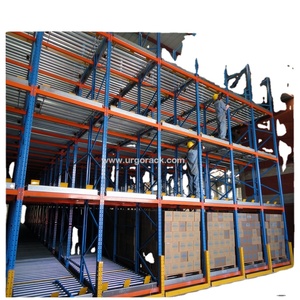
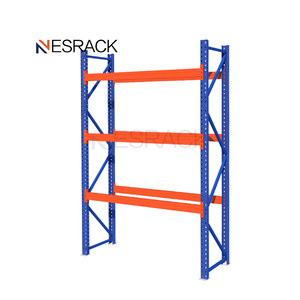
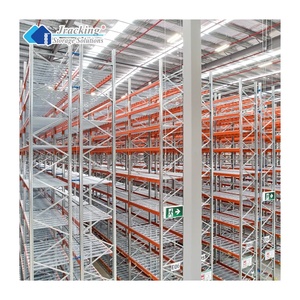
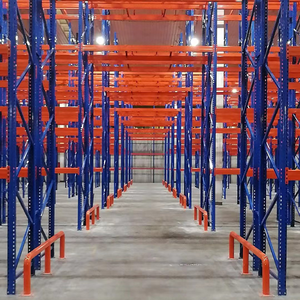
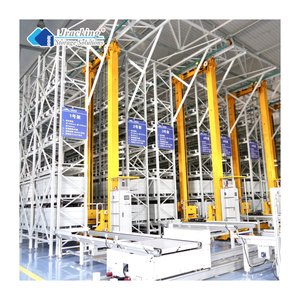
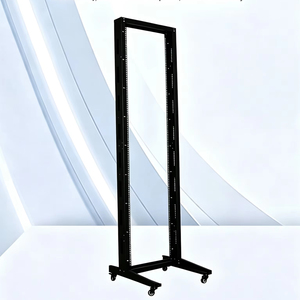
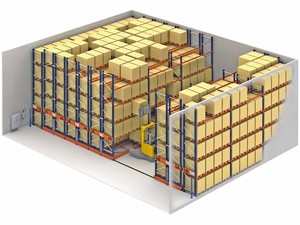
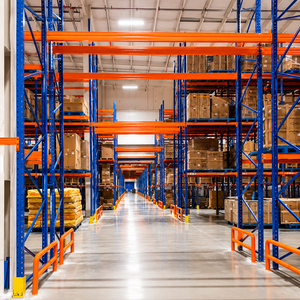
We mitigate procurement risks for general contractors, logistics operators, and regional racking distributors through precision metallurgy, standardized fabrication, and strict international compliance.
We never substitute substandard coil sheet. Uprights, box-beams, and braces are profiled exclusively from prime cold-rolled steel certified with mill test certificates (MTC) ensuring specified tensile yield strength and ultimate elongation under severe stress cycles.
Every high-bay bay elevation is mathematically verified by our in-house engineering team. We supply full layout schematics, static loading calculations, frame stability simulations, and 3D renderings mapped to your specific forklift turning radius and mast clearances.
For high-risk zones across South America, Oceania, and Southern Europe, our systems feature widened heavy baseplates, double anchor stud arrangements, and heavy-gauge diagonal K-bracing designed to dissipate dynamic harmonic energy during seismic events.
Automated phosphating and multi-stage ultrasonic degreasing precede a robotic electrostatic thermoset epoxy-polyester coating. Tested to withstand up to 500 hours of continuous salt-spray exposure without flaking, bubbling, or weld-joint oxidization.
Components are packaged in modular knock-down bundles engineered to maximize 40ft HQ container cubic utilization. Beams and uprights are interleaved with foam-cushioning and steel strapped, reducing overseas ocean freight costs by up to 25% while preventing shipping damage.
Physical destruction testing and deflection testing are executed on production batches in adherence with European FEM 10.2.02 and American RMI standards. We ensure beam deflection limits strictly stay within L/200 under maximal working static loads.
Designing high-bay racking systems that exceed 12 meters in vertical height introduces complex mechanical challenges that go well beyond basic pallet racking calculations. In high-bay facilities, deadweight loads, dynamic impact from high-reach turret trucks (VNA) or automated AS/RS stacker cranes, along with wind draft and ground-slab deflection, compound against the rack upright column profiles. Guangzhou Heda Shelves Co., Ltd. resolves these dynamic stress distributions by employing cold-formed omega-profile and multi-faceted hexagonal upright profiles that maximize the section modulus ($Z_x, Z_y$) while minimizing total steel mass.
Our upright columns and load-bearing step/box beams are cold-roll-formed from hot-rolled coil Q235B and Q355B micro-alloyed structural steels. The material features an average yield point ($R_{eH}$) of 235 to 355 MPa, delivering the optimal ductility-to-hardness ratio required to absorb localized mechanical shocks during forklift pallet insertions. All connector clips (3-jaw and 4-jaw brackets) are stamped from heavy-gauge high-tensile plate steel and joined to longitudinal box profiles using robotic continuous metal active gas (MAG) automated welding in compliance with ISO 3834 and EN 1090 welding quality benchmarks.
To assist global procurement directors and facility engineers in identifying the mathematically optimal racking system for their capital expenditure plans, our engineering matrix evaluates the five major heavy-duty high-bay configurations:
| Racking Topology | Volumetric Utilization | Selectivity | Forklift Access Type | Ceiling Height Limit | Estimated Cost / Pallet |
|---|---|---|---|---|---|
| Selective High-Bay Racking | 40% – 50% | 100% (Pure Direct Access) | Reach Truck / VNA Turret | Up to 15 Meters | $$ (Lowest CAPEX) |
| Heavy Duty Drive-In Racking | 65% – 75% | FILO (Last-In, First-Out) | Counterbalance Inside Lane | Up to 11 Meters | $$$ (Moderate) |
| Radio Shuttle High-Bay System | 75% – 85% | Semi-FIFO / FILO Flexible | Standard Forklift at Bay Face | Up to 24 Meters | $$$$ (High Density) |
| Automated AS/RS Crane System | 85% – 95% | 100% Computer Scheduled | Automated Stacker Crane | Up to 40 Meters | $$$$$ (Turnkey Automated) |
| Electric Mobile Pallet Racking | 80% – 90% | 100% On-Demand Aisle Opening | Standard Reach Truck | Up to 14 Meters | $$$$ (Cold Chain Optimized) |
High-bay rack structures subjected to seismic ground motion experience amplified sway at higher tier elevations. To suppress destructive shear forces, HEDA equips structural frames with heavy-duty baseplates (minimum thickness 8mm to 16mm) anchored into structural concrete floors via dual chemical or high-expansion mechanical wedge anchors. Horizontal and vertical plan-bracing frames are inserted at calculated tier intervals to create rigid box diaphragms, transforming discrete rack uprights into a cohesive spatial truss framework capable of withstanding peak ground accelerations (PGA) up to 0.4g without structural uncoupling or catastrophic frame buckle.
Strategic developments shaping international supply chain procurement, warehouse modernization, and industrial racking investments through 2030.
With urban industrial land acquisition costs escalating across North America, Southeast Asia, and Europe, logistics enterprises are abandoning low-slung 6-meter warehouses. Procurement contracts now focus heavily on high-bay structural frameworks scaling between 15 and 35 meters, maximizing the vertical cube to drastically drive down real estate costs per stored pallet.
Global buyers are shifting away from rigid single-purpose racking. Modern procurement specifications dictate "Automation-Ready" installations: racks designed to support manual reach trucks initially, but engineered with precise punch pitches and beam profiles capable of retrofitting radio shuttles, AGV guide tracks, and pick-to-light sensors without field cutting or hot work.
Sustainability guidelines and ESG mandates are actively entering warehouse capital procurement tenders. Importers prioritize suppliers using fully recyclable low-carbon steel, energy-efficient induction drying ovens, and zero-VOC electrostatic powder finishes that guarantee worker health during installation and meet green building criteria such as LEED and BREEAM.
The transition from analog steel shelving to intelligent logistics infrastructure is defined by three technological evolutions:
Rather than relying solely on empirical safety factors, modern high-bay racking systems undergo full three-dimensional finite element modeling (FEA) using ANSYS and dedicated structural engineering software. FEA calculates localized stress concentration zones at beam-to-column connector junctions, simulates nonlinear plastic hinges under severe forklift mast impacts, and models torsional buckling across long-span beams. This enables engineers to eliminate superfluous steel weight while strengthening high-risk deflection zones with cold-rolled internal stiffeners.
Cutting-edge high-bay installations are increasingly integrated with digital twin telemetry systems. Wireless strain gauge sensors and MEMS triaxial accelerometers installed at critical column footings provide continuous real-time data regarding live load weights, accidental impact forces from handling equipment, and foundation micro-settlements. This predictive maintenance data allows operators to inspect and repair damaged uprights well before structural failure thresholds are reached.
The rapid expansion of global refrigerated biopharma and frozen food trade requires racking steel that does not experience ductile-to-brittle transitions at -30°C. Modern cold storage systems utilize micro-alloyed steels containing trace vanadium and nickel, treated with cryogenic-stabilized powder coatings that resist surface micro-cracking caused by extreme temperature differentials and condensation moisture cycles.
Clear, engineer-verified answers covering load ratings, seismic calculations, international packaging, and warehouse customization requirements.
Our heavy-duty high-bay systems accommodate uniform distributed loads (UDL) from 1,000 kg up to 4,500 kg per beam level. Cantilever systems support up to 2,500 kg per arm level, and multi-tier structural mezzanine floors carry between 800 and 1,000 kg/m². Every design is customized to your pallet dimensions and material handling equipment.
Yes. We provide complete OEM/ODM production. Upright frame heights can reach up to 18 meters in single sections (and higher via precision splice connectors), beam spans adjust to any custom pallet width (e.g., 2300mm, 2700mm, 3300mm), and column punch patterns are available in standard 50mm, 75mm, or 76.2mm (3-inch) increments.
We fabricate all primary load-bearing profiles from certified Q235B cold-rolled structural steel (with Q355B available for ultra-tall or heavy configurations). Surface treatment includes automatic 4-stage chemical degreasing, zinc-phosphate conversion, and electrostatic thermoset epoxy powder curing with a thickness of 70–90 μm.
Yes. Our engineering division creates comprehensive 2D CAD architectural layouts and 3D isometric renderings before production commences. We map rack layouts around building columns, floor expansion joints, ESFR in-rack fire sprinkler clearances, and emergency egress corridors at zero upfront cost.
All structural members feature knock-down (KD) assembly. Beams and uprights are packaged in heavy-duty bundles secured with industrial steel strapping and protective corrugated corner guards. Smaller hardware (bolts, safety pins, footplates) is packed in reinforced wooden crates to maximize 40ft HQ container loading density.
Engineering layout reviews and preliminary price tenders are delivered within 8 hours. Standard containerized manufacturing cycles range between 15 and 25 working days depending on total project tonnage, custom powder coat color specifications, and production queue volume.
Share your warehouse floor dimensions, pallet load parameters, and material handling specifications. Our technical engineering division delivers complete CAD layout proposals and competitive direct-from-factory quotes within 8 hours.