HEDAHeavy Duty Racking
 English
 Español
EnglishEspañolExplore our structural portfolio engineered for high throughput, heavy static/dynamic payload capacities, and integrated material handling workflows.
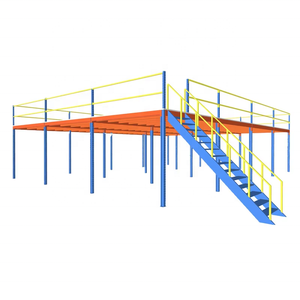
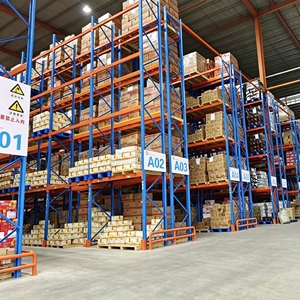
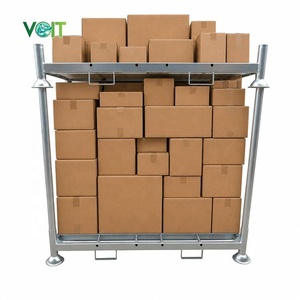
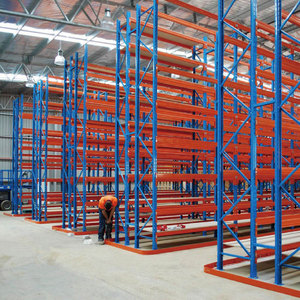
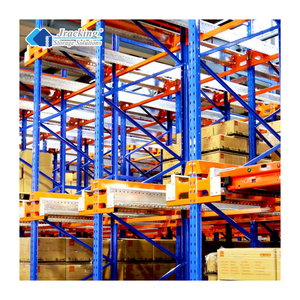
In modern industrial logistics, static floor-space footprint has become an expensive corporate overhead. A Custom OEM Heavy Duty Pallet Flow Racking System—often designated as gravity flow or dynamic roller racking—represents the pinnacle of space-saving storage density paired with flawless chronological dispatch. Operating on an inclined dynamic lane concept (typically calibrated at a pitch angle between 2.5% and 3.5%), pallets are loaded from the charging aisle (rear) and glide effortlessly by natural gravitational force toward the discharging face (front).
Dynamic movement demands exacting structural reliability. Standard low-end storage racks cannot sustain the kinetic momentum produced by multi-ton palletized cargo traversing prolonged lane depths (up to 20 pallets deep). Our OEM manufacturing specifications integrate calibrated magnetic speed controllers, hydraulic centrifugal centrifugal braking rollers, entry guide channels, and high-tensile safety ramp stops. Below is an engineering comparison matrix evaluating heavy duty dynamic systems against other high-density configurations:
| Racking Architecture | Inventory Flow | Storage Density Index | Forklift Travel In Aisle | Throughput Velocity | Typical Target Industry |
|---|---|---|---|---|---|
| Heavy Duty Pallet Flow (FIFO) | Pure FIFO | 85% – 90% Floor Utilization | Zero (Dedicated Perimeters) | Ultra-High (Simultaneous Pick/Load) | Cold Storage, Food, FMCG, Pharma |
| Drive-In / Drive-Through | LIFO (Rarely FIFO) | 70% – 80% Utilization | High (Inside Racking Frame) | Low-Medium (Risk of Frame Damage) | Bulk Single-SKU Raw Material |
| Two-Way Radio Shuttle | Flexible FIFO / LIFO | 85% – 92% Utilization | Low (Transporter Automated) | High (Battery/Sensor Dependent) | High-Bay Automated Logistics Hubs |
| Selective Pallet Racking | 100% Selectivity | 40% – 50% Utilization | Continuous (Wide Operating Aisles) | Medium (Bottlenecks in Central Aisles) | Multi-SKU Distribution Warehouses |
The structural spine of any dynamic flow channel rests entirely on raw material integrity. Utilizing certified cold-rolled steel (grades Q235B and Q355B), upright frames are continuously roll-formed with omega-profile columns engineered to absorb cyclic dynamic vibrations. Beams and track stringers undergo strict finite element analysis (FEA) to confirm deflection boundaries conform rigorously to EN 15512, ANSI MH16.1, and FEM 10.2.02 international storage regulations.
Autonomous governor rollers throttle descending speed at a uniform velocity of 0.2 to 0.3 m/s, preventing hard collisions regardless of individual pallet load disparities ranging from 400 kg to 2,000 kg.
Heavy duty mechanical separator foot pedals isolate the foremost front pallet from line pressure of trailing pallets, allowing forklift operators frictionless, unjammed extraction without lateral resistance.
Roller tracks and sub-assemblies are built with heavy electro-galvanized or hot-dip galvanized finishes alongside thermoset electrostatic powder-coated uprights, operating smoothly from -30°C blast freezers to tropical humidities.
Strategic dynamics transforming heavy duty storage systems, intelligent tracking, and turnkey automated warehousing over the next decade.
Procurement directors and supply chain leaders are navigating unprecedented geopolitical, energy, and real estate shifts. Based on global warehouse audits and supply chain forecasts, dynamic pallet flow systems are moving beyond basic standalone mechanical steelwork into hybrid, automated fulfillment nodes. The primary procurement and development trends reshaping the industry include:
Traditional forklift-driven loading is rapidly giving way to Automated Guided Vehicles (AGVs) and Autonomous Mobile Robots (AMRs). Future gravity flow lanes feature self-centering entry funnels and photoelectric stop-limit sensors that allow robotic pickers to execute optical alignment with sub-millimeter loading precision.
The emergence of Industry 4.0 pallet lanes incorporates wireless telemetric bearings within braking rollers. These miniature sensors detect abnormal deceleration, excessive thermal friction, or mechanical track jam alerts in real-time, feeding health metrics directly to the enterprise Warehouse Management System (WMS).
International infrastructure budgets prioritize future-proof modularity. Custom OEM racking requires knock-down bolted column-base designs capable of being reconfigured when pallet profiles alter. Concurrently, regional building codes require advanced non-linear dynamic seismic engineering for earthquake zones.
Over 20 years of technical excellence, heavy duty steel engineering, and streamlined global export services from Guangzhou, China.
Established in 2001, executing over 5,000 completed warehouse and industrial racking projects across 100+ countries.
From heavy duty pallet flow, radio shuttle, cantilever, and mezzanine systems to supermarket store fixtures from a single source.
Custom structural calculations, pitch engineering, lane depths, beam profiles, electrostatic colors, and private branding.
Certified Q235B cold-rolled steel, robotic welding without slag, ultrasonic joint inspections, and certified pre-shipment load tests.
Dedicated bilingual export sales engineers supply CAD drawings, 3D structural renderings, and quotations within 8 business hours.
In-depth answers to technical, mechanical, and logistical questions routinely evaluated by professional logistics engineers.
Connect directly with Guangzhou Heda Shelves engineering specialists. Provide your facility layout drawings, load ratings, or custom OEM requirements and receive a comprehensive CAD layout and structural cost quotation within 8 hours.
Inquire Now