HEDAHeavy Duty Racking
 English
 Español
EnglishEspañolPrecision manufactured in Q235B cold-rolled structural steel to international FEM, RMI, and ISO9001 standards.
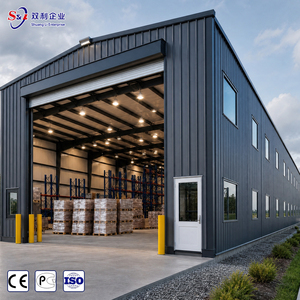
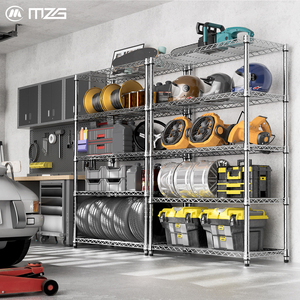
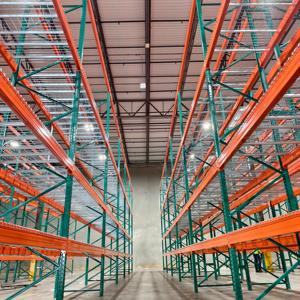
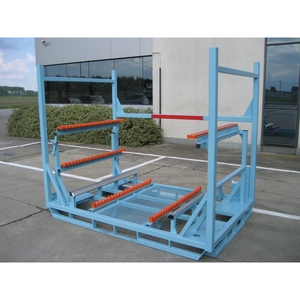
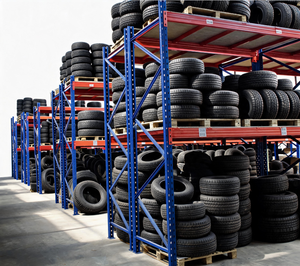
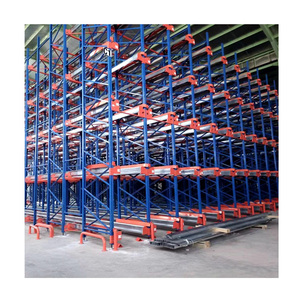
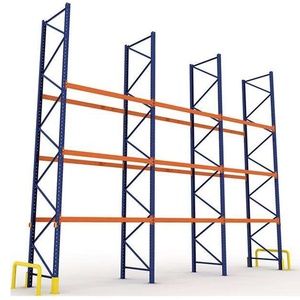
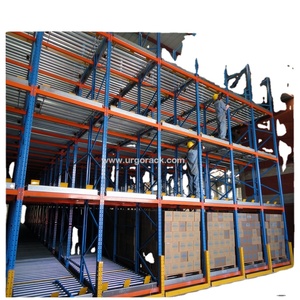
In modern logistics, industrial manufacturing, and raw material warehousing, standard selective pallet racking fails when confronted with non-standard, long-span, or irregularly bundled goods. Structural steel tubes, extruded aluminum profiles, structural timber, bar stock, and PVC piping create severe spatial inefficiency and handling hazards when forced into conventional uprights.
A custom OEM heavy duty single sided cantilever racking system solves this fundamental material handling constraint by eliminating front vertical columns. Consisting of a vertical column, a heavy-duty extended horizontal base, tapered adjustable arms, and a rigid diagonal bracing truss, this structural topology provides completely unobstructed horizontal access along the entire length of the warehouse perimeter wall.
Unlike double-sided cantilever systems where opposing cantilever arms counterbalance structural moments across a shared central upright, single-sided cantilever configurations subject the column and base connection to severe eccentric bending stresses. Every loaded arm exerts a rotational moment \( M = F \times L \), directly transferring tension to the rear flange of the upright and massive compression to the lower base junction.
As a verified tier-1 China manufacturer with more than 20 years of structural fabrication heritage, Guangzhou Heda Shelves Co., Ltd. calculates each installation according to finite element analysis (FEA) under European FEM 10.2.09 and American Rack Manufacturers Institute (RMI MH16.2) codes. Our engineering team calculates anchor tensile pullout resistance against concrete slab specifications (typically requiring minimum 200mm–300mm slab thickness with 28-day compressive strength \(\ge 30\,\text{MPa}\)) using high-shear chemical wedge anchors to ensure absolute stability against overturning moments.
| Structural Parameter | Light to Medium Duty Standard | Heavy-Duty Roll-Formed (C-Profile) | Extra Heavy Duty Structural (Hot-Rolled IPE/H-Beam) |
|---|---|---|---|
| Load Capacity Per Arm | 150 kg – 500 kg | 500 kg – 1,200 kg | 1,200 kg – 2,500+ kg (Proof Tested) |
| Column Section Height | 2,000 mm – 3,500 mm | 3,500 mm – 6,000 mm | Up to 12,000 mm (High-Bay Side-Loader) |
| Arm Length Outreach | 400 mm – 800 mm | 800 mm – 1,500 mm | 1,200 mm – 2,200 mm (Tapered Gusset) |
| Vertical Adjustment Pitch | 75 mm / 100 mm C-Profile Punch | 100 mm / 140 mm Heavy Pitch | 100 mm Heavy Grade 8.8 High-Tensile Bolted |
| Steel Specification | Q235B Cold-Rolled Carbon Steel | Q235B / Q355B Low-Alloy Structural | Q355B Heavy Structural IPE / H-Beam Sections |
| Anti-Corrosion Finish | Epoxy Electrostatic Powder (60-80μm) | Dual-Coat Polyester Powder Coated | Hot-Dip Galvanized (ISO 1461, 85μm+) for Outdoor |
Single-sided cantilever racks are designed specifically to mount flush against perimeter structural building walls or back-to-back with narrow side-aisles. By positioning single-sided uprights against unusable perimeter wall zones, facility directors recover 28% to 45% of previously lost floor area. Forklifts with 4-way reach or multidirectional guided travel navigate aisles without catching front frame obstructions, reducing industrial warehouse impact damages by over 60%.
Based in Pazhou, Guangzhou adjacent to the Canton Fair Complex — engineering and exporting turnkey racking globally since 2001.
Every rack is engineered around your cargo profile: bundle weight, cross-sectional dimensions, deflection elasticity, forklift mast reach, and seismic soil coefficient. From bespoke arm stoppers and axle pipe holders to removable drop-in shelf decking (wire mesh, galvanized steel pan, or timber), we deliver purpose-built storage architectures.
Raw materials are exclusively verified Q235B and Q355B structural steel from top-tier domestic mills. All welding conforms to international automated robot welding protocols. Before container stuffing, individual arm pairs undergo physical static load testing up to 2,500 kg per level, eliminating on-site deflection hazards.
Our multilingual export engineering department supplies preliminary layout CAD plans, weight-moment capacity calculations, and transparent FOB/CIF pricing within 8 hours. Project contractors receive complete 3D design renderings to present directly to project owners prior to production.
Shipping heavy structural steel overseas can result in severe freight inefficiencies. HEDA engineers components into 100% modular, high-density knock-down assemblies. Base plates, I-beam columns, cantilever arms, and diagonal X-braces nest perfectly, achieving up to 98% 40ft High Cube container volume utilization.
Strategically located in Guangzhou alongside the Canton Fair Pazhou Complex, overseas buyers can inspect our high-capacity roll-forming lines, automated electrostatic powder-coating ovens, and modern showroom in a single business trip. Verified export credentials spanning Europe, the Americas, Australia, the Middle East, and Southeast Asia.
Key sourcing shifts driven by warehouse automation, high steel volatility, and global compliance standards.
Global EPC contractors and industrial distributors are increasingly bypassing intermediary regional brokers. By procuring custom single-sided cantilever racks directly from certified Chinese original equipment manufacturers, buyers reduce procurement capital expenditure by 25–40% while gaining custom dimensional flexibility, mill test certificates (MTC), and direct design sign-offs.
While cold-rolled C-profiles satisfy light-to-medium retail loads, procurement requests for heavy-industrial single-sided cantilever racks show a dramatic shift toward hot-rolled structural steel (IPE, HEA, and European standard universal beams). Structural profiles resist torsional buckling and withstand repeated accidental forklift impacts in harsh lumber yards and steel distribution yards.
Leading tier-1 engineering firms now require full Building Information Modeling (BIM) files (such as Revit, IFC, and STEP files) prior to manufacturing contracts. Buyers demand clearance simulation between cantilever arm pitch, overhead sprinkler envelopes, and 4-directional side-loading forklift travel geometries before cutting structural steel.
Outdoor single-sided cantilever racking for piping and timber is shifting rapidly from standard powder painting to hot-dip galvanizing under ISO 1461. While initial Capex is 15–20% higher, the elimination of rust repainting, peeling, and corrosion structural failure over a 25-year operational lifecycle yields substantial Total Cost of Ownership (TCO) savings.
Next-generation structural optimizations enhancing safety, verticality, and automation integration.
Single-sided cantilever racking is integrating into automated guided vehicle (AGV) long-goods logistics. Systems are now fitted with laser-guided inductive wire floor channels, mechanical guide rails, and photoelectric sensors that guide high-reach 4-directional automated mast trucks safely down narrow 1,800mm operating aisles.
When an arm is loaded with 2,000 kg of structural steel pipes, elastic beam theory dictates unavoidable mechanical deflection. Modern engineering utilizes continuous tapered arm geometry with an upward factory camber angle (typically 2° to 3°). When loaded to maximum rated safe working capacity, the arm deflects downward to a true horizontal plane, preventing stored goods from rolling forward.
Next-generation high-bay cantilever installations in smart manufacturing hubs are embedding wireless strain gauge load sensors and tilt detection telemetry into base connections. If uneven loading or localized impacts exceed pre-calibrated bending thresholds, automated warnings alert facility managers via warehouse management system (WMS) dashboards.
Traditional rigid welded connections can crack under intense cyclic seismic shear forces. Modern structural cantilever columns utilize ductile Grade 8.8 and 10.9 bolted column-to-base flange joints with oversized anchor baseplates, meeting seismic performance criteria across active earthquake zones in Latin America, Japan, and Oceania.
Critical engineering, loading, shipping, and installation queries answered by HEDA's structural design team.
Share your floor plan, cargo profiles, and load specifications. Our Guangzhou engineering headquarters will generate verified 2D/3D layouts and factory-direct pricing within 8 hours.