 English
 Español
Industrial Engineering Excellence
Advanced High-Density Logistics & Storage Solutions
Bridging mechanical durability with operational safety: our heavy-duty push-back racking, selective systems, and custom industrial metal fixtures are designed to elevate pallet storage density by up to 75% compared to standard configurations.
2001
Established Engineering Roots
3,000+
Tons Monthly Throughput
5,000+
Global Projects Installed
8 Hours
Rapid Technical Response
Technical Insight & Engineering Whitepaper
How OEM Push Back Pallet Racking Redefines Warehouse Volumetric Efficiency
Understanding kinematics, nested cart systems, and load dissipation metrics for modern intralogistics distribution centers.
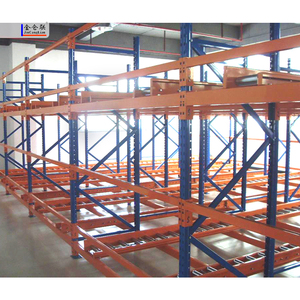
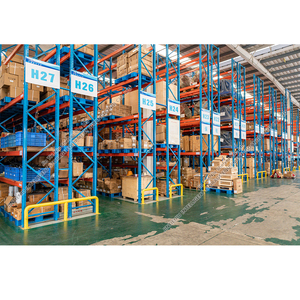
Push back pallet racking represents a pivotal technological leap over static selective racking systems. Operating on an inclined nested-cart principle under a Last-In, First-Out (LIFO) inventory sequence, a push-back matrix houses multiple pallet positions (typically 2 to 6 pallets deep per lane) along an inclined structural steel rail track. When a forklift introduces the first pallet, it rests safely on top of the uppermost carriage. As subsequent pallets are staged, the forklift operator uses the incoming unit to gently push back previously positioned pallets, exposing the sub-level nested carts along high-precision flanged guide wheels.
From a structural mechanics standpoint, push back racking circumvents the major vulnerability observed in conventional drive-in systems: forklift upright collisions. Because the material handling equipment never penetrates the structural rack bays, upright damage incidents are diminished by upwards of 80%. Every OEM structural upright and step beam manufactured by Guangzhou Heda Shelves Co., Ltd. is cold-formed from certified Q235B high-yield structural steel, calibrated accurately to dissipate combined static and dynamic impact stresses under strict international safety margins (RMI, FEM 10.2.02, and AS4084 standards).
Nested Low-Profile Cart Matrix
Fabricated with laser-cut heavy plate steel, multi-tier carriages ride on sealed, heavy-duty industrial bearings. Low-profile construction preserves vertical warehouse clearance and maximizes usable lift height.
Certified Dynamic Gravity Incline
Engineered slope gradients (calibrated precisely at 2.5% to 3.5%) ensure steady, fail-safe gravity return of nested pallets when picking, avoiding high-velocity collisions or stalled inventory along the track.
Multi-SKU Density & Selectivity
Each dedicated lane operates independently. Facilities can dedicate distinct SKUs to separate picking lanes, maintaining up to 90% pallet selectivity while preserving the dense footprint of high-bay bulk blocks.
Technical Performance Comparison
Comparative Analysis: Push Back Racking vs Alternative Systems
Assess spatial volumetric ratio, labor throughput speed, operational risk, and capital investment lifecycle across prevalent heavy-duty warehouse storage methodologies.
| Storage System Type | Space Utilization | Pallet Selectivity | Forklift Cycle Time | Impact Collision Hazard | Ideal Application Scenario |
|---|---|---|---|---|---|
| OEM Push Back Racking | 75% - 85% High | Lane Dependent (Multi-SKU) | Fast (External Loading Only) | Minimal (Truck remains in aisle) | Cold Storage, Food & Beverage, 2-6 Pallet Depths |
| Standard Selective Racking | 40% - 50% Low | 100% Total Direct Access | Standard | Low to Moderate | High-SKU variation, low volume per SKU picking |
| Drive-In / Drive-Thru Racking | 65% - 75% High | Very Low (Single SKU / Lane) | Slow (Mast enters rack depth) | High (Frequent upright collision) | Homogeneous bulk commodities, seasonal storage |
| Pallet Flow (Gravity Roller) | 85% - 90% Ultra High | Strict FIFO Rotation | Fast (Separate load/pick aisles) | Minimal | Rapid turnover fast-moving perishables, high CAPEX |
Industry Forecasting
Future Procurement Trends in Industrial Storage Racking
Market dynamics influencing capital expenditures across 3PL warehouses, e-commerce fulfilment centres, and smart factories.
Convergence with Autonomous AMR/AGV
Global warehouse operators are retrofitting push-back lanes with automated guided vehicle (AGV) docking interfaces, requiring exact carriage tolerances and laser-guided centering stops to facilitate automated pallet replenishment without human operators.
Supply Chain Reshoring & High-Yield Cold Racks
With skyrocketing commercial land lease rates in North America, Europe, and Australasia, supply chain procurement managers prioritize high-density retrofit capabilities over expanding physical building perimeters, prioritizing systems with 3,000+ kg structural capacities per bay.
Seismic Resilience & Green Surface Coating
Procurement mandates enforce upgraded electrostatic thermosetting powder formulations devoid of volatile organic compounds (VOCs), matched with FEM-compliant finite element analysis (FEA) to endure severe seismic load conditions in coastal and earthquake zones.
R&D Roadmap
Evolutionary Frontiers: How Push Back Technology Is Advancing
From magnetic eddy-current decelerators to ultra-thin high-tensile steel cold-roll profiling.
The mechanical limits of traditional push-back systems have historically centered around cart jamming, off-center pallet tracking, and sudden runaway carriage returns during unseated pick maneuvers. Modern engineering has systematically eliminated these operational bottlenecks through three primary technological breakthroughs:
First, the integration of self-compensating centrifugal brake rollers embedded directly beneath the nested cart assemblies. Unlike friction brakes that wear out after repeated thermal friction cycles, magnetic eddy-current dampeners self-regulate descent speeds strictly proportional to the pallet's actual gross weight. Whether staging a 500 kg air freight pallet or a 2,000 kg containerized chemical drum pallet, the dynamic descent speed remains fixed at an ergonomic and safe 0.15 m/s.
Second, continuous automated roll-forming and laser-welding lines enable cold-rolled upright columns featuring complex return-lip geometry. By introducing 8 to 12 cold-formed folds along the upright profile, section modulus and torsional rigidity increase substantially without unnecessary weight penalties. This enables OEM factories to supply structurally leaner components that reduce maritime container shipping tonnage while delivering verified level ratings exceeding 4,500 kg per beam level.
Enterprise Strengths
Why Tier-1 Importers and EPC Contractors Partner with Us
Backed by over two decades of precision manufacturing, certified Q235B metallurgy, and end-to-end global project delivery capabilities.
Since 2001 Heritage
Over 20 years of proven manufacturing excellence, delivering 5,000+ warehouse and commercial fixtures across five continents.
Full Product Spectrum
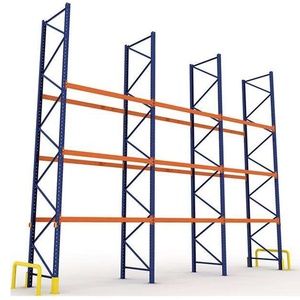
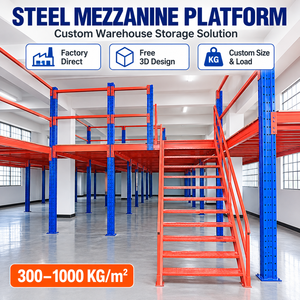
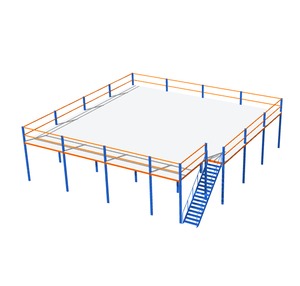
One-stop production spanning push back, heavy-duty selective, mezzanine platforms, radio shuttles, cantilever, and retail shelving.
Bespoke OEM Customization
Engineered to exact millimeter tolerances for beam spans, vertical clearance, floor load capacities, and corporate RAL powder coat matching.
Strict Quality Assurance
100% Q235B prime structural steel, certified weld penetration tests, electrostatic salt-spray corrosion resistance, and pre-shipment load tests.
8-Hour Engineering Turnaround
Dedicated international export engineering desks offering fast structural calculation, 2D AutoCAD layouts, and 3D realistic project renders.
Procurement Knowledge Base
Frequently Asked Questions on Push Back Pallet Racking
Technical guidance direct from our engineering department regarding load ratings, installation considerations, and import specifications.
What load capacities can your OEM push back and pallet racking systems support?
Our engineered push back systems support up to 1,500 kg per pallet position across 2 to 6 deep cart channels. Our broader heavy-duty selective and industrial warehouse systems achieve verified load ratings from 1,000 kg up to 4,500 kg per level, with specialized heavy mezzanine floors sustaining 800–1,000 kg/m² and heavy cantilever systems carrying over 2,500 kg per arm.
How do push back cart systems accommodate weak or irregular wooden pallets?
Because pallets are seated directly across welded structural steel carts rather than individual roller bearings, push-back racking provides full continuous bottom footprint support. This eliminates the risk of cracked timber slats, bottom board splintering, or sagging typical of gravity roller flow racks when handling lower-grade single-use wooden pallets.
Can your push back systems be configured for extreme cold storage environments?
Yes. For blast freezers and cold storage facilities operating between -20°C and -35°C, we specify low-temperature impact-resistant steel alloys, sealed stainless-steel carriage bearings, and cold-room-certified food-grade low-viscosity synthetic lubricants that prevent grease crystallization and cart stall.
What steel specifications and anti-corrosion treatments are applied?
We exclusively utilize prime grade Q235B cold-rolled structural sheet and coil steel. Surface pre-treatments feature multi-stage acid washing, degreasing, and phosphating, followed by our upgraded automated electrostatic epoxy-polyester powder coat system cured at 180°C. For aggressive chemical or outdoor environments, hot-dip galvanizing per ISO 1461 is available.
Do you engineer seismic-resistant racking designs for earthquake-active zones?
Absolutely. Having installed successful heavy-duty racking projects in high seismic regions such as Ecuador, Japan, and the Pacific Rim, our engineering department designs oversized ductile base plates, deep chemical floor anchorage arrays, reinforced horizontal/cross bracing struts, and heavy-gauge column back-to-back ties complying with FEMA 460 and local building codes.
How are modular knock-down components packed for international container freight?
All structural components—including upright frames, step beams, push back track channels, and nested carts—are designed with precision knock-down modularity. Parts are packed using protective PE foam, steel-strapping bands, timber dunnage, and corner angle boards. This design protects factory-finished coatings during ocean transport and maximizes container cube utilization to lower per-unit international shipping costs.
Request an OEM Engineering Layout & Factory Quote
Send your warehouse architectural drawings, pallet dimensions, ceiling clear heights, and load profile requirements. Our senior structural logistics engineers will deliver preliminary 2D CAD drawings, 3D models, and a detailed bill of materials within 8 hours.