HEDAHeavy Duty Racking
 English
 Español
EnglishEspañolExplore precision-rolled, hot-rolled I-beam and cold-formed structural racking configured specifically for multi-bay distribution nodes, oversized profiles, lumber packs, and automated manufacturing buffers.
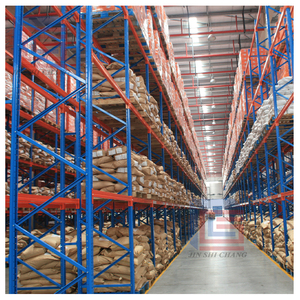
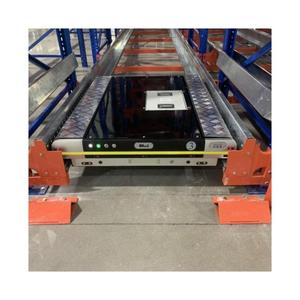
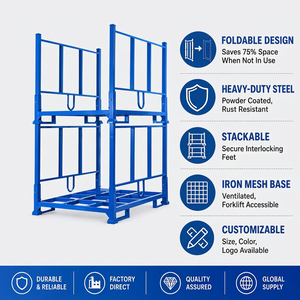
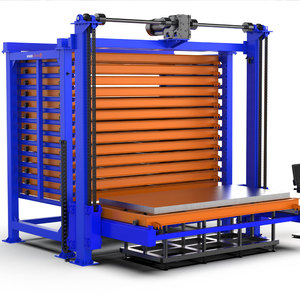
Located adjacent to the Canton Fair Complex in Pazhou, Guangzhou, Heda Shelves Co., Ltd. delivers direct factory engineering, certified welding integrity, and end-to-end containerized logistics.
Over 20+ years (est. 2001) engineering heavy-duty storage racks across 5,000+ completed international projects.
Direct supply covering cantilever systems, high bay selective racks, shuttle units, and retail fixtures from one manufacturing hub.
Tailored upright column heights (up to 12m), arm lengths (600–2000mm), and specific deflection ratings calculated via FEM.
Certified Q235B cold/hot-rolled structural steel, full penetration welding, automated electrostatic powder coating, and pre-shipment tests.
Dedicated bilingual engineering sales team supplying AutoCAD layouts, 3D structural models, and turnkey quotes within 8 hours.
Cantilever racking represents an indispensable structural solution in modern industrial warehousing, precisely engineered to overcome the severe limitations of standard selective pallet racking. Conventional pallet racks feature front upright columns that create rigid horizontal compartments. When managing long, unwieldy, or non-uniform goods—such as extruded aluminum profiles, timber lumber packs, structural steel tubing, PVC piping, gypsum panels, and bar stock—front uprights make uninterrupted continuous storage impossible and exponentially increase forklift impact risks.
By shifting all structural load paths to vertical central columns interconnected via heavy-duty horizontal and diagonal cross-bracing, cantilever racking offers a completely open, unbroken pick-face. As an experienced OEM/ODM cantilever racking manufacturer, Guangzhou Heda Shelves Co., Ltd. designs systems featuring either cold-formed roll-formed steel for medium-duty loads (300 kg to 800 kg per arm) or hot-rolled structural H-beams/I-beams for heavy-duty applications rated up to and exceeding 2,500 kg per arm level.
Structural reliability depends on managing significant bending moments at the arm-to-column connection. Our engineers fabricate proprietary connector pin hubs and high-tensile bolted sleeves that allow arms to deflect upward without transmitting destructive rotational torque into the vertical column. Furthermore, arms are engineered with an intentional 2° to 4° upward pitch under zero load, ensuring that when working under full load conditions, the arms settle completely level without risking slippage or unseating of cylindrical materials.
Compare mechanical tolerances, column sizing, and operational metrics between light-medium and heavy-duty structural cantilever systems engineered by Heda Shelves.
| System Parameters | Light & Medium-Duty Roll-Formed | Heavy-Duty Structural I-Beam | Automated / AS/RS Compatible |
|---|---|---|---|
| Load Rating Per Arm | 150 kg – 600 kg (Uniformly Distributed) | 800 kg – 2,500+ kg (Heavy Structural) | 1,000 kg – 2,000 kg (High Precision) |
| Upright Height Reach | 2,000 mm to 5,500 mm | 3,500 mm to 12,000 mm | 6,000 mm to 18,000 mm |
| Steel Grade Standard | Q235B Cold-Rolled Carbon Steel | Q235B / Q355B Hot-Rolled Structural I-Beam | Q355B Precision Structural Grade |
| Arm Length Span | 400 mm – 1,200 mm | 800 mm – 2,200 mm | 600 mm – 1,500 mm (Machined Guide Ends) |
| Standard Vertical Pitch | 75 mm / 100 mm Multi-hole Pitch | 100 mm / 140 mm Heavy Pin Configuration | Precision CNC Punched 50 mm Increments |
| Recommended Handling | Manual Handling / Counterbalance Forklift | Side Loader / 4-Way Multi-directional Truck | Automated Stacker Cranes & Guided AGVs |
| Surface Protection | Degreased + 80-120μm Powder Coating | Epoxy Coating / Hot-Dip Galvanizing (Outdoor) | Anti-Static High-Durability Polyurethane |
How evolving smart logistics, environmental standards, and cross-border supply chains are dictating how global industrial facilities procure structural storage.
Global warehouse developers are moving away from buying steel strictly per kilogram. Enterprise buyers now evaluate FEA (Finite Element Analysis) deflection performance, damage resistance, and ease of reconfiguring arms. Buying high-yield structural steel with optimized profile shapes delivers higher load capacities while reducing deadweight, lowering sea container shipping costs significantly.
The rapid growth of multi-directional automated forklifts and autonomous stacker cranes requires tighter cantilever manufacturing tolerances. Traditional welded variations are being replaced with CNC precision-drilled columns and laser-cut connecting saddles to maintain true horizontal alignment across high-bay aisles exceeding 10 meters.
With indoor warehouse real estate leasing at record highs, distributors of timber, concrete pipes, rebar, and structural steel are migrating long-material storage to outdoor open yards. This has surged demand for ISO 1461 hot-dip galvanized cantilever structures that withstand acid rain, high UV exposure, and coastal marine salinity without structural degradation.
How structural engineering is shifting to meet ultra-high safety compliance, seismic resilience, and smart structural health monitoring.
In active earthquake zones like the Pacific Rim and South America (proven in our Ecuador and Chile installations), cantilever columns feature expanded base shoe plates anchored with epoxy chemical anchors and paired with engineered X-bracing to absorb lateral ground acceleration without catastrophic column snap.
Modern distribution facilities store both long items and palletized or boxed accessories on the same rack. The trend utilizes drop-in welded wire decks or steel shelf supports placed directly across cantilever arms, transforming open linear arms into solid shelf tiers without losing cantilever access.
Advanced high-bay cantilever systems are beginning to incorporate IoT strain gauge micro-sensors mounted at the base connection. These sensors continuously monitor micro-deflection, operational overload conditions, and accidental forklift collisions, instantly alerting warehouse safety managers via cloud dashboards.
Critical technical, engineering, and logistics questions answered by HEDA's Senior Structural Racking Specialists.
Consult directly with our senior structural racking engineers in Guangzhou. Share your facility CAD floor plan, material dimensions, and target weight capacities. We provide a comprehensive 3D layout, load deflection calculations, and factory-direct quotation within 8 hours.
Send an Inquiry