HEDAHeavy Duty Racking
 English
 Español
EnglishEspañolDiscover factory-direct, high-durability pallet systems tested to international safety benchmarks (FEM, ANSI, and AS4084) engineered for heavy distribution hubs, manufacturing facilities, and automated warehouses.
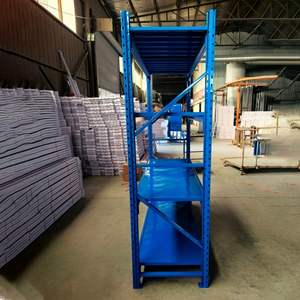
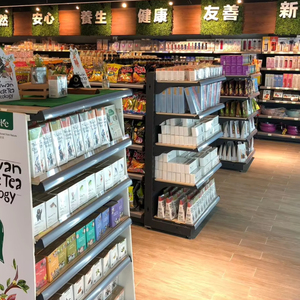
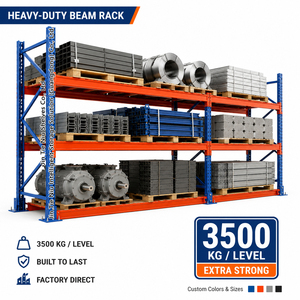
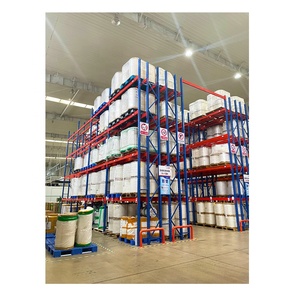
A peer-reviewed benchmark examining structural engineering credentials, seismic certifications, automated roll-forming technologies, and supply chain logistics for industrial buyers worldwide.
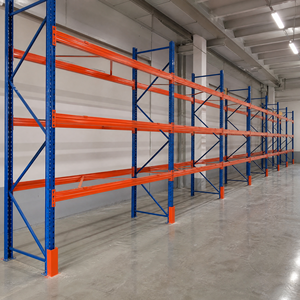
Headquartered in Pazhou, Guangzhou, HEDA Racking stands as an international benchmark for heavy-duty collapsible and knock-down structural pallet systems. Utilizing prime Q235B cold-rolled steel and proprietary automated electrostatic powder lines, HEDA delivers high load-bearing racks certified up to 4,500 kg per beam level.
A German multinational recognized worldwide for modular steel structures and automated intralogistics. Their heavy pallet racking frameworks feature high cold-formed tolerances suited for automated stacker cranes and dynamic shuttle interfaces.
Historically pioneering the adjustable slotted angle and structural beam lock mechanism, Dexion (Gonvarri Material Handling) provides robust pallet systems optimized for fast mechanical breakdown, reconfiguration, and high torsional rigidity.
Mecalux is an international force in the storage manufacturing sector with production facilities across Europe and the Americas. Their heavy-duty modular racks emphasize automated roll-forming and advanced cathodic electrodeposition finishes.
Belgium-based Stow International specializes in heavy static pallet racking, drive-in systems, and robotic shuttle carriers. Their structural design balances low steel tare weight with exceptional lateral buckling resistance under extreme payloads.
Operating major fabrication plants across the United States and Mexico, Interlake Mecalux produces teardrop and structural pallet racks tailored to American RMI (Rack Manufacturers Institute) and ANSI MH16.1 specifications.
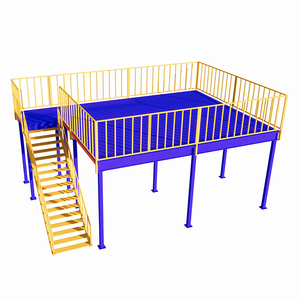
A specialized Dutch engineering subsidiary of the voestalpine Group, Nedcon develops custom high-load racking, multi-tier mezzanine frameworks, and heavy-duty collapsible structural frames designed for complex automation retrofits.
Spain's AR Racking is renowned for pre-galvanized upright configurations that resist corrosion in cold rooms and chemical handling sites. Their modular bolted frames provide fast disassembly and minimal transport volume.
A key North American manufacturer with annual production exceeding 100 million pounds of steel products. Their heavy-duty collapsible structural frames and patented hook-and-slot pinch-pin assemblies ensure swift assembly in seismic regions.
As a Nucor company, Hannibal leverages massive domestic steel supply chains. Their patented Tube-Rak system features heavy-gauge structural dual-tube uprights that resist torsional twist and fork truck impact in extreme loading environments.
Founded in 2001 in Pazhou, Guangzhou—directly beside the Canton Fair Complex—HEDA operates a 30,000 m² modern manufacturing ecosystem. Every project is backed by structural engineering, direct mill certifications, and knock-down container shipping optimization.
Over two decades of precision manufacturing with 5,000+ completed installations across North America, Europe, Australia, and the Middle East.
Structural cold-rolled Q235B steel finished with a 500-cycle wear-resistant electrostatic powder-coating, free from welding slag or burrs.
Engineered flat-pack knock-down architecture protects components in maritime transit and maximizes container cubic capacity to slash ocean freight.
Direct communication with structural engineers. Receive professional 2D CAD layouts, load capacity calculations, and 3D renderings within 8 hours.
Global supply chain directors and warehouse operations managers are transforming procurement criteria to navigate rising land costs, labor shortages, and ESG mandates.
With ocean freight volatility and inland trucking expenses remaining a primary cost driver, buyers demand completely knock-down (CKD) modular racks. Flat-pack nesting increases container space utilization by up to 45%, protecting upright faces and step beams from transit deformation while drastically cutting landed import tariffs.
Modern building codes (such as AS4084-2023, RMI ANSI MH16.1, and Eurocode EN 15512) enforce rigorous dynamic load modeling. Sourcing contracts require FEA stress calculations, widened footplates, and seismic anchor certifications for zones vulnerable to ground motion or soft-soil warehouse foundations.
Pallet racks are no longer standalone static steel fixtures. Modern procurement briefs require selective beams to interface seamlessly with Autonomous Mobile Robots (AMRs), Automated Storage and Retrieval Systems (AS/RS), and radio-guided high-density pallet shuttles without requiring full structural teardowns.
From metallurgical advances to digital-twin monitoring, racking manufacturing is undergoing a rapid transition toward high-strength, low-carbon industrial storage equipment.
Fabricators are progressively transitioning toward thermo-mechanically controlled rolled (TMCR) micro-alloyed steels. This metallurgy achieves higher yield strengths (up to 420-500 MPa) without sacrificing cold ductility, allowing for thinner profiles that maintain or exceed a 4,500 kg per beam load capacity while reducing structural deadweight.
Standard solvent coatings have been rendered obsolete by automated shot-blasting and non-phosphating zirconium surface treatments paired with thermosetting polyester powders. These new multi-stage finishes provide over 500 hours of salt-spray resistance and prevent peeling in -30°C cold room condensation cycles.
Physical measurement errors are being eliminated by integrating Building Information Modeling (BIM) within CAD/CAM roll-forming workflows. Structural engineers provide complete 3D warehouse simulations that detect facility column clashes, sprinkler piping interferences, and forklift aisle clearances before roll-forming begins.
Actionable, engineering-backed answers addressing the most common technical questions encountered during cross-border heavy pallet rack procurement.
Load performance depends strictly on upright profile geometry, material thickness, beam span, and connector lock design. Standard medium-duty systems support 300 to 800 kg per beam pair. In contrast, heavy-duty industrial pallet racking engineered from high-grade Q235B cold-rolled steel supports 1,000 to 4,500 kg per level uniformly distributed load (UDL). Mezzanine floors typically support 800 to 1,000 kg/m², while heavy cantilever arms carry up to 2,500 kg per arm.
Seismic certification requires site-specific engineering under local standards (e.g., AS4084, ANSI MH16.1, or Eurocode 8). Racking configurations must incorporate enlarged base plates, heavy-duty floor anchor bolts with specific torque ratings, continuous vertical cross-bracing (portal bracing), and structural row spacers to link back-to-back rack runs into a unified, energy-dissipating dynamic diaphragm.
Q235B cold-rolled structural steel offers a proven yield strength of 235 MPa combined with balanced elongation and cold-forming ductility. This ductility prevents brittle micro-fractures along rolled corners and laser-punched drop slots during high-speed CNC profiling. In the event of heavy forklift collisions, Q235B yields and deforms plastically rather than fracturing catastrophically, preserving structural integrity.
To deliver an engineered 2D CAD layout and precise quotation, manufacturers require: (1) Warehouse architectural drawings showing ceiling clear heights, building columns, and floor expansion joints; (2) Pallet specifications (width, depth, height including cargo, and maximum gross weight); (3) Forklift model, turning radius, and maximum mast lifting height; and (4) Ambient operating temperature (ambient, cold room, or blast freezer).
Industrial exporters utilize Completely Knock-Down (CKD) packing. Upright frames are either pre-bolted or flat-packed with high-density EPE foam buffering between vertical channels. Beams are stacked in interlocking wood-dunnage bundles secured by heavy steel strapping and wrapped in moisture-barrier stretch film. This nesting methodology prevents surface scratching while maximizing 40ft High Cube container cubic capacity to minimize freight costs.
Leading manufacturers employ automated multi-stage pre-treatment lines (alkaline degreasing, acid descaling, and silane/zirconium passivation) followed by electrostatic powder deposition cured at 180°C–200°C. For extreme outdoor or sub-zero refrigeration conditions, pre-galvanized or hot-dip galvanized structural profiles provide cathodic sacrificial barrier protection against moisture and chemicals.
Submit your facility drawings, pallet loading requirements, and distribution goals. Our engineering team delivers compliant 2D CAD layouts, structural FEA calculations, and a transparent factory-direct quotation within 8 hours.
Contact Us