HEDAHeavy Duty Racking
 English
 Español
EnglishEspañolEngineered to double and triple vertical cubic operational volume while sustaining heavy structural live loads up to 4,500 kg per beam level.
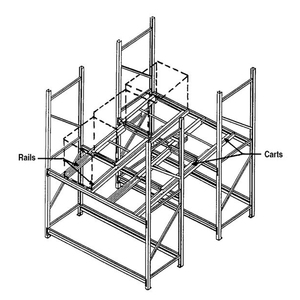
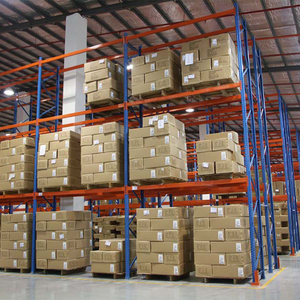
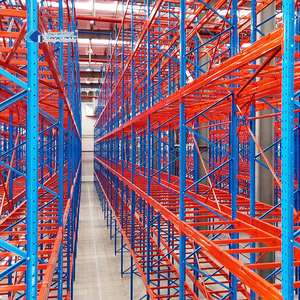
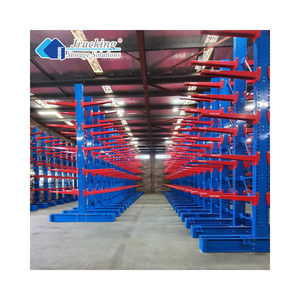
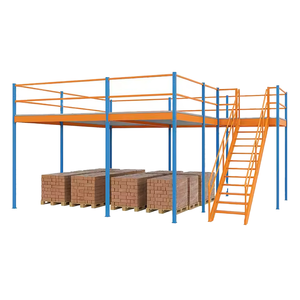
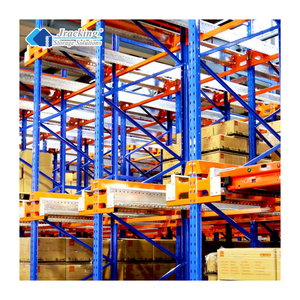
In modern industrial logistics, the physical horizontal footprint is often the most expensive operational asset. A rack-supported mezzanine eliminates the capital expenditure associated with new real-estate development by leveraging the warehouse's dead vertical clearance. Unlike standard structural steel platforms (structural mezzanines) that rely on large I-beam structural columns with substantial footings, a rack-supported mezzanine utilizes the high-density upright frames and beam levels of the underlying heavy-duty pallet racking system as the primary vertical load-bearing columns.
This structural synergy delivers an extraordinary mechanical advantage: the lower levels serve as heavy-capacity selective pallet racking (rated from 1,000 kg to 4,500 kg per level), while the overhead integrated deck framework supports an additional active mezzanine floor rated between 300 kg/m² to over 1,000 kg/m² for picking corridors, conveyor sortation, office space, or sub-assembly operations. The entire structure acts as a unified, bolted, cold-rolled steel matrix with continuous distribution of structural dead loads, live loads, and lateral seismic vectors down to high-tensile baseplates anchored into the reinforced concrete slab.
| Engineering Metric | Heavy Duty Rack-Supported Mezzanine | Freestanding Structural Steel Platform |
|---|---|---|
| Primary Load-Bearing Matrix | Q235B cold-rolled engineered uprights & cross-bracing | Hot-rolled wide flange I-beams & tubular steel columns |
| Lower-Level Spatial Utility | 100% integrated pallet storage, carton flow, or shelving | Open wide-span clearance (storage requires separate racks) |
| Foundation Slab Requirements | Distributed point loading via expanded baseplates (6–8" slab typical) | Concentrated heavy point loads; frequently requires dedicated concrete footings |
| Civil Permitting & Classification | Demountable industrial equipment / knock-down fixtures | Permanent or semi-permanent building structural modification |
| Capital Expenditure Ratio | Baseline (35% – 50% lower overall cost per pallet position) | Elevated due to material tonnage and complex foundation work |
| Modularity & Relocation | 100% bolt-together knock-down components; relocatable | Welded or heavy bolted structures; low relocation feasibility |
A rigorous review of the premier global original equipment manufacturers (OEMs) and structural rack providers based on production tonnage, engineering compliance, and international field delivery.
Established in 2001 in Guangzhou, China, HEDA has evolved into a premier international engineering factory operating a 30,000m² manufacturing facility with an output exceeding 3,000 tons per month. Certified with CE, ISO9001, and SGS standards, HEDA delivers factory-direct, turnkey rack-supported mezzanines constructed entirely from certified Q235B cold-rolled steel. With over 5,000 turnkey projects executed across North America, Europe, Australia, Southeast Asia, and the Middle East, HEDA differentiates itself with bespoke 3D CAD/BIM structural modeling, seismic engineering for active fault zones, automated electrostatic powder coating lines with zero welding slag, and rapid 8-hour engineering response windows.
Headquartered in Neunkirchen, Germany, SSI Schaefer is one of the world's most prominent intralogistics conglomerates. Their rack-supported mezzanine systems are celebrated for precision European structural tolerances, heavy DIN standard compliance, and seamless integration with Automated Guided Vehicles (AGVs) and complex automated conveyor sorting networks.
Operating massive manufacturing facilities across Europe and the Americas, Mecalux provides extensive pallet rack-supported walkways and multi-tier picking structures. Their proprietary calculation software ensures EN 15512 compliance, optimizing beam spans for high-volume picking operations and eCommerce fulfillment hubs.
Stow is a leading European racking manufacturer with a heavy focus on heavy-duty cantilever systems, industrial racking, and multi-deck pallet mezzanines. Their engineering emphasis revolves around modular cold-formed profiles that maximize structural stiffness while reducing static structural dead weight.
Dominating significant market share across North America, Interlake Mecalux produces roll-formed and structural rack-supported mezzanine systems strictly designed to RMI (Rack Manufacturers Institute) and IBC (International Building Code) specifications, complete with stamped engineering calculations.
Historically one of the pioneers of adjustable slotted steel angles, modern Dexion manufactures robust multi-tier mezzanine floors engineered over high-bay pallet racking. Their systems prioritize occupational safety, integrated sprinkler systems, and acoustic floor decking.
While internationally celebrated for forklift manufacturing, Jungheinrich is an intralogistics systems powerhouse. Their rack-supported mezzanine installations feature bespoke interfaces with narrow-aisle (VNA) reach trucks, industrial goods lifts, and computerized inventory routing systems.
Steel King is known for its heavy-duty structural tubular steel pallet racks. When applied to rack-supported mezzanines, their tubular column designs deliver impact resistance against forklift collisions, providing enhanced structural stability in demanding manufacturing settings.
BITO provides refined multi-tier order picking systems supported by boltless shelving and heavy-duty live-storage pallet racks. Their platform surfaces feature anti-slip, punched galvanized steel panels engineered specifically for high pedestrian foot traffic and ergonomic manual order selection.
With an annual production volume exceeding tens of thousands of tons of roll-formed and structural steel, Ridg-U-Rak supplies industrial catwalk and multi-level rack platforms with hook-and-slot connections, column protectors, and heavy baseplate configurations for North American logistics facilities.
Critical macro factors reshaping how global enterprise buyers specify, procure, and deploy rack-supported industrial structures through 2030.
Procurement directors are bypassing local domestic middle-tier distributors to contract directly with large-scale certified manufacturers like HEDA. With modern factory audits conducted via high-resolution video streaming, full container knock-down optimization, and factory pre-assembly testing, direct procurement consistently yields a 30% to 45% capital expenditure reduction without sacrificing structural steel certifications.
The traditional human-picking mezzanine floor is evolving. Future procurements mandate specialized mezzanine flooring materials (such as high-density resin-coated composite panels over corrugated steel deck) engineered to withstand the rolling wheel point loads and continuous friction of Autonomous Mobile Robots (AMRs) operating upper-level sortation loops.
Global warehouse planning demands strict validation before raw steel enters production. Buyers now require comprehensive FEA stress calculations, simulating dynamic floor deflection, live forklift braking momentum, and site-specific seismic accelerations (Ss, S1 values) to prevent structural deflection under real-world operating loads.
Insurance regulations (such as FM Global and NFPA 13 standards) dictate the integration of in-rack ESFR sprinkler lines. Modern rack-supported mezzanines integrate pre-cut channel holes, wire mesh decking, or open-grid steel grating that ensures fire-suppression water flows unimpeded through upper walkways down to lower pallet levels.
Sustainability mandates require racking manufacturers to minimize the structural carbon footprint. Advanced cold-forming profiles allow lighter cross-sectional thicknesses while matching or exceeding the yield strength of conventional heavy hot-rolled steel, drastically cutting raw iron ore consumption and shipping fuel burn.
With warehouse downtime costing thousands of dollars daily, modular bolt-together systems that require zero hot-welding on site have become mandatory. Knock-down packing configurations allow up to 25% higher structural tonnage per 40-foot HQ shipping container, lowering overall landed freight costs.
Combining 20+ years of high-yield metallurgy, robotic production control, and international project execution.
At Guangzhou Heda Shelves Co., Ltd., our racking and industrial mezzanine systems are developed as structural civil solutions rather than standard off-the-shelf shelving. Located adjacent to the Canton Fair Complex, our 30,000m² manufacturing plant features fully automated roll-forming lines, automated laser-cutting stations, robotic welding cells, and an industrial-grade continuous electrostatic powder-coating line that produces a resilient, slag-free protective finish resistant to abrasion and chemical corrosion.
Every rack-supported mezzanine system fabricated in our plant is engineered with high-yield Q235B cold-rolled steel. Our export sales engineering department operates across global time zones, providing certified load calculations, full 3D layout renderings, and export documentation within an industry-leading 8-hour response window.
Clear, direct engineering answers addressing the technical, structural, and logistical questions raised by warehouse managers, civil engineers, and supply chain procurement officers.
Load calculation requires a combined finite element assessment of dead load (weight of steel, decking, stairs), live load (personnel and material handling, typically 300 to 1,000 kg/m²), and concentrated pallet storage loads on the lower beam tiers (ranging from 1,000 kg up to 4,500 kg per beam pair). HEDA engineers calculate column buckling limits, upright profile thickness, and baseplate dimensions against the warehouse concrete floor slab rating.
In most scenarios, no. Rack-supported mezzanines require uprights engineered with heavier steel gauges, custom upright slot punching, and specialized load-bearing connectors to handle overhead dead and live platform loads. While lower components appear similar to standard selective racks, the vertical column calculations and foundation anchoring parameters must be designed from the start for combined axial loads.
The optimal decking depends on operational use: (1) Solid or Perforated Steel Planks: Non-combustible, wear-resistant, and high load capacity. (2) Galvanized Steel Bar Grating: Preferred for fire protection since it allows sprinkler water and warehouse light penetration. (3) Heavy Plywood / Bimodal Timber over Corrugated B-Deck: Provides a quiet, non-slip surface well-suited for manual picking corridors.
HEDA custom-engineers each structure to comply with the project site's seismic acceleration coefficients. This involves widening the column footplates, increasing anchor bolt shear strength, integrating continuous vertical cross-bracing panels, and reinforcing horizontal sway-bracing across the underside of the mezzanine floor joists.
Vertical logistics are handled using three primary methods: (1) Up-and-Over Safety Pallet Pivot Gates: Allows a forklift on the ground floor to deposit pallets safely behind a protective dual-barrier gate. (2) Continuous Vertical Reciprocating Conveyors (VRCs): Automated freight lifts that carry boxed goods or pallets between levels. (3) Spiral Chutes: Used for rapid, gravity-driven outbound order routing.
All HEDA racking components and mezzanine members are engineered as full knock-down systems. Long upright frames and horizontal beams are bound in protective steel bundles with custom corner buffers, while hardware, baseplates, and accessories are crated. This modular approach maximizes container cubic capacity and protects parts during multi-week ocean transport.
Planning a warehouse expansion, manufacturing platform, or automated distribution hub? Send your warehouse layout and load criteria. Our senior engineering team will deliver a comprehensive 2D/3D CAD design, structural load analysis, and factory-direct quotation within 8 hours.