HEDAHeavy Duty Racking
 English
 Español
EnglishEspañolSelecting a certified pallet shelving factory requires evaluating steel yield strengths, structural safety factors, roll-forming tolerances, and compliance with ANSI MH16.1, FEM 10.2.02, and EN 15512 specifications.
In contemporary warehousing, logistics hubs, and industrial manufacturing plants, the pallet racking system forms the structural backbone of supply chain continuity. Modern intralogistics demands far exceed simple vertical tiering; contemporary operations require precision-engineered systems designed to accommodate multi-ton seismic loads, dynamic automated guided vehicle (AGV) interactions, high-throughput shuttle channels, and rigorous cold-chain stress profiles. Identifying a qualified pallet shelving factory and supplier necessitates a deep-level technical audit extending far beyond aesthetic surface finishes. Professional procurement teams must evaluate structural engineering calculations, raw material metallurgy (primarily certified Q235B and Q355B cold-rolled carbon steel), electrostatic powder coating micrometer thresholds, weld penetration integrity, and knockdown packaging density for export shipping economics.
Explore heavy-duty systems engineered for extreme structural stability, high volumetric utilization, and seamless material handling integration.
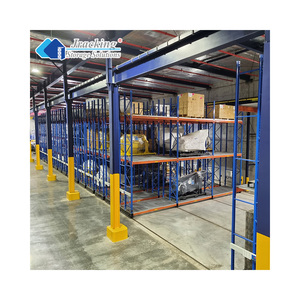
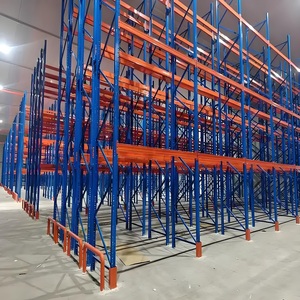
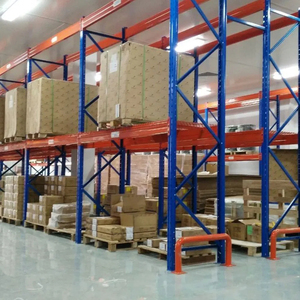
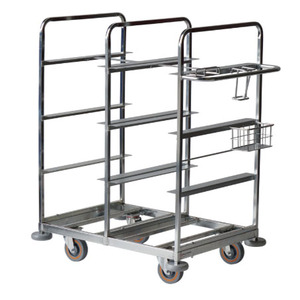
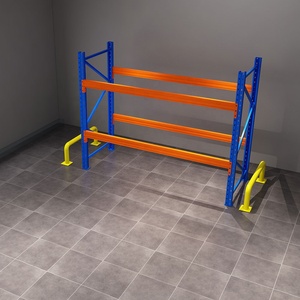
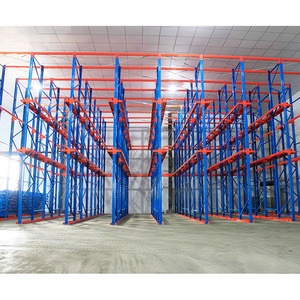
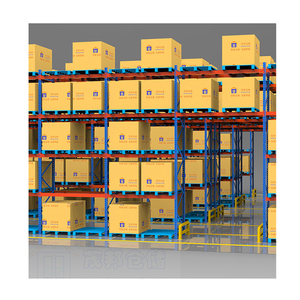
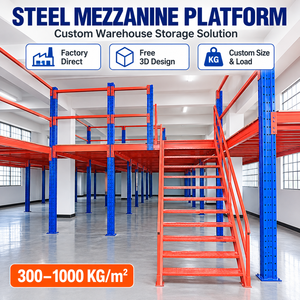
How global distribution centers, third-party logistics (3PLs), and engineering EPCs benchmark rack manufacturers prior to contract signing.
Procuring industrial pallet racking is an exercise in structural safety. An upright collapse caused by sub-standard gauge steel or poorly welded beam connectors risks millions in asset destruction and severe personal liabilities. When conducting factory audits—either physically at manufacturing clusters or via accredited third parties like SGS, TÜV, or Bureau Veritas—procurement executives must scrutinize four primary engineering pillars:
Tier-1 suppliers use genuine Q235B or high-strength Q355B strip steel with certified mill test reports (MTR). Tensile yield strength must consistently exceed 235–355 MPa without micro-fracturing along continuous cold roll-forming bends.
Box beams and step beams require robotic continuous CO2 gas-shielded fillet welding along the beam-end connector ears. Connectors must integrate three-to-four engagement prongs and automated spring safety locking pins.
Prior to powder application, automated automated nine-stage acid pickling, phosphating, and de-greasing baths ensure absolute surface purification. Dry film thickness (DFT) must measure 60–90 μm to survive high-humidity operating conditions.
| Evaluation Parameter | Certified Tier-1 Factory (HEDA Standard) | Generic Commodity Racking Supplier | Direct Impact on Warehouse ROI |
|---|---|---|---|
| Raw Material Formulation | Certified Q235B / Q355B cold-rolled prime steel from Baosteel/Shougang | Uncertified secondary scrap or re-rolled plate | Prevents sudden catastrophic embrittlement failures under full design loads |
| Deflection Ratio Standards | Calculated at L/200 under full design capacity (EN 15512 / RMI) | L/150 or non-verified deflection criteria | Maintains forklift driver safety margins and prevents permanent beam sagging |
| Surface Pretreatment | 9-stage automated chemical cleaning, phosphating & pure epoxy powder | Basic manual solvent wipe with rapid alkyd paint | Resists corrosion, chipping, and rust-flaking in ambient and chilled warehouses |
| Seismic Footplate Engineering | Custom widened baseplates with dual wedge anchors & diagonal portal ties | Standard single-hole stamped sheet footplates | Essential for compliance with UBC and IBC seismic hazard classifications |
| Export Packaging & Loading | Knockdown modules secured with timber battens, bubble pack & steel straps | Loose metal-to-metal bundling directly inside container | Cuts ocean freight costs by up to 35% and eliminates transit rub damage |
The confluence of astronomical real estate pricing, omnichannel delivery demands, and automated intralogistics is reshaping how supply chain leaders procure storage infrastructure.
Buyers are moving beyond basic static drive-in racks toward Radio Shuttle Racking Systems. Powered shuttles traverse deep storage channels, reducing forklift travel time by 60% and nearly eliminating rack frame impact collisions.
Global clients demand dual compliance: EN 15512 (European standard) and ANSI MH16.1 (American standard). Advanced factories provide dynamic finite element analysis (FEA) reports calculating base shear, inter-story drift, and soil-structure interactions.
Enterprise environmental, social, and governance (ESG) audits now examine manufacturing scope 1 and 2 emissions. Leading suppliers employ closed-loop electrostatic recovery booths (98% powder reuse) and electric roll-forming drives to minimize lifecycle carbon footprints.
Modern racking procurement is tied into Building Information Modeling (BIM). Tier-1 manufacturers provide native Revit (.RFA) and IFC files to verify clear overhead sprinkler clearances, lighting lumens, and automated mobile robot (AMR) path layouts.
From robotic roll-forming tolerances to smart impact sensors, racking engineering is evolving rapidly.
The development of pallet storage racks is characterized by a push toward higher strength-to-weight ratios, greater modularity, and automated intelligence. In high-bay facilities reaching 15 to 40 meters, traditional manufacturing tolerances are unacceptable. Modern factories utilize computerized roll-forming lines capable of maintaining column straightness within 1/1000 of length, preventing cumulative eccentric loading along deep reach aisles.
While standard open Omega profiles remain the industry workhorse, severe duty environments are adopting seam-welded closed-tube structural steel uprights. These provide over 40% higher torsional rigidity and extreme resistance to forklift prong shear punctures.
Sub-zero temperatures down to -30°C induce severe cryogenic embrittlement in conventional commercial steel. Innovations in micro-alloyed boron and manganese steel compositions maintain impact notch toughness, preventing catastrophic crack propagation during cold warehouse impacts.
Development is underway for integrated tri-axial IoT vibration and strain gauge telemetry installed directly within bottom upright column protectors. These sensors alert safety directors via cloud dashboards the moment an impact exceeds allowable yield thresholds.
Established in 2001 in Pazhou, Guangzhou, HEDA Shelves combines over two decades of mechanical precision with direct export manufacturing capability.
Headquartered immediately adjacent to the China Import and Export Fair (Canton Fair) Complex in Guangzhou, Guangzhou Heda Shelves Co., Ltd. has spent over 23 years perfecting industrial racking design, precision roll-forming, and full-scope overseas project delivery. Having executed more than 5,000 turnkey warehousing installations across Southeast Asia, North America, Europe, Australia, Africa, and the Middle East, HEDA provides international buyers with complete supply chain transparency, engineering rigor, and direct-from-factory pricing.
Continuous engineering since 2001, mastering custom racking, mezzanines, and high-bay installations.
Complete systems: selective pallet, radio shuttle, cantilever, mezzanines, and store fixtures.
Bespoke beam lengths, column profiles, weight capacities, and RAL powder coat colors.
Continuous material testing, weld inspection, and real physical static load testing up to 4,500 kg.
Dedicated structural engineers provide rapid CAD layouts, 3D models, and transparent quotations.
A standout core competency of HEDA is international shipping optimization. Steel racking is inherently heavy, and inefficient container packaging can double international freight costs. HEDA's engineering department produces custom computer-modeled container packing blueprints for every project. Components are fabricated to exact knock-down specifications, strapped using high-tensile steel banding, wrapped in heavy-duty polyethylene shock-absorbing film, and cushioned with custom wooden dunnage blocks. This ensures pristine surface quality upon port arrival while cramming up to 26–28 metric tons into a standard 40-foot High Cube container.
Clear, technically accurate answers to the most common queries raised by warehouse managers, EPC contractors, and procurement agents.
Whether you are expanding an existing distribution center, designing a cold storage facility, or setting up a multi-tier mezzanine platform, our export sales engineers reply within 8 hours with custom CAD layouts, load calculations, and factory-direct pricing.
Get a Quote