Industrial Automation & Material Handling Whitepaper

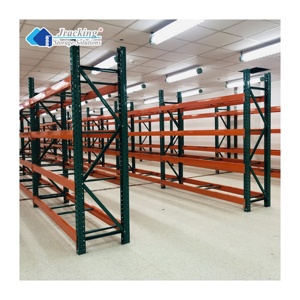
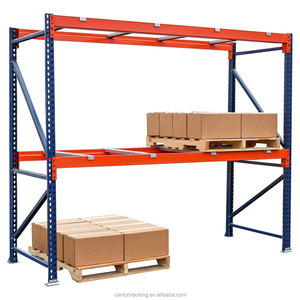
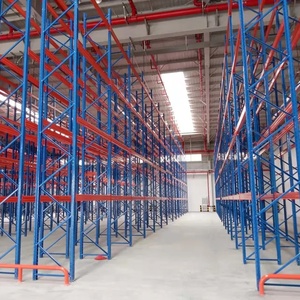
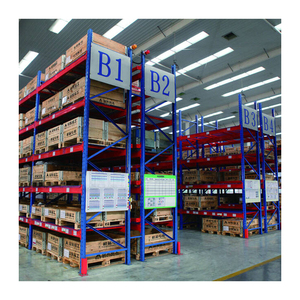
Top China Heavy Duty Automated Pallet Racking Factories & Suppliers

The definitive B2B technical procurement framework, structural engineering audits, and global supply chain roadmap for next-generation automated warehousing systems.

Market Intelligence

Engineering Excellence in Automated Racking

Global supply chain resilience requires precision-engineered structural fabrication. Modern heavy-duty automated pallet racking systems form the rigid mechanical backbone for Automated Storage and Retrieval Systems (ASRS), high-density radio shuttle configurations, and intelligent high-bay distribution hubs worldwide.

Q235B / Q355B
Certified Structural Steel
4,500 kg
Max Pallet Level Payload
5,000+
Global Logistics Installations
< 8 Hours
Direct Engineering Response
Industrial Portfolio

Engineered Pallet Storage Systems

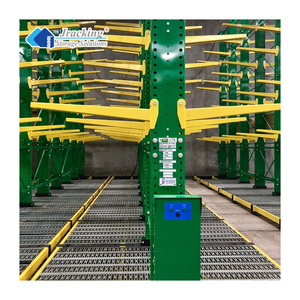
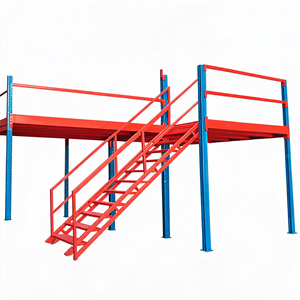
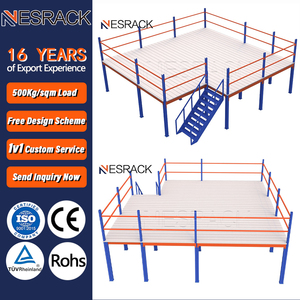
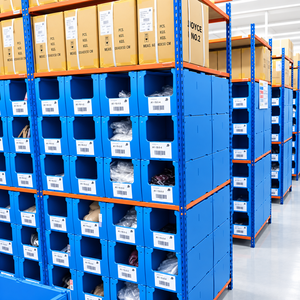
Review our heavy-duty industrial racking configurations, cold-storage shuttle components, cantilever racks, and modular mezzanine platforms manufactured to ISO 9001, CE, and FEM structural standards.

Whitepaper Chapter 01

Future Procurement Trends in Heavy-Duty Automated Racking

The automated warehouse rack is no longer passive steel shelving. It has evolved into an active electromechanical structure that dictates robotic throughput, pallet clearance tolerances, and cold-chain thermal efficiency.

1. Ultra-Low Tolerance Requirements for Autonomous Mobile Robots (AMR) & ASRS

Procurement teams are shifting away from traditional selective racking tolerances (FEM 10.2.02 standard) toward tight-envelope robotic fabrication (FEM 9.831 / 9.832). When high-speed crane cranes or Automated Guided Vehicles (AGVs) navigate aisles at speeds exceeding 4 m/s, floor deflection and beam deflection limits tighten from standard 1/200 down to 1/350 or 1/500 of the span. Upright vertical plumbness must remain within ±1.5 mm across a 24-meter vertical lift.

"Automated pallet warehousing failures are rarely caused by steel yield stress; they are triggered by millimeter-level deflection under non-uniform dynamic braking, causing laser sensor misreads on high-speed shuttles."

Forward-thinking procurement specifications must demand structural roll-formed profiles featuring high-frequency continuous punched holes with zero taper. Spliced connection plates must utilize Grade 8.8 or Grade 10.9 high-tensile structural bolts rather than standard friction connectors to resist cyclic fatigue from shuttle acceleration and deceleration forces.

Rack-Supported Clad Buildings

Replacing conventional civil construction by using the heavy-duty racking framework directly as the load-bearing skeleton for exterior wall cladding and roof panels, slashing construction timetables by 35%.

Cold-Storage Sub-Zero Metallurgy

Rapid expansion of cold-chain logistics demands low-temperature impact resistant steel (Q355ND/NE) capable of maintaining structural ductility and Charpy V-notch energy standards down to -30°C without brittle cleavage fracture.

Digital Twin & IoT Strain Gauges

Integration of fiber-optic strain sensors inside main load beams and wireless vibration transceivers on baseplates to transmit real-time deflection telemetry into warehouse management software (WMS).

Structural Benchmark

Engineering Specification Comparison

Comparing conventional manual selective pallet racking against heavy-duty automated systems helps logistics architects formulate proper RFP criteria.

Evaluation Parameter Conventional Pallet Racking Radio Shuttle High-Density Clad Automated High-Bay (ASRS)
Vertical Bay Height Limits Up to 11.5 meters (Forklift limited) Up to 18.0 meters Up to 40.0 meters
Beam Deflection Tolerance L / 200 (FEM standard) L / 300 to L / 350 L / 400 to L / 500 (Tight Envelope)
Space Utilization Efficiency 40% - 45% (Aisle-dominant) 70% - 80% (Deep lane) 85% - 92% (Maximum Density)
Throughput Cycles (Pallets/hr) 20 - 30 manual picks / driver 40 - 65 shuttle picks / crane 120 - 250 automated crane cycles
Seismic Damping Requirements Standard concrete anchor bolts Heavy base plate + chemical anchors Finite element simulated dynamic damping
Factory Verifiable Capabilities

The HEDA Industrial Manufacturing Advantage

Established in 2001 in Pazhou, Guangzhou, Guangzhou Heda Shelves Co., Ltd. has delivered over 5,000 logistics and automated retail storage projects across 5 continents.

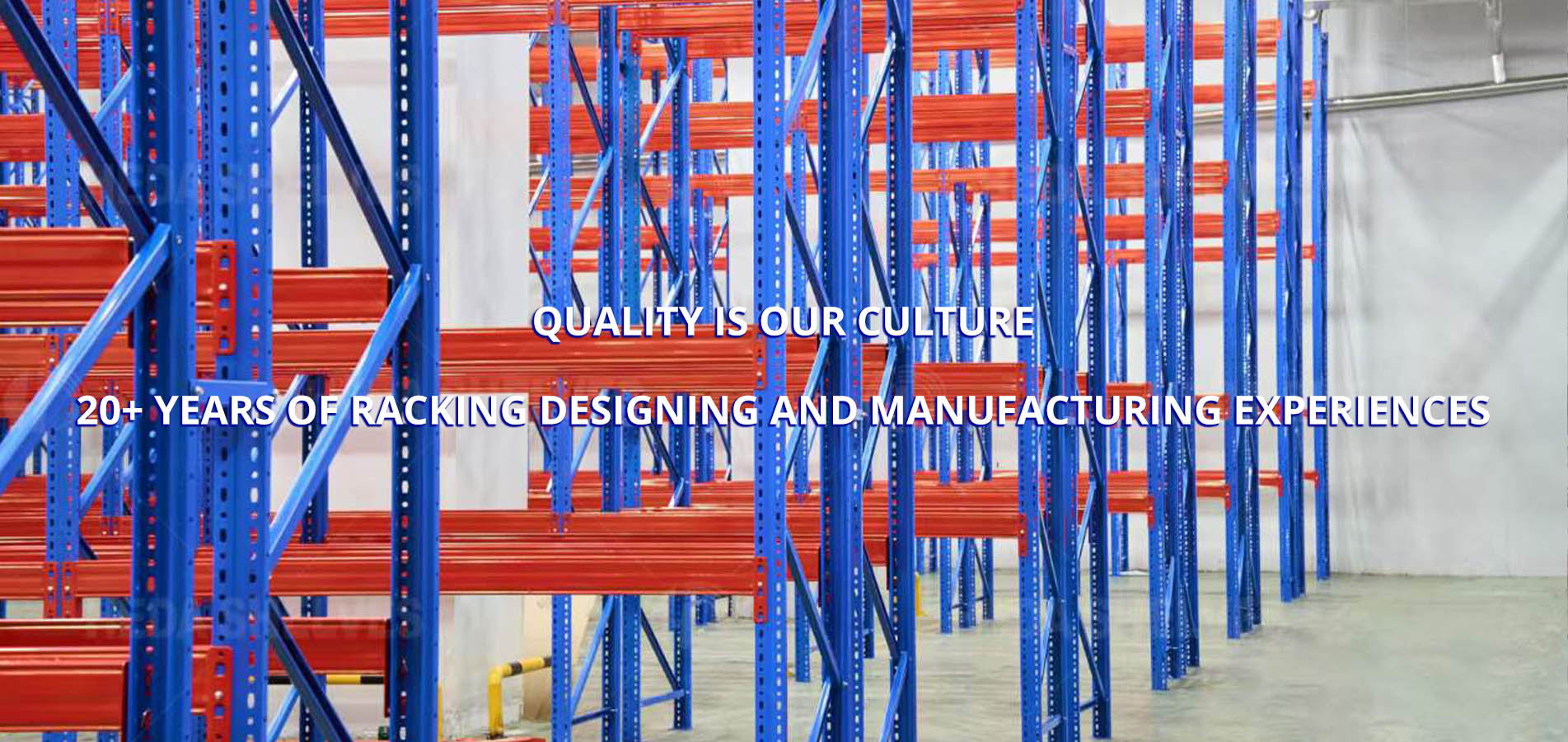
HEDA automated heavy duty high bay pallet racking workshop

Our manufacturing headquarters adjacent to the Canton Fair Complex provides international buyers with complete auditing transparency. From high-speed automated roll-forming lines punching continuous teardrop and diamond-slot upright columns to 22-stage automated electrostatic powder coating tunnels that completely eliminate slag, weld spatters, and paint drips.

2001
Founded in Guangzhou with 20+ years export integrity
3,000+ Tons
Monthly cold-rolled structural steel capacity
300+
Skilled technicians, welders, and design engineers
8-Hour SLA
Guaranteed technical design and drawing turnaround

Seismic Engineering for Fault Zones

Custom seismic baseplates, deep concrete chemical sleeve anchoring, and mid-level cross X-bracing compliant with UBC Zone 4 and Eurocode 8 seismic requirements for high-risk zones in the Americas and Oceania.

Full Knock-Down Export Packing

Structural parts are nested with shock-absorbing strapping, bubble buffering, and heavy steel skids, ensuring 100% container volume loading to reduce ocean freight expenses while protecting powder coatings.

3D BIM & Turnkey Structural Layouts

Before production, our engineering office generates comprehensive CAD drawings, structural load simulations, and 3D walkthrough renderings integrated with building MEP designs to eliminate on-site assembly conflicts.

Procurement Guide

Frequently Asked Questions

Key structural, metallurgical, and logistics answers direct from our senior warehouse storage engineering team.

What specific steel grades and mechanical testing are utilized in HEDA automated pallet racking?
We utilize certified prime cold-rolled steel coils primarily sourced from top-tier mills (Baosteel and Shougang). Our standard frames and beams utilize Q235B (yield strength ≥ 235 MPa, tensile strength 370–500 MPa), while high-load and seismic vertical uprights utilize Q355B (yield strength ≥ 355 MPa). Every manufacturing batch includes raw material mill test certificates (MTC), tensile elongation testing, and weld penetration testing according to EN 15512 and RMI criteria.
What are the maximum pallet load ratings supported by your high-bay configurations?
Our engineered heavy-duty configurations regularly support 1,000 kg to 4,500 kg per beam level (distributing two to three standard 1,200x1,000mm or Euro 800x1,200mm industrial pallets per bay). In multi-tier structural platforms and heavy mezzanine floors, we engineer sustained uniform distributed loads (UDL) between 800 kg/m² and 1,200 kg/m², while heavy cantilever arms support up to 2,500 kg per single cantilever level.
How do automated radio shuttle systems interface with your heavy-duty rack structures?
Our automated shuttle racking integrates specialized roll-formed galvanised guide rails equipped with laser-cut docking points, centralizing entry ramps, and safety wheel guards. Rail tolerance is held within ±1.0 mm to guarantee smooth shuttle traveling speeds up to 1.2 m/s under full 1,500 kg pallet loads without rail binding or vibration-induced battery disconnection.
What surface treatment technology is used to prevent corrosion in cold stores and humid environments?
We operate automated continuous pre-treatment lines featuring degreasing, hot alkaline wash, iron phosphating, and demineralized water rinse. Racks receive an electrostatic epoxy-polyester architectural powder coating baked at 180°C to 200°C, providing coating thicknesses of 60 to 80 microns. For harsh exterior yards, fertilizer warehouses, or sub-zero blast freezers, we provide continuous hot-dip galvanizing (HDG) to ASTM A123 standards with coating thicknesses exceeding 85 microns.
Can HEDA customize racking configurations to accommodate non-standard overseas pallets?
Yes. Over 70% of our delivered volume is custom-engineered OEM/ODM production. We adapt upright frame depths (from 600 mm to 1,500 mm), beam clear spans (from 1,000 mm to 4,200 mm), box beam and step beam profiles, and teardrop or hook punch patterns to interface seamlessly with US teardrop standards, European hook connectors, or Australian pallet formats.
What is the typical engineering and production lead time for an overseas container project?
Our export sales engineering team provides full 2D layout drawings and structural proposals within 8 business hours of receiving your warehouse architectural plan. Upon technical drawing signoff, standard manufacturing cycles range from 15 to 25 calendar days for 2 to 10 standard 40-foot high-cube (40HQ) containers, supported by pre-shipment factory trial assemblies.

Ready to Engineer Your Automated Warehouse?

Connect immediately with our Guangzhou senior material handling engineering division. Receive custom load calculations, 3D layouts, and direct container factory pricing within 8 hours.