HEDAHeavy Duty Racking
 English
 Español
EnglishEspañolEngineered for medium-to-heavy manual loading, multi-tier mezzanine consolidation, and high-density unitized palletization. Each structure utilizes high-grade cold-profile steel and automated robotic welding to guarantee static deflection under L/250.
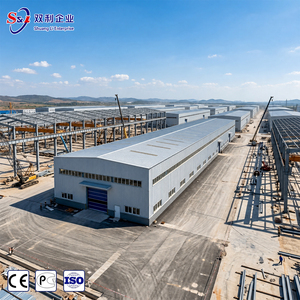
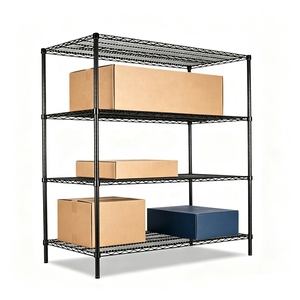
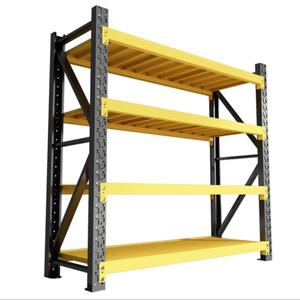
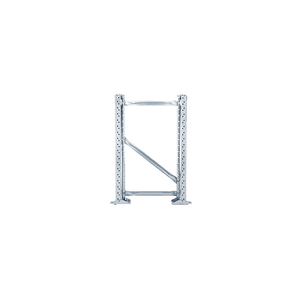
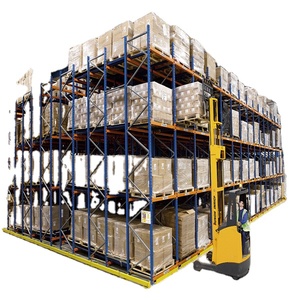
Heavy duty longspan racking represents the structural backbone of modern intermediate fulfillment centers, 3PL logistics facilities, automotive parts warehouses, and multi-tier picking architectures. Unlike lightweight commercial shelving or heavy pallet racking that requires dedicated mechanical handling equipment, industrial longspan systems operate as high-density, wide-bay manual load configurations capable of bridging spans from 1,200 mm to beyond 2,700 mm while carrying uniformly distributed loads (UDL) between 300 kg and 1,500 kg per level.
Structural reliability starts at the molecular composition of the coiled steel. Our fabrication standard exclusively deploys certified continuous-cast prime cold-rolled Q235B structural carbon steel (equivalent to European S235JR and American ASTM A36). Q235B provides an optimal balance between yield strength ($R_e \ge 235 \text{ MPa}$), ultimate tensile strength ($R_m$ spanning 370–500 MPa), and an elongation percentage at fracture exceeding 26%. This ductile capacity prevents sudden brittle structural shear failure under dynamic impact loads, such as accidental collision from walkie-stackers or severe seismic excitation.
Our upright frames undergo continuous multi-stage cold-roll forming with cold stamping of Omega-shaped ($\Omega$) cross-sections. The open-back Omega profile, augmented by precisely engineered stiffener returns along the flanges, yields an exceptionally high moment of inertia ($I_x, I_y$) and radius of gyration, thereby drastically curtailing axial buckling tendencies under heavy multi-tier dead loads.
Under international logistics racking norms, allowable structural deflection for horizontal step beams and box beams carrying static load is constrained to $L/200$ (general duty) and $L/250$ to $L/300$ for heavy duty precision installations, where $L$ defines the clear span between adjacent upright columns:
Maximum Deflection: δ_max = (5 × q × L^4) / (384 × E × I_x) ≤ L / 250
Here, $q$ denotes the uniformly distributed static load per unit length, $E$ indicates Young's modulus of elasticity for structural steel ($2.05 \times 10^5 \text{ N/mm}^2$), and $I_x$ denotes the second moment of area about the horizontal axis of bending. Every longspan beam welded in our Guangzhou plant integrates dual structural steel drop-lock connectors with 3 or 4 claw hooks that engage tightly into the upright teardrop or diamond perforations. This semi-rigid mechanical joint resists rotational torsional displacement, distributing positive bending moments away from the beam mid-span and transferring them into the vertical column frame.
| System Classification | Bay Span (Clear Width) | Frame Depth | Load Capacity (UDL/Level) | Decking Substrate Option | Primary Industrial Use Case |
|---|---|---|---|---|---|
| Standard Longspan D Series | 1,200 – 1,800 mm | 400 – 800 mm | 300 – 500 kg | Cold-rolled steel drop-in shelves | E-commerce bin storage, light spare parts |
| Heavy Duty Longspan HD | 1,800 – 2,500 mm | 600 – 1,200 mm | 600 – 1,200 kg | Wire decking / Ribbed steel deck | Automotive engine heads, heavy hardware |
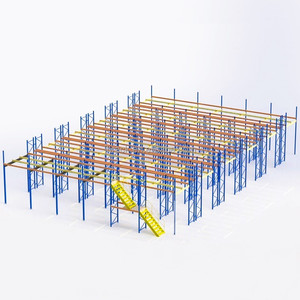
| Mezzanine-Supported Longspan | 1,500 – 2,400 mm | 800 – 1,200 mm | 800 – 1,000 kg + Deck Load | Perforated steel / Galvanized grating | Multi-tier manual consolidation platforms |
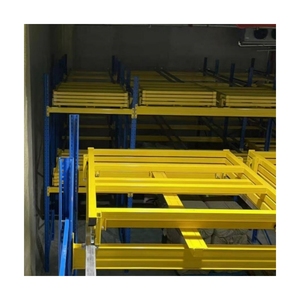
| Wide-Span Heavy Push-Back | 1,800 – 3,000 mm | 1,000 – 1,500 mm | 1,000 – 2,500 kg | Roller beds / Cart nesting channels | High-density FIFO/LIFO warehouse vaults |
Shifting macroeconomic parameters, automated logistics retrofits, and global decarbonization commitments have fundamentally transformed how supply chain directors specify and procure warehouse structural steel.
High ocean freight volatility has prioritized packaging cubic efficiency. Modern procurement mandates 100% boltless, knock-down upright frames where bracing members nest flat with high-tensile locking bolts. By eliminating pre-welded bulk frames, export sea container utilization rises from 62% to over 91%, slashing landed unit freight by 24–38%.
Industrial operations are transitioning toward goods-to-person automation. Procurement specs now stipulate precise base clearance tolerances (±1.5mm) and standardized lower aperture clearances to accommodate mobile robotic drives that glide beneath longspan levels, creating collaborative manual-robotic fulfillment stations.
Global corporate ESG mandates require low environmental footprints. Standard wet paints are being phased out in favor of thermoset polyester-epoxy powder formulations processed through 7-stage phosphate-free silane pre-treatments, delivering 500+ hours of ASTM B117 salt spray rust resistance without volatile organic emissions.
Buyers located in Pacific Rim, Latin American, and Mediterranean seismic regions now mandate non-linear dynamic simulation reports. Structural procurement includes oversized seismic footplates, high-ductility Hilti/Fischer anchor bolts, and dual-plane X-bracing to prevent catastrophic rack collapse during Richter 7+ events.
Enterprise facilities now demand physical-to-digital asset sync. Each HEDA upright frame and beam features laser-etched QR identifiers matching structural manufacturing batches, allowing logistics supervisors to verify rated UDL limits, inspection logs, and replacement part numbers via tablet scans.
Warehouse storage is moving rapidly away from static, single-purpose metal racks toward high-modularity, reconfigurable vertical assets. As commercial rents escalate globally, logistics managers can no longer afford unutilized cubic air space. This reality has catalyzed three critical technological evolutionary trends in longspan racking:
Historically, manufacturing thick 2.0 mm–2.5 mm steel profiles was the sole method for achieving higher load tolerances. However, cutting-edge roll-forming technology uses high-strength structural micro-alloyed steels (such as Q355B and domex variants) combined with intricate profile folding. By introducing 12-to-16 bend corners into a single upright section, stiffness increases exponentially without adding deadweight steel mass. This weight-to-strength optimization reduces base steel consumption by 14% while retaining identical torsional resistance.
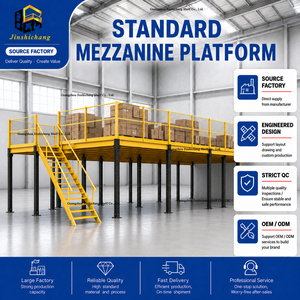
Rather than constructing costly free-standing structural steel I-beam platforms, modern warehouses deploy heavy duty longspan racking as structural load-bearing piers for 2-tier and 3-tier pick towers. The longspan columns support the overhead C-section and Z-section joists directly. Integrated steel stairs, pallet drop gates, and illuminated perimeter mesh safety railings create hundreds of square meters of primary manual fulfillment footprint within existing warehouse envelopes.
Human error and rapid hand-pallet operation represent the primary causes of beam dislodgement in manual pick aisles. Traditional L-shaped wire pins are prone to vibrating loose or being discarded by maintenance crews. Contemporary HEDA longspan beams integrate automated snap-lock safety pins that engage with an audible click upon seating into the upright slot. Disengagement requires a deliberate two-stage upward mechanical leverage tool, preventing dangerous load dislodgement under high-velocity impacts.
Established in 2001 in Pazhou, Guangzhou—directly beside the Canton Fair Complex—HEDA is an audited international supplier combining two decades of structural craftsmanship with cutting-edge automated production lines.
20+ years of dedicated R&D and export manufacturing, delivering 5,000+ completed storage projects worldwide since 2001.
From heavy duty longspan, selective pallet, and shuttle systems to multi-tier mezzanines, store gondolas, and supermarket equipment.
Tailored upright gauges, beam spans, powder coating RAL formulations, wire decks, and structural branding for OEM/ODM distributors.
Certified Q235B raw steel verification, non-destructive weld penetration checks, 150% static overload testing, and smooth zero-slag powder coat.
Dedicated bilingual structural engineers supply 2D layout CAD schematics and detailed BOM pricing within 8 hours across global time zones.
Actionable answers prepared by HEDA structural engineering and international shipping specialists.