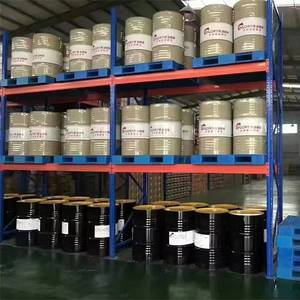
 Selective Rack
Pallet Racking Warehouse Storage Heavy Duty Warehouse Shelves Goods Pallet Storage Rack
- Load Rating: 1,000 – 4,500 kg / beam level
- Material: High-yield Q235B steel grade
- Access: 100% direct pallet selectivity
 English
 Español
Engineered for extreme volumetric efficiency, seismic safety compliance, and maximum forklift compatibility across global supply chain distribution hubs.
Selective Rack
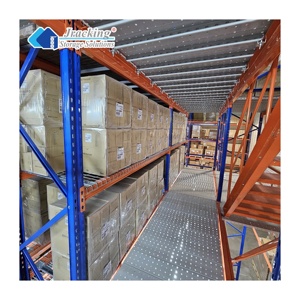 EUR Pallet Standard
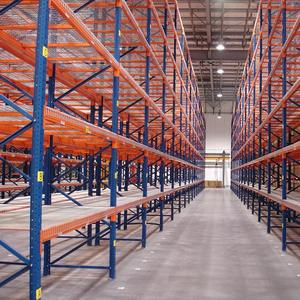 CE Certified
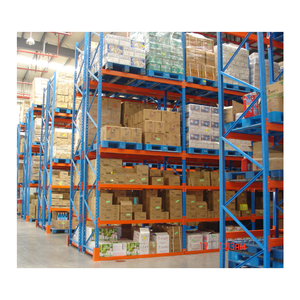 Modular Stacking
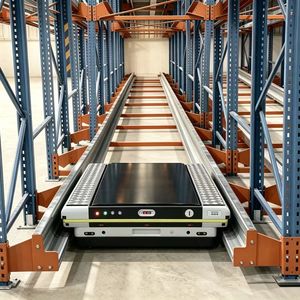 Semi-Automated
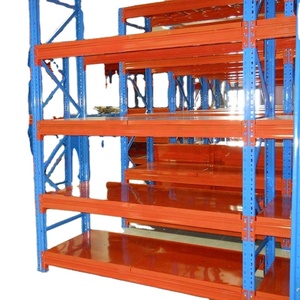 Longspan Shelving
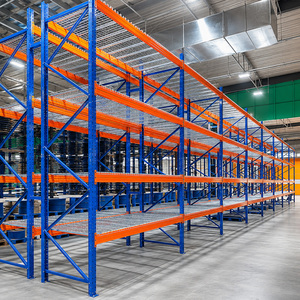 Automotive Heavy
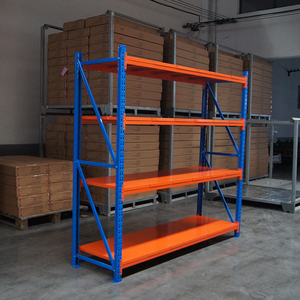 Industrial Universal
Eliminating supply chain uncertainties through certified steel metallurgy, engineering-first precision, and lean export knock-down packing methodologies.
Over two continuous decades specializing in structural calculation, high-density manufacturing, and turnkey commissioning across 5,000+ logistics hubs worldwide.
Selective pallet, radio shuttle, drive-in, cantilever, multi-tier mezzanines, and store equipment consolidated under single-source engineering oversight.
Custom beam spans, upright steel gauge variations, baseplate seismic bolting patterns, and brand-matching powder coatings tailored to client layout blueprints.
Continuous spectroscopic raw steel testing, automated seam ultrasonic verification, salt-spray corrosion tests, and full destructive deflection loading audits.
Direct technical access to certified structural CAD engineers providing preliminary structural calculations, 3D DWG schematics, and load tables within 8 business hours.
In industrial high-bay intralogistics, a failure in storage rack design is never a minor issue—it represents a systemic threat to warehouse personnel safety, multi-million dollar inventory assets, and operational continuity. As an established industrial pallet racking manufacturer and exporter established in 2001 in Pazhou, Guangzhou (adjacent to the world-renowned Canton Fair Complex), Guangzhou Heda Shelves Co., Ltd. (HEDA Racking) manufactures racking systems designed around empirical stress analysis rather than generic estimations.
The structural integrity of industrial pallet racks depends on the metallurgical consistency of the raw steel. We exclusively source continuous cast, hot-rolled coils converted into certified Q235B and Q355B cold-rolled structural steel. With a nominal yield strength ($R_e$) of no less than 235–355 MPa and ultimate tensile strength ($R_m$) ranging between 370–510 MPa, our upright posts and load beams deliver stable elastic deformation properties under peak dynamic load events caused by seismic ground movement or high-velocity material handling impacts.
Formed through continuous 22-station automated roll-forming lines. Profile geometries feature 10 to 12 cold-bent stiffening ribs, maximizing the radius of gyration ($r$) and critical buckling resistance ($P_{cr}$) under concentric and eccentric vertical loads up to 28,000 kg per bay.
Manufactured by robotic seam-welding two matching "C"-channels together into a unified tubular structure. High-strength 3, 4, or 5-claw steel end connectors transfer beam loads into the column slots, minimizing joint rotation and deflection to strict L/250 ratios.
180-meter continuous pretreatment tunnel with zinc-phosphate conversion coating, automated 12-gun electrostatic powder deposition, and 200°C cross-linking ovens to produce non-chipping, scratch-resistant surface protection rated past 500 hours of continuous salt-spray exposure.
Every export project engineered by HEDA Racking is evaluated under finite element analysis (FEA) software, adhering strictly to the client's territorial code requirements:
| Standard Specification | Governing Jurisdiction | Structural Deflection Limits | Seismic & Impact Redundancy | HEDA Factory Verification |
|---|---|---|---|---|
| FEM 10.2.02 / EN 15512 | European Union, UK & CE | Vertical Deflection ≤ L/200; Horizontal ≤ H/350 | Second-order ($P-\Delta$) global sway frame analysis | CE certified, full claw yield moment testing |
| RMI (ANSI MH16.1) | North America, US, Canada | Vertical Deflection ≤ L/180 max design limit | Baseplate boundary anchor shear & uplift verification | Engineered seismic baseplates up to 16 mm thickness |
| AS 4084:2023 | Australia & New Zealand | Deflection ≤ L/200 (Class A logistics centers) | Dynamic spectral acceleration & fork shear upright guards | Independent load testing with 1.5 safety factor |
| GB/T 28576-2012 | China & Trans-Asia (OBOR) | Vertical Deflection ≤ L/200; Upright ≤ 1/1000 | Material tensile verification ($R_e \ge 235 \text{ MPa}$) | Mill test certificate (MTC) with chemical analysis |
By pre-engineering our structural components with fully knock-down (KD) configurations, upright frames are nested with bolted horizontal and diagonal bracing struts ($K$-bracing or $X$-bracing schemes). This approach provides double structural advantage: it enhances field reparability when an upright leg experiences warehouse forklift damage, while simultaneously maximizing shipping container volume efficiency to lower international ocean freight costs by up to 35% per delivered project bay.
How intralogistics automation, space cost compression, and ESG mandates are transforming warehouse rack procurement strategies across major global markets.
Rising industrial land acquisition costs in regional distribution centers have accelerated the shift away from standard 3.5m wide forklift aisles. Enterprise buyers are pivoting rapidly toward Radio Shuttle Racking Systems, converting vertical clear heights up to 18 meters into continuous deep-channel storage lanes (up to 40 pallets deep). This change increases warehouse volumetric storage density by up to 80% while significantly reducing lift truck transit cycles and aisle collision hazards.
The expansion of global frozen pharmaceutical and cold food logistics demands racking systems designed for operation at -25°C to -30°C. In sub-zero temperatures, standard mild structural steels can experience severe ductile-to-brittle metallurgical transitions. Procurement engineers now demand special alloy stabilization, hot-dip galvanized finishes, or low-temperature impact-resistant powder coatings to prevent micro-fracturing under dynamic pallet impact.
Recent structural revisions in building codes across the Americas (UBC/IBC/RMI) and Pacific Rim regions demand that rack suppliers deliver site-specific structural calculations. These calculations must account for the natural resonance frequency ($T_1$) of pallet-loaded frames, ground acceleration spectra ($S_s, S_1$), and live load soil-structure interaction. Importers require validated PE structural stamps and widened baseplates anchored with specialized seismic chemical chemical studs.
Modern distribution facilities are increasingly built to support unmanned operations ("lights-out" or "dark" warehouses). Consequently, racking tolerances have evolved from classic manual millimeter variances down to sub-millimeter tolerances (±1.0 mm cumulative over a 24-meter vertical span). Frame perpendicularity, deflection consistency, and optical positioning target integrations must be maintained so automated crane stackers and autonomous mobile robots (AMRs) can interface seamlessly.
When procurement directors evaluate factory bids from Chinese racking manufacturers, analyzing solely the FOB steel price per metric ton introduces significant operational and financial risks. A complete Total Cost of Ownership (TCO) model reveals that the initial procurement price accounts for merely 40% to 55% of the total 15-year lifecycle expense of an industrial warehouse racking installation.
| Evaluation Pillar | Low-Bid Tier 3 Exporter Risk | HEDA Engineered Factory Standard | Direct Financial Impact (10-Yr Horizon) |
|---|---|---|---|
| Steel Grade Consistency | Scrap-reprocessed steel with inconsistent tensile yield and high carbon embrittlement | Certified prime Q235B cold-rolled steel from top-tier mills with certified MTC test traceability | Eliminates sudden beam buckle failures and pallet drop liabilities |
| Packaging & Container Cube | Welded rigid uprights that waste 45% of 40HQ container interior cubic volume | Precision knock-down (KD) bolted frames flat-packed with structural corner steel protectors | Saves $1,200 – $3,500 per container in ocean freight costs across international sea routes |
| Pretreatment & Coating Life | Acid wiping without phosphate layer; powder flaking starts within 12–18 months | 180-meter continuous multi-stage phosphating wash plus thermoset electrostatic polymer cure | Prevents corrosion and eliminates rack repainting and inventory contamination |
| Pre-Engineering Verification | Generic PDF catalog estimates without dynamic deflection calculations | Dedicated structural design team supplying custom CAD plans, 3D DWG schematics, and load charts within 8 hours | Prevents local building permit rejections and costly layout modifications |
By establishing engineering-first procurement specifications, logistics project directors save substantial capital across shipping, assembly, and long-term facility safety. HEDA Racking's strategic manufacturing hub in Pazhou, Guangzhou, delivers clear logistical advantages: overseas buyers can audit factory production lines, review physical steel samples, and verify load test fixtures during their attendance at the biannual Canton Fair.
Detailed engineering and commercial answers to the questions most frequently raised by international supply chain directors, project engineers, and facility planners.