Heavy Duty
 English
 Español
Precision-fabricated from Q235B cold-rolled structural steel, treated with anti-corrosion electrostatic powders, and tailored for heavy payload requirements across global distribution hubs.
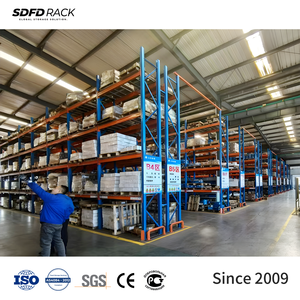
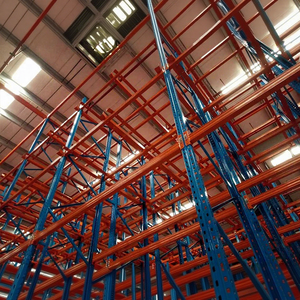
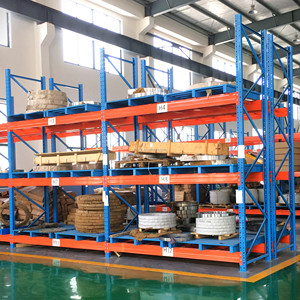
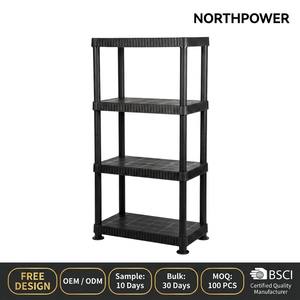
Over 23 years of continuous manufacturing excellence, delivering structural reliability, compliance, and direct factory pricing to 100+ countries.
Founded in 2001 in Guangzhou, Heda has engineered over 5,000+ completed projects across 5 continents, serving retailers, cold-chain hubs, and 3PL operators.
End-to-end catalog manufacturing: selective pallet racks, heavy mezzanine platforms, radio shuttle carts, drive-in systems, and retail gondolas from a single source.
Dynamic engineering adaptation for height, beam clear-spans, payload tiers, seismic load zoning, and anti-corrosion electrostatic RAL powder coatings.
Certified Q235B high-tensile cold-rolled steel, robotic automatic seam welding, zero-slag automated blasting, and strict physical deflection verification.
Senior bilingual structural engineers deliver professional warehouse layout proposals, AutoCAD schematics, and 3D realistic renderings within 8 business hours.
As industrial land prices escalate and automated robotics take center stage, multi-tier mezzanine engineering is undergoing significant technological transitions.
Modern warehouse footprints leverage rack-supported mezzanine platforms where high-tensile upright frames double as primary vertical structural columns. This dual functionality eliminates the need for independent heavy-gauge civil pillars, reducing steel tonnage costs by up to 34% while optimizing floor volumetric utilization by over 100%.
Advanced hot-dip galvanizing and electrostatic micro-powder coatings safeguard steel substrates against high-humidity conditions, common in cold-chain logistics and maritime fulfillment hubs.
Traditional wooden plywood and bare checkered plate decks are rapidly being superseded by specialized composite steel floorings, cold-formed perforated steel planks, and fiber-reinforced resin floor systems. These engineered surfaces withstand the point-load wheels, acceleration torque, and continuous trajectory braking of Autonomous Mobile Robots (AMRs).
Surface co-efficient friction tuning ensures accurate optical sensor tracking while dissipating static electricity in micro-fulfillment distribution hubs.
Global export compliance demands rigorous structural simulations adhering to FEM 10.2.02, RMI MH16.1, and AS4084 standards. Today's mezzanine engineering applies finite element modeling to determine buckling resistance under seismic vibrations, live load harmonic resonance, and asymmetric weight loading configurations.
Expanded heavy base plates, dual-shear safety drop pins, and high-tensile anchor bolting ensure catastrophic collapse prevention under extreme industrial operations.
| Evaluation Parameter | Selective Pallet Racking | Structural Steel Mezzanine | Rack-Supported Multi-Tier Mezzanine |
|---|---|---|---|
| Volumetric Space Efficiency | Moderate (Single Floor Footprint) | High (200% Usable Floor Area) | Maximum (Up to 300% Multi-Tier Utilization) |
| Standard Floor Load Capacity | 1,000 – 4,500 kg / beam level | 500 – 1,500 kg / m² uniform load | 300 – 1,000 kg / m² platform level |
| Material Handling Flow | High forklift accessibility | Conveyor, lifter, and cart manual picks | Automated chutes, vertical lifts & AGV sorting |
| Installation Complexity & Knock-Down | Rapid clip-in assembly | Heavy civil bolting & I-beam lifting | 100% Knock-down, fully reusable steel framing |
| Capital Investment ROI | Immediate baseline investment | Long-term industrial facility expansion | Highest ROI: Avoids warehouse relocation costs |
What cross-border enterprise buyers, EPC contractors, and logistics consultants must assess when importing industrial steel racking directly from China.
Tier-1 multinational importers are adopting strict Environmental Product Declarations (EPD) and CBAM (Carbon Border Adjustment Mechanism) audits. Chinese manufacturers utilizing EAF (Electric Arc Furnace) recycled scrap steel and solvent-free, heavy-metal-free thermosetting powder coatings offer distinct tariff and corporate sustainability advantages over conventional coal-intensive producers.
Skyrocketing ocean freight rates necessitate smart structural breakdown engineering. HEDA's proprietary upright nesting configurations, slotted splice connections, and modular roll-formed teardrop profiles maximize shipping container cubic capacity, fitting up to 25% more structural tonnage per 40ft High Cube container compared to non-optimized racking systems.
Cross-border procurement cycles have permanently shifted away from manual static catalog selections. Overseas project developers now leverage pre-production 3D BIM/CAD digital modeling, stress-strain simulations, and real-time high-definition video factory inspections to verify weld integrity, coating thickness (micrometer calibrated), and live beam deflection testing prior to port dispatch.
Critical engineering criteria, freight guidelines, and manufacturing standards addressed by our senior structural engineering team.