HEDAHeavy Duty Racking
 English
 Español
EnglishEspañolStandard-compliant, high-density storage configurations manufactured with Q235B cold-rolled structural steel, optimized for load distribution and seismic resilience.
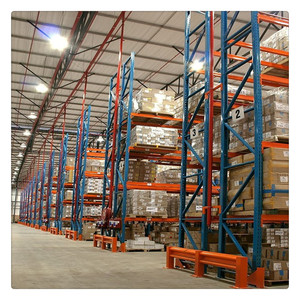
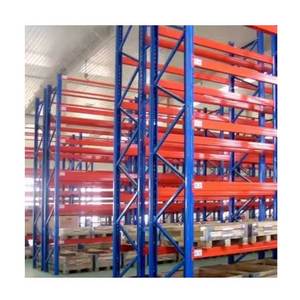
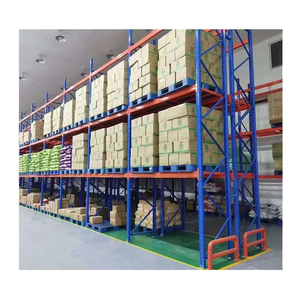
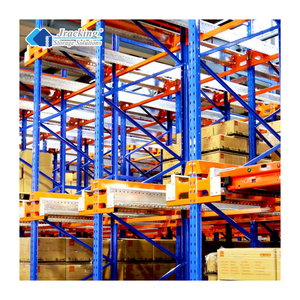
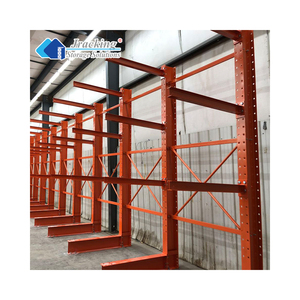
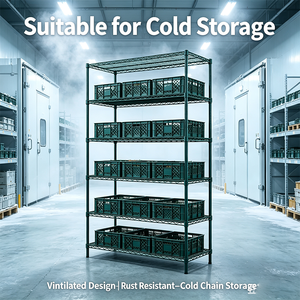
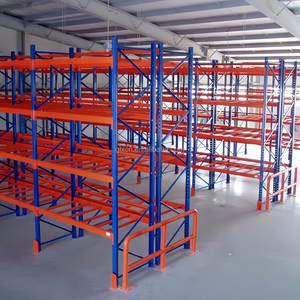
In modern industrial facilities handling oversized, non-palletized inventory—such as extruded aluminum, structural steel piping, architectural timber, and automotive stampings—conventional selective pallet racking presents clear operational limitations. The absence of front upright columns makes the industrial cantilever racking system an essential choice for continuous horizontal storage. Engineering high-bay cantilever architectures requires a comprehensive understanding of mechanical deflection tolerances, seismic force dampening, and advanced material-handling workflows.
Unlike standard static racking where weight directly transfers downward through dual upright columns, cantilever designs depend on tapered cantilever arms anchored to a single central or wall-backed vertical column. Load distribution follows strict cantilever beam equations, wherein bending moments peak at the connection point between arm and upright. High-caliber manufacturers use hot-rolled H-beams or heavy-gauge Q235B cold-rolled steel to mitigate arm drooping and column twisting. At maximum permissible deflection (typically L/250 to L/300 according to FEM 10.2.02 and ANSI MH16.1), the structural arm must maintain positive clearance to ensure that side-loaders or multidirectional forklifts can retrieve items without catching adjacent tiers.
The procurement landscape for cantilever racking is shifting rapidly. Facility directors are transitioning away from generic configurations toward engineered systems designed for specialized material handlers. The key trends shaping procurement through 2030 include:
Integration of magnetic or mechanical guidance systems along cantilever bases, allowing specialized narrow-aisle (VNA) multidirectional trucks to operate with clearances as slim as 1.8 meters.
Retrofitting cantilever arms with proximity sensors and optical positioning reflectors, converting traditional heavy-duty arms into nodes for automated storage and retrieval systems (AS/RS).
Hot-dip galvanization (HDG) exceeding 85 microns thickness to resist extreme condensation, aggressive thermal cycling, and rust in unheated yards and cold-storage operations.
Engineering cantilever racking for zones with seismic risk requires rigorous stress simulations. When lateral earthquake forces hit high-bay columns supporting multi-ton steel tubes, harmonic resonance can cause traditional rigid bolts to sheer. Advanced manufacturers implement articulated pivot arm connections: cantilever arms pinned with high-tensile safety pins that pivot upwards if bumped by a forklift mast or subjected to seismic shockwaves, dissipating kinetic energy rather than buckling the vertical column.
Over two decades of precision manufacturing, strict European safety adherence, and project delivery across five continents.
Delivering heavy-duty warehouse storage and supermarket fixtures since 2001 across more than 5,000 completed worldwide projects.
From cantilever, radio shuttle, and pallet racking to mezzanine floors and retail display systems, fully unified under one roof.
Custom upright profiles, arm loading parameters up to 2,500 kg per arm tier, and tailored column baseplates calculated against seismic zones.
Premium Q235B cold-rolled steel, automated electrostatic powder coating with zero welding slag, and rigorous physical load testing.
Dedicated international export engineering team offering project feasibility assessments and 3D warehouse layout models within 8 hours.
Clear engineering insights to guide warehouse project managers, distributors, and logistics procurement teams.
Arm load capacity is calculated based on a uniformly distributed load (UDL). For instance, an arm rated at 1,500 kg requires the payload's weight center to rest at the arm's midpoint. Concentrating a load on the outer tip reduces capacity by up to 50% due to heightened leverage and bending moments on the vertical column.
Roll-formed cantilever racking utilizes cold-formed light-gauge steel, offering a cost-effective solution for light to medium applications (300–800 kg per arm). Structural cantilever systems use heavy-duty hot-rolled I-beams and channel steel, engineered for demanding environments up to 2,500 kg per arm, such as steel distribution, lumber yards, and pipe storage.
Yes. Removable wire mesh decking, heavy steel grating, or continuous longitudinal steel panels can be installed across adjacent arms. This creates a solid storage shelf capable of carrying variable length materials, small bundles, pallets, or coiled coils safely without drop-through risks.
All structural uprights and cantilever arms are pre-engineered as full knock-down (KD) assemblies. Bundles are protected with heavy-gauge corrugated wraps, plastic edge guards, and high-tensile steel strapping. This keeps components secure in transit, protects powder coatings, and maximizes ocean container cube space to minimize freight expenses.
High-bay cantilever configurations (exceeding 6 meters in height) generally demand reinforced concrete slabs with a minimum thickness of 200–250 mm and compressive strengths of at least C25 to C30 (approx. 3,500–4,000 PSI). Our engineers provide precise baseplate foot calculations and anchor pull-out ratings with each layout proposal.
Absolutely. We provide customized outdoor cantilever rack architectures fitted with sloped roof truss canopies to divert rain and snow. All external components undergo hot-dip galvanization to ensure decades of rust resistance even in coastal, high-humidity, or chemical storage yards.