HEDAHeavy Duty Racking
 English
 Español
EnglishEspañolDirect factory manufacturing utilizing cold-formed high-tensile steel, high-precision automated CNC punching, and electrostatic thermoset epoxy powder coating for rigorous industrial duty.
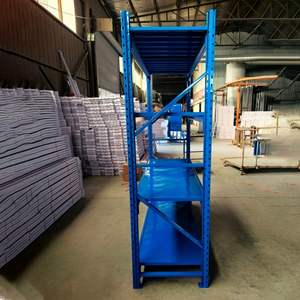
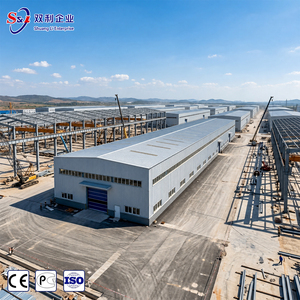
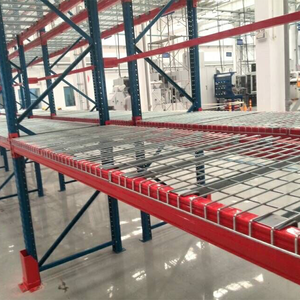
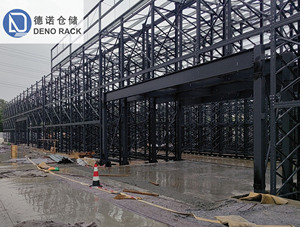
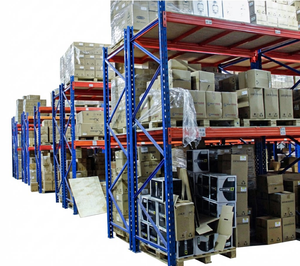
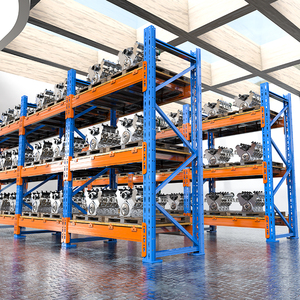
In modern intralogistics, commercial warehouse racking cannot be evaluated simply as static metal framework. Racks are dynamic structural mechanisms subject to complex multi-axial dead loads, variable live loads, seismic accelerations, and cyclic operational impact stresses from material handling equipment (MHE). International procurement authorities must demand rigorous metallurgical transparency and strict adherence to structural engineering benchmarks.
The metallurgical backbone of trusted heavy-duty racking relies primarily on certified Q235B cold-rolled carbon structural steel (comparable to European EN 10025 S235JR and American ASTM A36). Q235B possesses a nominal yield strength of 235 MPa and a tensile threshold of 370–500 MPa, with an elongation at break exceeding 26%. This specific balance between yield strength and ductile plasticity ensures that under extreme localized overloads, structural elements exhibit predictable plastic deformation rather than catastrophic brittle rupture.
Under international standard ANSI/RMI MH16.1 and European norm EN 15512, the maximum vertical deflection limit for load-carrying horizontal beams under full static design load is strictly capped at L/200 (where L is the clear span distance between upright columns). For sensitive automated robotic interfaces (such as AGVs or radio shuttle lanes), deflection tolerances must tighten further to L/300 or L/400 to avoid shuttle rail misalignment and sensor triangulation faulting.
Vertical upright column engineering requires precision cold-roll-forming profiles featuring multi-bend stiffening ribs. Each intermediate 90-degree roll-formed radius redistributes compressive loads, significantly raising the critical Euler buckling limit of the section. Perforation pitch (traditionally 50 mm, 75 mm, or 76.2 mm teardrop/diamond slots) must be executed on automated high-speed mechanical presses to ensure slot pitch tolerances within ±0.1 mm over continuous 12-meter profiles.
Selecting the ideal storage topology demands balancing pallet retrieval velocity against cubic space utilization. Below is an engineering evaluation across primary industrial racking configurations deployed across global distribution hubs:
| Storage Topology | Floor Utilization | Pick Selectivity | Standard Payload Capacity | Forklift Equipment Match | Primary Application Spectrum |
|---|---|---|---|---|---|
| Selective Pallet Racking | 35% – 45% | 100% Immediate | 1,000 – 4,500 kg / level | Counterbalance, Reach Truck | High-SKU distribution, FMCG, retail hubs |
| Drive-In / Drive-Through | 65% – 75% | FILO / FIFO (Batch) | 1,000 – 2,000 kg / pallet | Standard Reach, Counterbalance | Cold stores, beverage, seasonal mass items |
| Radio Shuttle System | 75% – 85% | Automated FILO / FIFO | 500 – 2,000 kg / pallet | Integrated 24V/48V Shuttle Bot | Cold chain (-25°C), raw ingredients, buffers |
| Heavy-Duty Cantilever | 40% – 55% | 100% Linear Access | 500 – 2,500 kg / arm | Side-loader, 4-way Forklift | Steel pipes, timber, sheet metals, extrusions |
| Structural Mezzanine Floor | Up to 200% (2x) | Manual / Carton Flow | 300 – 1,000 kg / m² | Conveyors, Vertical Lifts | E-commerce sortation, spare parts, assembly |
| ASRS Clad High-Bay | 85% – 95% | 100% Computerized | Up to 3,000 kg / cell | Automated Stacker Crane | Lights-out warehouses, pharmaceutical mega-hubs |
The global racking and industrial shelving sector is experiencing radical modernization driven by labor deficits, skyrocketing real estate costs, and sustainability mandates. Enterprise supply chain procurement teams must account for four defining shifts:
Warehouses are increasingly ordering manual selective racking pre-engineered with floor-anchor tolerances, rail slots, and laser reflector mounts capable of immediate retrofitting into AGV or 4-way shuttle lanes without major operational teardowns.
ESG compliance is shifting tier-1 sourcing toward electric arc furnace (EAF) recycled steel. Concurrently, zero-heavy-metal thermoset powder coatings and solvent-free silane pre-treatment baths have become mandatory to satisfy European CBAM import mandates.
With distribution nodes clustering along global transport hubs in seismic risk zones (e.g., Pacific Rim, Latin America, Turkey), procurement requires third-party Finite Element Analysis (FEA), widened ductile base plates, and supplementary horizontal sway bracing.
Procurement teams prioritizing upfront purchase price over lifetime reliability frequently incur catastrophic hidden operational expenses. Poorly coated beams corrode rapidly in refrigerated conditions; sub-gauge steel columns buckle under minor forklift guide strikes; and non-standardized slot profiles prevent buyers from sourcing cost-effective replacement components down the line.
The Cold Storage Challenge: In temperature-controlled facilities operating at -18°C to -30°C, ordinary structural carbon steel can experience ductile-to-brittle transition phenomena. Microscopic crystal boundaries freeze, significantly reducing the steel's Charpy V-notch impact energy absorption. High-grade cold storage racking must specify controlled deoxidized killed steels with minimized phosphorus and sulfur impurities, combined with specialized anti-freeze thermosetting powder films that resist thermal contraction micro-cracking and moisture ingress under frost thaw cycles.
Engineered in Guangzhou beside the Canton Fair Complex, HEDA Shelves integrates precision manufacturing, full-cycle structural calculation, and comprehensive export packing for seamless project commissioning worldwide.
Over 20 continuous years dedicated exclusively to heavy-duty industrial storage racks, mezzanine systems, and store shelving. Over 5,000 major projects completed across North America, Latin America, Europe, Australia, Southeast Asia, and the Middle East.
Modernized roll-forming workshops, robotic continuous seam welding, and an advanced automated electrostatic powder-coating line capable of producing over 3,000 tons of structural steel components monthly to sustain massive logistics infrastructure rollouts.
We do not sell out of fixed catalogs. Our senior engineering staff uses structural CAD, 3D parametric BIM modeling, and load FEA stress simulations to tailor beam lengths, post thickness, safety pins, and base configurations strictly to your forklift turn radius and pallet weight profiles.
Export components are engineered for modular knock-down packing. Precision nested upright frames and beam bundles protected with heavy protective air-cushion films maximize container loading space, slashing international sea freight costs by up to 35%.
In global trade, speed is reliability. Our dedicated export engineering desk operates across multi-continent time zones, providing preliminary layout evaluations, budgetary quotations, and technical feedback within 8 business hours of blueprint submission.
From raw Q235B spectrometer coil verification to weld bead ultrasonic testing, powder film micrometer thickness testing (60–90 μm target), and live 150% static overload deflection tests before packing, zero defective members escape dispatch.
Key structural, logistical, and commercial inquiries clarified by our senior intralogistics project engineers.
Our engineered installations span light-to-medium pick shelving (300–800 kg per tier), standard selective pallet racking (1,000–4,500 kg per beam level), multi-tier structural mezzanine floors (800–1,000 kg/m² uniform distributed load), and heavy cantilever systems carrying up to 2,500 kg per arm. All systems are engineered with a minimum safety factor of 1.5 to 1.65 based on cold-formed steel engineering codes.
All structural elements are fabricated in certified Q235B cold-rolled steel conforming to national standards equivalent to EN 10025 S235JR and ASTM A36. Structural beam connections, bolt shear allowances, and upright slot profiles follow the structural testing philosophies of ANSI/RMI MH16.1 (USA), EN 15512 (Europe), and AS 4084-2023 (Australia). CE certification documentation is available for all export contracts.
Yes. Every project begins with our engineering design department. We analyze your CAD floor plan, ceiling beam heights, building column grids, fire sprinkler drops, pallet specs, and forklift mast turn clearance. We provide detailed 2D operational layout drawings and 3D isometric renderings before fabrication so you can simulate inventory routing and storage capacity gains.
For seismic sites (such as the West Coast of the Americas, Japan, New Zealand, or Southern Europe), we incorporate widened base plates with heavy dual wedge anchors, heavy-gauge cold-formed portal frames, supplementary x-bracing, and horizontal top tie beams. Finite element analysis (FEA) simulates peak ground acceleration (PGA) resistance under full load states.
Components undergo a five-stage automated pre-treatment bath: degreasing, rust removal, acid pickling, phosphating/silane rinsing, followed by electrostatic powder deposition of high-grade epoxy polyester. The film is cured in a 200°C oven, producing a smooth 60–90 μm thick finish that eliminates weld slag, prevents flaking, and resists abrasion from daily forklift impacts. Hot-dip galvanization is available for outdoor or extreme sub-zero cold room environments.
Upright frames and horizontal beams are shipped in flat knock-down (KD) condition. Beams are stacked in custom wooden-dunnage steel-strapped bundles with protective edge guards, while upright posts are bundled with interleaved PE foam layers to prevent transit scratching. Hardware and baseplates are sealed in reinforced plywood crates. This method maximizes container cube utilization, packing up to 26–28 tons into a standard 40ft HQ container.