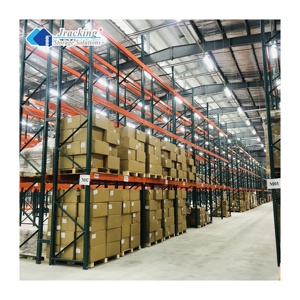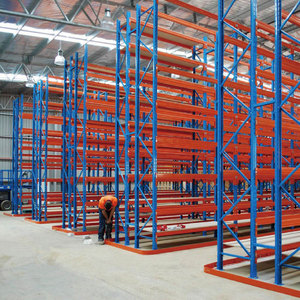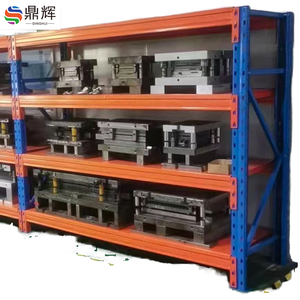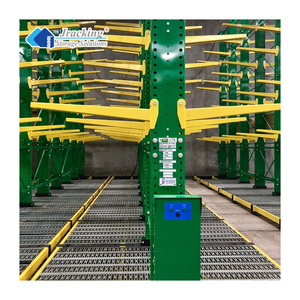
Tested under rigorous European load parameters, structural Q235B/Q355B cold-rolled steel profiles, and automated material handling specifications.
A Comprehensive Structural White Paper for Austrian Logistics Directors, Structural Engineers (Ziviltechniker), and Supply Chain Operations Leaders.
Procuring industrial storage infrastructure in Austria requires adherence to specific European engineering criteria and local Austrian standardizations. As Austria serves as the central multi-modal logistics hub linking Western Europe through the Rhine-Danube corridor to emerging Central and Eastern European (CEE) markets, warehouse facilities in regions such as Vienna (Wien-Süd / Schwechat), Upper Austria (Linz-Enns logistics hub), and Styria (Graz industrial belt) face intense space pressure and high floor-load demands. Importing structural pallet rack systems from a dedicated manufacturer requires structural integrity, compliant material certifications, and calculated stability under static and dynamic forces.
In Austrian warehousing installations, racking systems fall primarily into two structural typologies: heavy structural hot-rolled IPE/UNP profiles and precision cold-formed steel sections. For cold-formed steel, Guangzhou Heda Shelves Co., Ltd. uses certified high-grade Q235B and Q355B structural steel (equivalent to European S235JR and S355JR according to EN 10025-2). Our cold-formed upright profiles undergo multi-stage continuous roll forming to generate multi-faceted omega profiles. This geometry yields higher moments of inertia ($I_x$, $I_y$) and superior torsional rigidity ($J$), ensuring that columns withstand second-order bending effects without local web buckling.
Specifies limit state design methods for steel static racking systems, requiring finite element calculation of structural joints, semi-rigid beam-to-column connector moment rotations, and design load factors ($\gamma_{G} = 1.35$, $\gamma_{Q} = 1.4$).
Defines exact deformation boundaries and clearance limits for standard and VNA setups. Austrian automated warehouses enforce beam deflection limits no greater than $L/200$ under full static working loads.
Governs seismic engineering in Austrian earthquake activity zones (such as the Vienna Basin, Mur-Mürz furrow, and Inn Valley in Tyrol), requiring specialized base plate anchor calculations.
Safety parameters driven by the Austrian General Accident Insurance Board (Allgemeine Unfallversicherungsanstalt). Mandates impact protection of at least 400 Nm absorbed energy at aisle intersections.
| Structural Parameter | Standard Chinese Export Grade | HEDA Austrian-Export Specification | Austrian Requirement (ÖNORM / EN) |
|---|---|---|---|
| Base Steel Raw Material | Commercial Grade Q195 / Q235A | Certified Q235B / Q355B (S235 / S355 Equivalent) | EN 10025 structural conformity with CE Mill Test |
| Vertical Deflection Limit ($\delta$) | $L / 180$ | Strict $L / 200$ to $L / 250$ Deflection Limits | EN 15620 Class 300: $\le L / 200$ |
| Beam End-Connector Locks | Spring or frictional steel latch | 5-Hook Claw with mechanical locking pins | EN 15512: Accidental dislodgement resistance > 5 kN |
| Surface Protection | Single-pass electrostatic bake | Degreasing + Pickling + Epoxy-Polyester 70–90µm | ISO 12944 C2/C3 durability certification |
| Seismic Footplate System | Standard welded single-bolt plate | Expanded ductile steel baseplate, dual chemical anchoring | ÖNORM B 1998-1 site-specific ground acceleration |
| Structural Documentation | Packing list & simple 2D drawing | Static Calculation Dossier + 3D BIM/CAD Layouts | Gewerbebehörde & Baupolizei audit verification ready |
Custom structural engineering tailored to the distinctive industrial topography and operational demands of Austrian logistics hubs.
Positioned around the Vienna International Airport (VIE) cargo district and the industrial cluster of Wiener Neudorf, warehousing facilities operate on high throughput, strict GDP (Good Distribution Practice) compliance, and continuous inventory rotation.
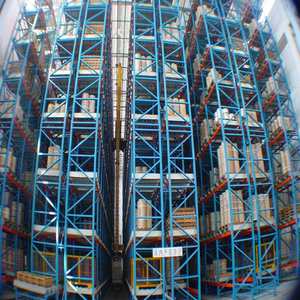
HEDA designs High-Bay Selective and Narrow Aisle (VNA) systems up to 15 meters in free-standing height. With automated wire or rail steering tolerances conforming to EN 15620, these installations maximize high-cost cubic meters while providing 100% individual pallet selectivity for high-SKU inventory.
Linz and the Ennshafen logistics triangle form the manufacturing backbone of Austria, heavily concentrated with steel producers, automotive component makers, and heavy engineering contractors.
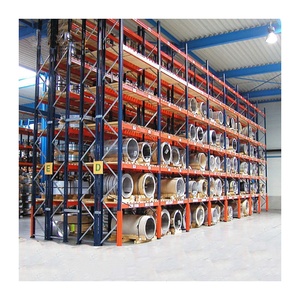
For this regional application, standard roll-formed light sections are insufficient. HEDA supplies structural cantilever racking fabricated from hot-rolled IPE steel profiles alongside reinforced drive-in and pallet racks capable of carrying 4,500 kg per beam level. These systems support dense steel coils, sheet metal bundles, and structural castings without creeping or fatigue failure under constant static stress.
Cold chain logistics centers located in Tyrol (Innsbruck-Wörgl corridor) and Salzburg contend with high real estate costs along Alpine transit routes and extreme energy expenditures for sub-zero food logistics.
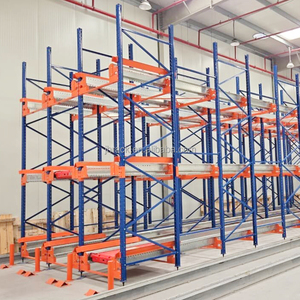
HEDA deploys Automated Radio Shuttle Racking Systems rated for continuous operations down to -30°C. High-density shuttle systems compress lane volume, reducing cooling air space loss by up to 55%. For rack-supported building designs (Silo-Lager), our calculations integrate extreme exterior snow loads and wind loads according to Austrian Alpine Annexes (ÖNORM EN 1991-1-3).
Key structural and regulatory developments transforming warehouse capital investments in Austria.
With Austrian labor rates and skilled warehouse operator shortages driving operational costs upward, warehouse operators in Upper Austria and Styria are rapidly retrofitting traditional wide-aisle pallet racking with Radio Shuttle carts and Autonomous Mobile Robot (AMR) interface decks. Racking must be engineered with micro-millimeter precision to ensure flawless optical sensor readings and shuttle docking.
Geopolitical supply-chain re-alignments have reinforced Austria's position as the primary operational gateway for the CEE corridor (Slovakia, Czechia, Hungary, Slovenia). Distribution facilities are opting for high-density, multi-tier mezzanine pallet combinations that enable multi-level picking networks within the same real estate footprint.
Austrian logistics parks increasingly mandate DGNB (Deutsche Gesellschaft für Nachhaltiges Bauen) or ÖGNI (Österreichische Gesellschaft für Nachhaltige Immobilienwirtschaft) gold and platinum certifications. HEDA supports these green initiatives by utilizing 100% recyclable structural steel, closed-loop phosphate-free powder coating, and ultra-compact flat-pack export engineering that minimizes maritime and road transport CO₂ per metric ton.
Guangzhou Heda Shelves Co., Ltd. brings two decades of manufacturing discipline to European project consignments.
Founded in 2001 and situated adjacent to the Canton Fair Complex in Pazhou, Guangzhou, HEDA Shelves has developed into an internationally integrated warehouse racking manufacturer. We operate automated continuous roll-forming lines, computerized multi-station punching presses, robotic welding stations, and an advanced electrostatic powder-coating facility.
Every production batch undergoes ultrasonic weld seam inspection, cross-hatch coating adhesion testing according to ISO 2409, and real-scale static load deflection verifications witnessed by third-party testing inspectors.
Our dedicated engineering department produces layout drawings, 3D structural models, and verifiable static reports (Statik-Unterlagen) accounting for local slab load-bearing capacities (Betonfestigkeitsklasse C20/25 to C35/45).
Our export engineering specialists deliver initial CAD layouts, container packing calculations, and budget estimates within 8 working hours across Austrian and Central European time zones.
Answers to common questions regarding Austrian import standards, statutory static checks, customs compliance, and structural design.
Yes. Austrian local authorities (Gewerbebehörde, Baupolizei) and work safety inspectors (Arbeitsinspektorat) mandate that steel storage racks comply with European standards EN 15512, EN 15620, and EN 15635. HEDA manufactures using certified Q235B/Q355B steel with verified yield points and executes finite element calculations aligned with EN 15512. We provide comprehensive static calculation packages (Statische Berechnungsunterlagen) that can be submitted to Austrian civil engineers (Ziviltechniker) for verification and building permit sign-offs.
The standard European pool pallet (EPAL 1 / EUR-1) measures 1200 mm in depth by 800 mm in width. HEDA frames are standardly engineered at 1100 mm depth, ensuring a uniform 50 mm front and rear overhang in strict accordance with safety guidelines. Clear entry beam spans of 2700 mm (for 3 EUR-1 pallets) and 3600 mm (for 4 EUR-1 pallets) are calculated to prevent exceeding the permitted deflection limit ($L/200$) under maximum rated payload.
While Austria is not subject to major Pacific-rim earthquakes, seismic activity zones do exist—notably in the Vienna Basin (Wiener Becken), the Mur-Mürz Valley in Styria, and parts of Tyrol and Carinthia. According to ÖNORM EN 1998-1 (Eurocode 8), racking installations in these zones require site-specific ground acceleration design. HEDA supplies enlarged base plates, heavy-duty gusset stiffeners, increased horizontal/vertical bracing, and chemical anchorage embedment depths to ensure seismic resilience.
Because Austria is landlocked, intercontinental container shipments from our Guangzhou factory arrive via northern European ports (Rotterdam, Hamburg, Bremerhaven) or southern gateway ports (Koper, Slovenia, or Trieste, Italy). From these container terminals, cargo travels directly by scheduled freight rail or road container chassis to Vienna, Linz, Graz, or Salzburg. We provide complete CIF, DDU, and DDP processing, handling all customs clearance and documentation.
In Austrian distribution facilities, forklift traffic constantly introduces road salt brine and meltwater during winter months. HEDA protects against this accelerated corrosion by finishing bottom uprights with heavy zinc-rich primer basecoats prior to electrostatic powder coating, or supplying fully hot-dip galvanized column base extensions (Fe/Zn 85 according to EN ISO 1461). Heavy-duty floor anchor crash guards protect column corners from both dynamic vehicle impact and direct de-icing fluid contact.
Yes. Our automated electrostatic powder-coating facility supports full RAL color customization. The most common European combinations—such as Gentian Blue (RAL 5010) or Anthracite Grey (RAL 7016) for upright frames, and Pure Orange (RAL 2004) or Traffic Yellow (RAL 1023) for horizontal load beams—are available as standard finishes with zero price penalty.