Procurement Clarity
Frequently Asked Questions for Argentine Importers
Answers to critical questions regarding customs documentation, seismic calculations, pallet standards, and installation support.
Are HEDA pallet racking systems compatible with Argentine ARPAL standard pallets?
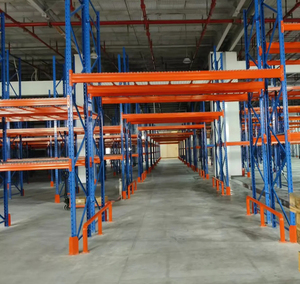
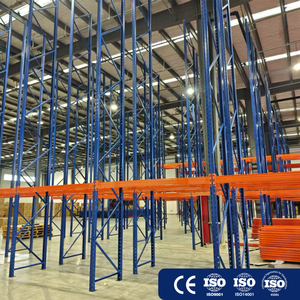
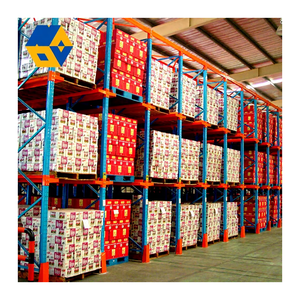
Yes. While standard European pallets measure 800 x 1200 mm, the prevalent Argentine pallet standard (ARPAL) is 1000 x 1200 mm. We engineer our beam spans (commonly 2300 mm for two pallets or 3300 mm for three pallets) and upright frame depths (typically 1000 mm or 1100 mm) specifically to provide the necessary 50 mm front and rear overhang required for secure ARPAL placement.
Can you engineer racking to comply with INPRES-CIRSOC seismic standards in Western Argentina?
Yes. For facilities in seismic zones like Mendoza and San Juan, we calculate dynamic horizontal acceleration forces based on your facility's seismic zone tier. We incorporate reinforced upright column profiles, heavy-duty floor base plates, oversized chemical anchor bolts, and additional diagonal upright bracings to guarantee structural equilibrium during seismic tremors.
What international trade documentation do you supply for customs clearance in Buenos Aires?
We provide full export documentation required for SIMI/SIRA customs clearance at Puerto Nuevo (Buenos Aires) or Exolgan (Dock Sud), including Commercial Invoices, detailed Packing Lists with exact bundle weights/dimensions, Clean on Board Bills of Lading, Certificate of Origin, and Mill Test Certificates (MTC) proving steel tensile compliance.
How are upright frames and beams protected against marine corrosion during transit?
Components undergo electrostatic powder baking at 180°C-200°C, providing a durable non-porous finish. For ocean transit across tropical and equatorial routes, upright frames and beams are nested with protective PE wrapping, corrugated corner protectors, and industrial desiccant bags within moisture-sealed container blocks to prevent rust or shipping abrasion.
Do you provide warehouse installation support in Argentina?
Every project is dispatched with comprehensive structural assembly manuals, component labeling, and step-by-step 3D installation schematics. For large logistics installations, our engineering team can provide remote video supervision or dispatch on-site installation supervisors to oversee local assembly contractors.
What is the production and delivery lead time from Guangzhou to Argentina?
Standard fabrication for a multi-container racking project typically takes 15 to 25 days following design sign-off and deposit receipt. Ocean transit time from South China ports (Nansha/Shenzhen) to the Port of Buenos Aires is approximately 35 to 45 days, depending on carrier transshipment schedules.
 English
 Español