DIN EN 15512 & FEM 10.2.02 Industrial Compliance

Drive In Pallet Racking System Manufacturer & Factories serving Berlin

High-Density Structural Storage Engineering Engineered for Maximum Cube Utilization, Cold-Store Efficiency, and Low-TCO Logistics Operations Across the Berlin-Brandenburg Capital Region.

85%
Warehouse Volume Utilization
4.5t
Max Load Rating Per Level
5,000+
Global Projects Installed
< 8h
Direct Structural Engineering Quote

Precision High-Capacity Pallet & Mezzanine Systems for Berlin Facilities

Manufactured from premium certified Q235B cold-rolled structural steel, optimized for intensive forklift duty, deep-lane drive-in loading, and high-density industrial logistics.

Structural Engineering Dynamics of Drive-In Racking for High-Density Operations

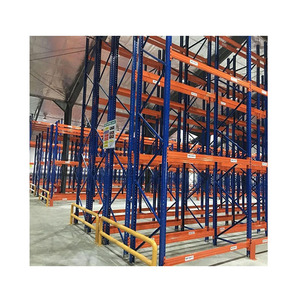
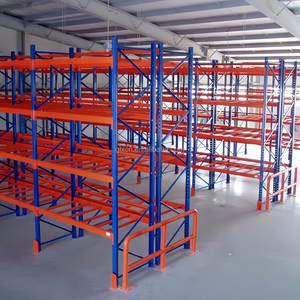
In modern industrial storage, the Drive-In Pallet Racking system represents the definitive high-density accumulation solution for operations managing low-to-medium SKU variety with high pallet volumes. Unlike conventional selective racking systems that require a dedicated operating aisle for every single or double row, a Drive-In racking configuration eliminates working aisles entirely. Forklifts drive directly into the storage lanes (structural bays) to deposit or retrieve unit loads supported along continuous cantilevered side rails.

This architectural approach achieves cubic volume space utilization exceeding 80% to 85%, compared to just 35% to 45% in standard selective systems. As a primary manufacturer supplying European logistics nodes and the Berlin-Brandenburg metropolitan hub (GVZ Großbeeren, GVZ Berlin Ost Freienbrink, and GVZ Wustermark), our structural engineering focuses on mitigating the distinct torsional strains, dynamic lateral displacements, and horizontal braking forces that heavy reach trucks and counterbalanced forklifts impose inside unbraced drive-in tunnels.

Key Engineering Fact: Under DIN EN 15512 and FEM 10.2.02 regulations, Drive-In systems lack standard internal cross-beam bracing within pallet bays. Stability is achieved through heavy top-tie portal beams, rear diagonal bracing towers, and floor-anchored ground guidance rails that absorb reach truck impact without transmitting torsional deflection to upper pallet runners.

First-In, Last-Out (FILO) Mechanics vs. Drive-Through (FIFO) Dynamics

Drive-in systems operate predominantly on a FILO (First-In, Last-Out) principle, where the bay is backed against a structural warehouse wall or closed with heavy X-bracing. The first pallet placed into the lane becomes the last pallet retrieved. For Berlin logistics facilities managing food manufacturing, bulk beverage reserves, and industrial raw components, FILO delivers the lowest floor space footprint per pallet location.

Alternatively, when throughput requires batch sequencing or date-controlled rotation, our factory engineers fabricate Drive-Through systems utilizing a FIFO (First-In, First-Out) topology. Drive-through systems feature distinct entry and exit portals, requiring tailored structural calculations because the omission of rear vertical bracing must be compensated by heavy-duty overhead portal ties and increased upright column steel thicknesses.

Steel Metallurgy & Structural Safety Integrity (Q235B vs. S355 Verification)

Every structural column and cantilever rail manufactured in our Guangzhou production hub utilizes premium high-tensile Q235B cold-rolled steel, engineered with cold-formed continuous multi-bend omega profiles. This profile guarantees an optimized radius of gyration, delivering exceptional yield strength under high vertical compression. Surface finishes undergo shot-blasting, chemical multi-stage washing, and high-adhesion electrostatic powder coating cured at 200°C. For Berlin's rapidly expanding cold storage facilities in Brandenburger food hubs, components can be specified with hot-dip galvanizing (HDG) to prevent micro-fissuring and condensation-induced oxidation under extreme cyclic temperature shifts down to -30°C.

Localized Applications Across Berlin-Brandenburg Supply Chains

Examining how high-density drive-in pallet racking solves real-world capacity and energy bottlenecks in Berlin's most vital economic corridors.

Cold Chain & Deep-Freeze

Sub-Zero Storage in GVZ Großbeeren

Refrigerated warehouse volume in southern Berlin carries enormous kWh energy overheads. By consolidating frozen food products, prepared dough, and dairy stock into 6-to-8-pallet deep Drive-In tunnels, ambient air gaps are reduced by 40%. The resulting thermal thermal mass drastically lowers refrigeration compressor cycles, saving Berlin cold store operators thousands in annual grid expenditures.

Direct Benefit: 38% Energy Density Optimization
Automotive & Industrial E-Mobility

Tier-1 Battery & Parts Logistics in Freienbrink

Adjacent to Berlin's electric vehicle manufacturing hubs, Tier-1 automotive sub-suppliers manage high volumes of standardized component crates and heavy battery casing modules. Our Drive-In systems feature heavy structural pallet brackets with 1,500 kg capacity per unit load, paired with rolled floor-angle guiding tracks to allow rapid, zero-error staging directly supplying factory assembly slots.

Direct Benefit: Damage-Free Forklift Guiding Channels
Urban Logistics & Retail

Fast-Moving FMCG Buffers in GVZ Wustermark

Large-scale retail supermarket distribution centers along the western Havel corridor require massive buffer stock storage before cross-docking into central Berlin stores. Drive-In racking provides high-density, multi-lane lane assignment per SKU batch, enabling fast replenishment cycles during seasonal consumption surges without requiring expensive warehouse real estate expansion.

Direct Benefit: Maximum Cube Staging Capacity

Macro Logistics Trends Shaping Storage Architecture in Berlin

Commercial land scarcity, rising construction costs, and strict ESG requirements are redefining warehousing across Germany.

Surging Industrial Land Rents in Berlin Peripheral Hubs

Prime warehouse lease rates in Berlin-Brandenburg have experienced continuous upward trajectory, with asking rents in premium logistics zones reaching historic highs. Developing new greenfield industrial square footage requires complex zoning, environmental permitting, and extended timelines. Consequently, facility directors are prioritizing cubic volume densification over building horizontal expansion—making Drive-In racking the preferred capital investment for maximizing pallet capacity inside existing building shells.

Decarbonization Mandates & Energy Efficiency (GEG)

Germany’s Building Energy Act (Gebäudeenergiegesetz - GEG) and stringent corporate ESG carbon accountability demand drastic reductions in industrial warehouse utility consumption. Because high-density Drive-In storage reduces the overall refrigerated volume required per stored pallet, logistics companies substantially decrease cold store kilowatt-hour loads per ton of goods, directly satisfying corporate sustainability compliance.

DGUV Regel 108-007 & Rigorous Safety Enforcement

German occupational safety authorities (Berufsgenossenschaften) enforce rigorous annual racking inspection regimes. Facilities are modernizing legacy storage with factory-engineered Drive-In racking featuring standardized upright crash protectors, high-visibility impact bumpers, and certified load signs. Procuring direct from experienced manufacturers guarantees that all structural steel and fastener engineering documentation passes TÜV and statutory structural verifications seamlessly.

Why International Buyers & Berlin Logistics Firms Choose Us

Delivering turn-key design, ISO-controlled manufacturing, and global export logistics from our 30,000 m² production base.

20+ Years Experience

Founded in 2001, executing over 5,000 warehouse, cold store, and retail racking installations globally.

Full Product Spectrum

Drive-in, radio shuttle, VNA, teardrop, cantilever, and heavy mezzanines engineered from one source.

Bespoke Customization

Bay clear heights, pallet runner gauges, entry chamfers, and bespoke RAL colors engineered to exact project spec.

Strict Quality Auditing

Q235B mill steel certification, full weld penetration testing, automated powder coat line, and pre-shipment assembly.

< 8h Engineering Reply

Factory-direct structural estimating teams provide comprehensive CAD layouts, 3D renders, and pricing in under 8 hours.

Direct Factory Manufacturing & Global Shipping Assurance

Our production complex operates dedicated multi-roll forming lines, precision automated robotic welding stations, and specialized electrostatic coating systems. Components are packaged in knock-down protective bundles to maximize shipping container cube efficiency and prevent surface abrasion on ocean journeys into Port of Hamburg or Bremerhaven before onward trucking into Berlin.

DIN & FEM Compliance

Designs strictly adhere to DIN EN 15512 static stability requirements and FEM 10.2.02 drive-in guidelines for beam and upright deflection.

Container Max-Cube Loading

Precision knockdown nesting ensures that 40-foot High Cube containers carry maximum weight, dramatically reducing per-pallet import logistics freight.

Turnkey Engineering Package

Every shipment includes detailed structural assembly blueprints, connection hardware, torque specifications, and factory-verified static calculation packets.

Frequently Asked Questions by Berlin & German Procurement Teams

Detailed technical, regulatory, and shipping answers to ensure smooth planning, certification, and commissioning.

How does your Drive-In racking comply with German DIN EN 15512 and DGUV safety regulations?
Our systems are calculated and fabricated according to DIN EN 15512 (Steel static storage systems – Adjustable pallet racking systems – Principles for structural design) and the guidelines of FEM 10.2.02 for Drive-In and Drive-Through structures. All material batches are certified under European chemical and yield standards (Q235B matching S235JR equivalent standards with certified yield points). Furthermore, we supply complete calculation sheets, material test reports (MTR), and official bilingual load rating warning plates (Traglasttabellen) that facilitate successful mandatory safety auditing under DGUV Regel 108-007 by certified German rack inspectors (Regalprüfer).
Can your systems accommodate standard Euro Pallets (EPAL 1) and Industrial Pallets (EPAL 3)?
Yes. We regularly engineer lane clearances for standard EPAL 1 (800 x 1,200 mm), EPAL 2 (1,200 x 1,000 mm), and EPAL 3 (1,000 x 1,200 mm) pallet variants, as well as customized steel bins. Our pallet support rails feature flared entry guides with tapered leading edges to assist forklift truck operators during pallet positioning and eliminate snagging. Custom rail offsets ensure adequate clearance around forklift mast channels while maintaining a minimum 50 mm pallet edge bearing seat on both sides as mandated by European safety norms.
What forklift impact protection and floor-guidance solutions are supplied?
Because forklift trucks enter the storage bays directly, protection against upright collision is critical. We manufacture heavy-duty, floor-anchored steel angle guide rails (typically 100 x 75 x 8 mm structural steel angle) running the full depth of each lane. These rails physically guide forklift wheels or chassis down the center of the lane, preventing tire rub against upright frames. Additionally, entry portal columns are protected by reinforced wraparound column guards finished in high-visibility RAL 1023 traffic yellow and anchored with heavy chemical or mechanical floor wedge anchors into concrete slabs.
How are import logistics, customs clearance, and delivery to Berlin handled?
We provide full flexible Incoterms including FOB, CIF Hamburg/Bremerhaven, and DDP (Delivered Duty Paid) direct to your warehouse site in Berlin, Potsdam, or Brandenburg. We prepare complete export documentation: certified commercial invoices, packing lists with detailed bundle piece counts, certificates of origin, and bill of lading sets. The shipping transit time from our factory port to Hamburg is approximately 28–35 days, followed by prompt bonded rail or trailer transport directly into the Berlin-Brandenburg industrial zone.
What concrete floor slab specifications are required in Berlin facilities?
Drive-In racking concentrates high cumulative point loads onto small footplate footprints due to multi-tier vertical storage. Slabs must generally possess a minimum compressive strength class of C20/25 or C25/30 concrete with an adequate slab thickness (typically 180 mm to 250 mm or greater, reinforced with steel rebar mesh) according to DIN 1045. As part of our technical drawing phase, our structural engineers supply point load reaction data (Stützenlasten) so your local civil engineering or flooring contractor can verify punching shear and subgrade settlement thresholds prior to anchoring.
What are the lead times for custom-engineered Drive-In racking projects?
Upon receipt of your warehouse floor plan, ceiling clear height, forklift dimensions, and pallet unit weights, our engineering team supplies a complete 2D layout drawing and formal proposal within 8 hours. Once technical specifications are approved, custom factory roll-forming and fabrication are typically completed in 15 to 25 days. Ocean container freight to northern European ports and final delivery to Berlin requires an additional 4 to 5 weeks, allowing project installation to occur smoothly within planned capital expenditure schedules.