HEDAHeavy Duty Racking
 English
 Español
EnglishEspañolEngineered to integrate seamlessly with automated guided cranes, four-way radio shuttles, and material handling systems across Tokyo, Osaka, Nagoya, and international transit corridors.
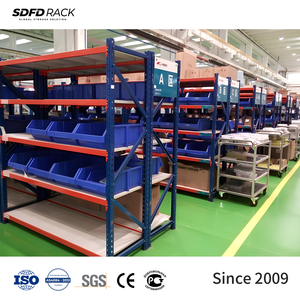
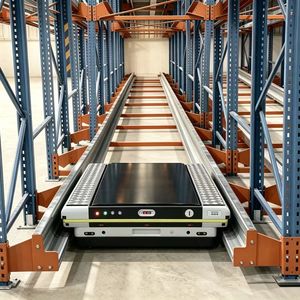
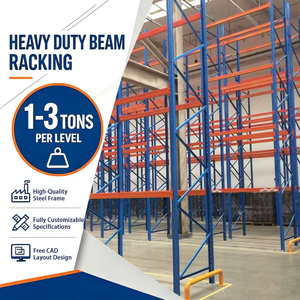
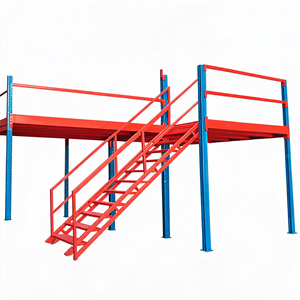
Deploying Automated Storage and Retrieval Systems across the Japanese archipelago demands engineering tolerances far exceeding standard global baseline standards. From subterranean fault line harmonic frequencies to multi-axis autonomous crane kinetic loads, our structures represent twenty-five years of refined metallurgy.
High-speed stacker cranes (Störgeräten) reaching travel velocities of 240 m/min demand upright straightness within 1/1000 deflection limits. Our precision cold-formed Q235B profiles prevent rail bind and sensor misalignment during multi-axis travel operations in deep-lane bays.
Japan's strict Building Standard Act (Kenchiku Kijun-hō) mandates precise resonance dampening. We engineer specialized baseplates with Hilti anchor arrays, cross-aisle portal ties, and diagonal shear trusses that disperse kinetic shockwaves during Great Kanto or Nankai Trough class events.
For automated cold chains storing seafood across Hokkaido or Kansai distribution centers at -25°C to -35°C, steel embrittlement is avoided via low-carbon grain refiners, Charpy V-notch impact-tested weldments, and multi-stage anti-condensation electrostatic coatings.
As an end-to-end industrial manufacturer since 2001, Guangzhou Heda Shelves provides OEM/ODM manufacturing capability directly to Japanese mechanical contractors, automation integrators, and logistics developers. Operating our specialized roll-forming lines, automated plasma punching rigs, and continuous powder-coating channels, we ensure direct factory prices without intermediary markups.
Every structural column, load beam, runner channel, and guide track is fabricated to customer engineering drawings or designed in-house using finite element stress analysis (FEA) to confirm dead, live, and seismic load tolerances before export crating.
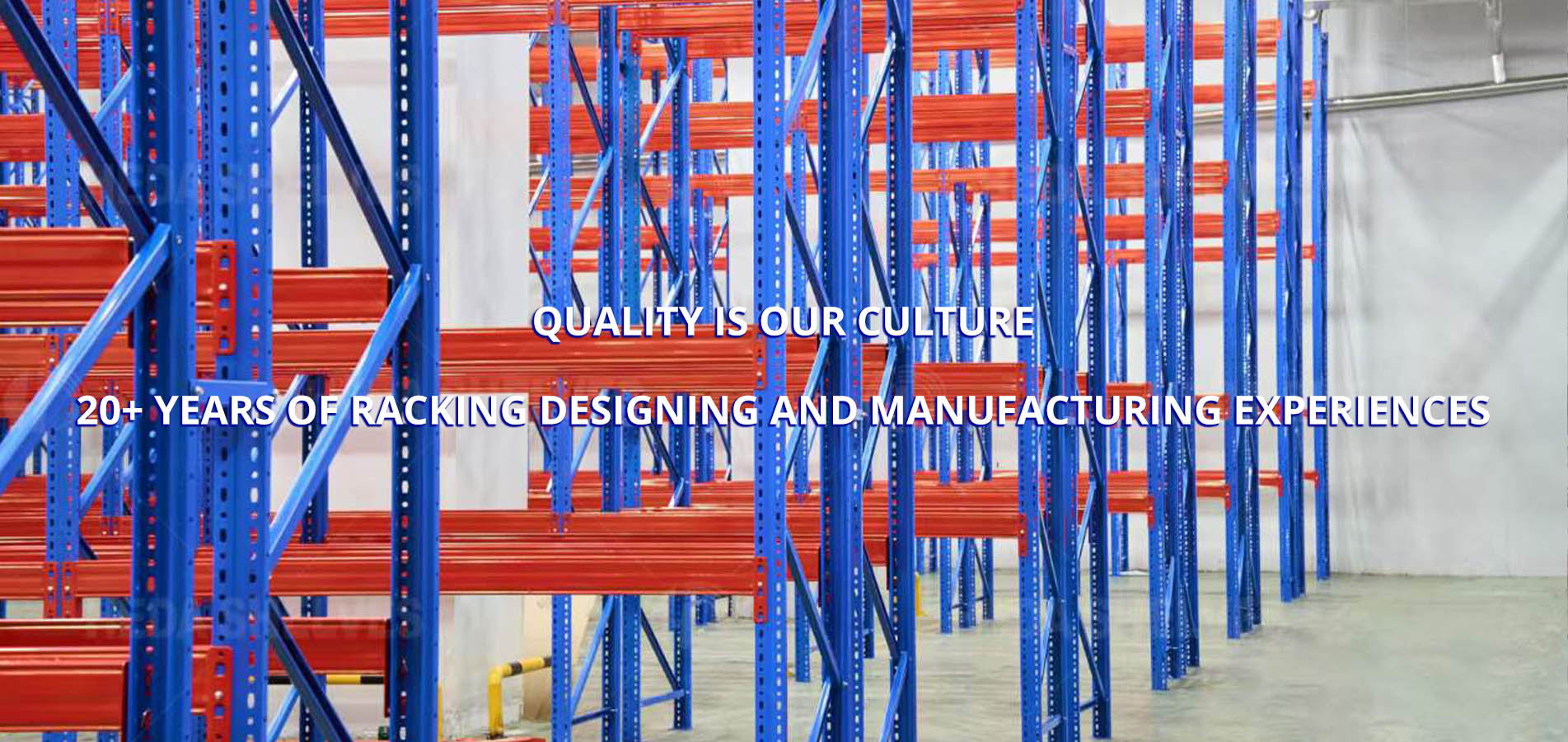
Japan’s demographic transition and industrial footprint require automated warehousing that delivers extreme volumetric efficiency, ultra-low operating errors, and seamless connectivity with autonomous mobile robots (AMRs).
Clustered across Aichi and Shizuoka, major OEMs utilize our heavy-duty high-bay racks and mini-load ASRS to execute continuous Just-in-Time (Kanban) delivery of engine sub-assemblies, body stampings, and EV battery cells directly to assembly lines.
Facing strict urban land scarcity across the Greater Tokyo Bay and Osaka-Kobe logistical nodes, multi-tier mezzanine floors and high-throughput mini-load shuttles expand vertical cubic storage capacity without requiring costly land acquisition.
From temperature-controlled seafood handling in Miyagi to medical supplies in Fukuoka, radio shuttle automated storage racking preserves product integrity, reduces operator exposure to thermal extremes, and cuts refrigeration cycle losses.
Modern Japanese distribution centers are transforming due to strict labor regulation updates, energy conservation goals, and the rise of autonomous logistics.
With the statutory implementation of annual 960-hour caps on commercial driver overtime, loading dwell times must drop substantially. Automated ASRS buffer racks stage outbound pallet loads before trucks arrive, enabling rapid cross-dock turnaround.
Fully automated storage racking operates in unlit, unheated, or reduced-oxygen facilities. This "Dark Warehouse" model cuts facility operating energy by up to 38%, supporting Japan’s 2050 carbon neutrality pledge while lowering operational overhead.
Standard racking is shifting to hybrid setups. Facilities pair high-level AS/RS cranes with flexible floor-level AGVs, pallet lifters, and Autonomous Mobile Robots (AMRs) using standardized steel interfaces and floor guidance tracks.
Five core operational advantages that safeguard project timelines, assure structural safety, and optimize total cost of ownership (TCO).
Designing, manufacturing, and installing storage solutions since 2001 with more than 5,000 project deliveries globally.
Pallet, shuttle, cantilever, and mezzanine systems plus store fixtures produced in one integrated manufacturing center.
Beam spans, column profiles, hole pitch, paint colors, and structural capacities tailored to precise client specifications.
Certified Q235B cold-rolled steel, ultrasonic weld verification, automated powder coating, and dynamic load testing before shipment.
Export sales engineers provide preliminary concept reviews, cost estimates, and CAD engineering feedback within 8 hours.
Technical, regulatory, and logistics answers for warehouse managers, EPC contractors, and equipment procurement teams.
Our engineering team designs structural profiles and bracing matrices in close accordance with Japanese seismic demand spectra. We perform horizontal load coefficient checks ($A_i$ distribution calculations) and supply comprehensive static calculations, FEA simulation files, and structural steel mill certificates required by local building inspectors and third-party safety assessors.
Yes. We specialize in OEM/ODM structural supply for automated integrators. Our guide rails, runner profiles, and landing shelves match the exact tolerances required by leading crane and shuttle manufacturers. We guarantee deflection tolerances tighter than 1/1000 under full load capacity to prevent mechanical friction or sensor errors.
We use high-grade structural Q235B cold-rolled steel tested for low-temperature impact resilience. For finishes, we run an automated electrostatic epoxy powder coating line with multi-stage pretreatment that cures an exceptionally smooth coat. It resists flaking, micro-cracking, and corrosion down to -30°C without welding slag residues.
Production lead time typically ranges between 20 to 30 days depending on project tonnage. Ocean container transit from our Guangzhou facility to major ports like Tokyo, Yokohama, Kobe, or Osaka takes approximately 4 to 7 days. Components are fully knock-down and packed in sequence-coded steel racks for fast unloading and on-site assembly.
Yes. Prior to production sign-off, our technical department provides detailed 3D AutoCAD drawings and complete BIM models showing rack load capacities, aisle clearances, and anchoring layouts. During installation, we supply step-by-step mechanical drawings, anchor torque specs, and can send bilingual installation supervisors to direct your local site crew.
While the standard 1100mm × 1100mm (JIS T11) pallet is widely used in Japan, we engineer custom frames for EU euro-pallets, US 40×48 inch pallets, heavy steel stillages, and customized plastic skids. Beam profiles and cross-support safety bars are customized to guarantee load safety from 500kg up to 4,500kg per level.