HEDAHeavy Duty Racking
 English
 Español
EnglishEspañolTested in world-class manufacturing facilities under ISO 9001 and EN 15512 standards, engineered to handle intense logistics throughput in Indian industrial corridors.
Dynamic FIFO gravitational storage mechanics, kinetic speed regulation, and coastal environmental resilience for the Bhiwandi-JNPT logistics corridor.
In modern industrial storage design, Gravity Pallet Racking (frequently designated as Pallet Live Storage or Dynamic Flow Racks) represents the optimal nexus between compact footprint utilization and strict FIFO (First-In, First-Out) stock rotation. Unlike static selective racking that consumes up to 60% of floor space in non-productive access aisles, gravity flow systems utilize an array of inclined wheel or roller beds mounted at a precise slope (typically 3° to 4° or approximately 3.5% to 5% inclination). Pallets loaded from the rear loading aisle travel smoothly under controlled gravitational acceleration toward the picking face, creating distinct, uncompromised traffic lanes for replenishment and retrieval forklifts.
For warehouse developers, logistics service providers (3PLs), and manufacturing conglomerates operating across the Mumbai Metropolitan Region (MMR)—particularly within epicenters such as Bhiwandi, Taloja, Panvel, Nhava Sheva (JNPT), and the Thane-Belapur Industrial Zone—gravity pallet racking addresses acute structural constraints: unprecedented commercial land valuation, premium rental escalations, and the demand for zero-downtime inventory turns.
From an engineering perspective, gravity pallet live storage is not merely a steel shelving frame; it is an active mechanical conveyance system powered entirely by terrestrial physics. Its operational integrity depends on four synchronized components: heavy-duty roller assemblies rated for dynamic impact, integrated centrifugal speed controllers (brake rollers) calibrated to maintain safe descent speed below 0.3 m/s, end-of-lane safety stop separators that eliminate back-pressure on the front pallet during forklift discharge, and high-yield cold-rolled upright columns capable of supporting combined static and live dynamic load surges exceeding 30 metric tons per bay.
How specific geographical sectors in and around Mumbai deploy engineered dynamic gravity live racking to solve unique operational bottlenecks.
As the primary warehousing node servicing South and Central Mumbai, Bhiwandi facilities handle millions of SKUs with tight shelf-life deadlines. Gravity flow lanes provide designated buffer sorting for fast-moving consumer goods, eliminating pallet handling bottlenecks during seasonal sale spikes without requiring robotic batteries.
Refrigerated and frozen container logistics near Jawaharlal Nehru Port trust high-density gravity racking to slash costly cubic meters of cooled space. With electricity tariffs in cold storage exceeding standard industrial rates, gravity flow racks condense cold chamber footprints while strictly observing cold-chain FIFO expiration mandates.
Regulated pharmaceutical clusters and chemical manufacturing complexes mandate traceable lot rotation and strict raw material staging. Gravity racking maintains single-lane batch tracking, preventing expired compound cross-contamination while maximizing explosion-proof warehouse volumes.
Connecting seamless logistics to the Chakan automotive belt via the Mumbai-Pune Expressway, component stamping suppliers utilize gravity live tracks for Just-In-Time (JIT) sub-assembly staging, guaranteeing that body-in-white panels glide effortlessly to outbound loading docks in exact assembly-line sequence.
Operating within 30 km of the Arabian Sea subjects warehouse hardware to high relative humidity (RH > 85%) and airborne chlorides. Our factory equips Mumbai-bound racking with Q235B cold-rolled steel and multi-stage thermosetting epoxy powder coatings cured at 200°C to permanently prevent galvanic corrosion.
Under Indian seismic code IS 1893:2016, Mumbai sits within moderate Seismic Zone III. HEDA engineers calculate dynamic gravitational sway forces, incorporating widened baseplates, heavy anchor bolting, and rear cross-bracing configurations to ensure rack stability during ground tremors.
Compare how dynamic gravity pallet live storage performs against traditional and automated density configurations in Indian logistics environments.
| Storage System Type | Inventory Principle | Space Utilization | Throughput Velocity | Power / Electrical Reliance | Capital Investment (ROI) |
|---|---|---|---|---|---|
| Gravity Pallet Flow Rack | Pure FIFO (First-In, First-Out) | Up to 80% (Extremely High) | Continuous / Rapid | Zero (100% Gravity Driven) | Rapid (12–18 Months) |
| Drive-In Racking | LIFO (Last-In, First-Out) | Up to 70% (High Density) | Slow (Risk of Upright Collision) | Zero | Low Capital / Slow Cycle |
| Radio Shuttle Cart Racking | FIFO or LIFO | Up to 85% (High Density) | Moderate to Fast | High (Rechargeable Batteries) | Moderate to High Initial Outlay |
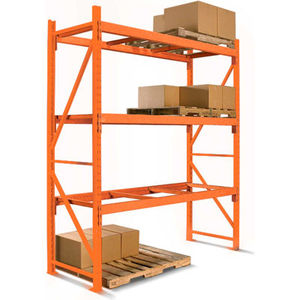
| Selective Pallet Racking | Random Access (100% Selectivity) | 35%–45% (Low Density) | High Single-Pallet Access | Zero | Low Initial / High Land Footprint |
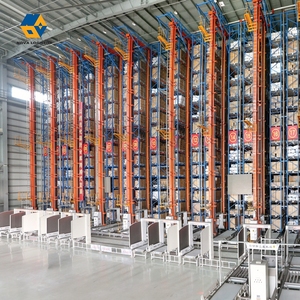
| Automated Storage & Retrieval (ASRS) | FIFO / Software Directed | 90%+ (Vertical Maximum) | Very Fast (Computer Controlled) | Continuous High Power Consumption | Extremely High Capital Expenditure |
As demonstrated, while ASRS and Radio Shuttle carts offer impressive density, they introduce ongoing operational failure points: electronic component vulnerability during power fluctuations, mandatory sensor recalibrations, and specialized software maintenance teams rarely based in suburban Mumbai. Conversely, Gravity Pallet Racking provides equivalent density with pure mechanical autonomy, eliminating warehouse downtime caused by grid failures or electrical surges.
Key regulatory, economic, and infrastructure developments accelerating the migration from unorganized static storage to engineered dynamic gravity tracks.
With Grade-A warehousing rental rates in Bhiwandi and Panvel climbing 12% to 18% year-on-year, logistics operators can no longer afford wide, empty forklift corridors. Dynamic gravity flow cuts leased square footage requirements in half while doubling pallet positions per building.
India's NLP mandates reducing logistics costs from 14% of GDP down to global benchmarks below 9%. Transitioning to self-propelled FIFO pallet lanes eliminates handling touchpoints, directly lowering operational labor costs and carbon footprints.
The Western Dedicated Freight Corridor reaching JNPT drastically shortens transit times from northern industrial corridors. Receiving terminals must process surge container offloadings within hours—a throughput speed only enabled by high-velocity gravity buffer racks.
Operating since 2001, Guangzhou Heda Shelves Co., Ltd. combines heavy-gauge steel extrusion, automated continuous roll forming, and dedicated engineering consultation.
Over two decades of pure racking manufacturing experience, delivering over 5,000+ completed commercial and industrial installations worldwide.
Exclusively forged using certified high-tensile Q235B structural grade steel, ensuring zero profile deformation under rigorous cyclic weight loads.
Advanced electrostatic coating lines deliver a seamless, pinhole-free finish that passes 500-hour salt spray tests for saline Mumbai ports.
Our dedicated export engineering department returns turnkey layout drawings, 3D renderings, and structural cost breakdowns in under 8 hours.
Our direct shipping containers depart Huangpu and Nansha ports weekly, arriving at JNPT (Nhava Sheva, Mumbai) in just 14 to 18 transit days. Every gravity racking framework is precision knocked-down to minimize freight volume, packaged with protective moisture barriers, and matched with detailed step-by-step CAD installation blue-prints and video assemblies for Mumbai installation crews.
Technical, logistical, and customs insights required when specifying and importing gravity pallet live systems into Maharashtra.