HEDAHeavy Duty Racking
 English
 Español
EnglishEspañolEngineered to accommodate standardized Korean T-11 (1,100 × 1,100 mm) and T-12 (1,200 × 1,000 mm) pallets, fully compliant with seismic safety coefficients and automated material handling interfaces.
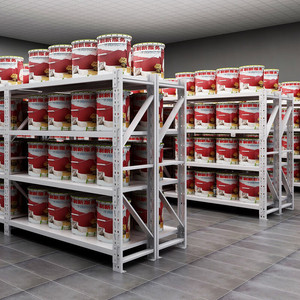
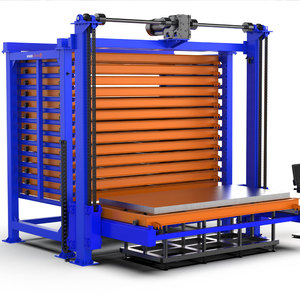
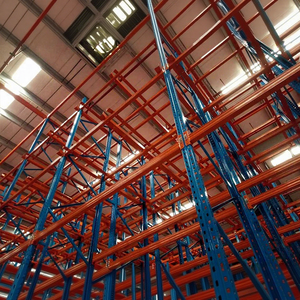
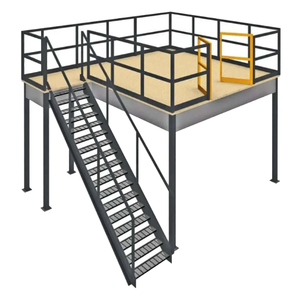
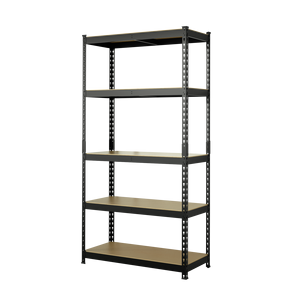
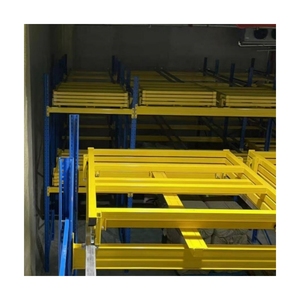
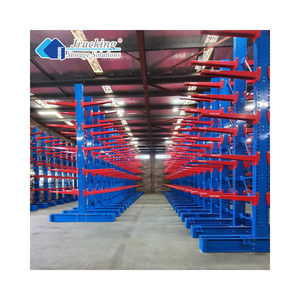
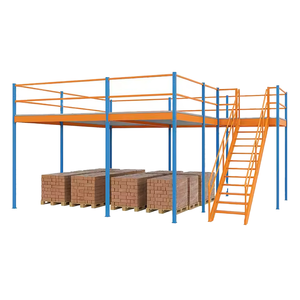
The South Korean warehousing and logistics sector operates under some of the most rigorous operational constraints globally. With prime industrial logistics clusters concentrated in the Greater Seoul Metropolitan Area (GSMA)—including Icheon, Yongin, Anseong, Pyeongtaek, and Incheon Port logistics zones—land acquisition costs command an immense premium. Facility developers and third-party logistics operators (3PLs) cannot afford unoptimized cubic volume.
Consequently, warehouse infrastructure has decisively pivoted from standard low-bay pallet storage toward high-bay structural systems rising from 10 to over 30 meters. These systems demand structural steel engineered with stringent tolerances, superior yield strength, and structural deflection limits that comply with the Korean Building Code (KDS 41) seismic design categories.
Technical Consideration: In South Korea, structural racking must balance heavy live loads with dynamic seismic accelerations ($S_s, S_1$). Unlike standard roll-formed racking, our hot-rolled structural steel columns utilize thickened flange profiles and solid gusseted base plates to maintain integrity during lateral seismic drift.
As a leading Chinese structural pallet rack manufacturer with over 20 years of OEM and ODM engineering heritage, Guangzhou Heda Shelves Co., Ltd. Bridges this precision gap. We supply certified structural steel racking systems manufactured under ISO 9001 and CE certifications directly to Korean general contractors, warehouse integrators, and logistics corporations.
A critical failure point for foreign racking imported into South Korea is the mismatch in pallet geometry. While Western markets predominantly specify ISO 1200 × 800 mm (Euro) or 48 × 40 inch (GMA) platforms, the Korean industrial standard is governed by KS T 1002, specifically the standard T-11 (1,100 × 1,100 mm) square pallet and the T-12 (1,200 × 1,000 mm) unit.
Our structural rack engineering packages feature customized clear-span beam lengths (such as 2,500 mm for 2-pallet bays or 3,600 mm for 3-pallet configurations) calculated to prevent beam deflection exceeding $L/200$ under full static load. Upright frame depths are precision-milled at 1,000 mm or 1,050 mm, providing optimal safety overhang for Korean pallet overhang standards while preventing bottom-board cracking.
Furthermore, our powder-coating finishing lines utilize high-durability electrostatic thermoset epoxy powders. This treatment ensures high scratch resistance against rough handling by Korean-manufactured forklifts (Doosan, Hyundai, Clark) and resists aggressive condensation cycles encountered in sub-zero cold-storage distribution centers.
From sub-zero cold-chain facilities servicing Seoul's fresh food delivery networks to heavy steel coil staging in Gyeongsang manufacturing zones.
Cold storage complexes in Yongin and Icheon powering automated "Dawn Delivery" (새벽배송) require specialized steel formulations. Standard steels become brittle at -25°C to -30°C. We supply low-temperature certified steel alloys combined with structural push-back or radio shuttle racking that resist thermal contraction micro-fractures.
Large third-party logistics mega-centers operated by Korea's leading carriers demand high-bay selective pallet racks up to 14 meters. Our structural columns feature high torsional rigidity, allowing reach trucks and turret VNA trucks to operate at high picking speeds without mast oscillation or clearance collisions.
Supplying Tier-1 and Tier-2 automotive component suppliers serving domestic assembly lines. Heavy stamped metal press dies, transmissions, and engine blocks are staged on structural racking systems engineered for 3,500 kg to 5,000 kg concentrated point-load capacities per shelf beam.
Supporting high-tech manufacturing corridors in Hwaseong, Pyeongtaek, and Icheon. We deliver heavy structural mezzanines and closed-profile powder-coated shelving free of sharp edges, zinc flaking, or particulate accumulation, preserving air purity in climate-controlled buffer rooms.
Specialized storage for hazardous materials, polymer rolls, and lithium-ion raw precursor ingredients in Cheongju and Pohang. Designed with integrated heavy structural drip-containment basins, seismic tie-bars, and chemical-resistant epoxy finishes resisting corrosive spillage.
Port-side bonded warehouses handling rapid turnaround import-export transshipment. Standardized knocked-down selective racks that assemble quickly, offer complete SKU accessibility, and adjust easily for mixed maritime containerized dry cargo.
How our export-grade structural pallet racking aligns with Korean and international building and seismic codes.
| Technical Parameter | HEDA / JRacking Structural Specification | Korean Regulatory Standard (KDS / KS) | European / American Benchmark (FEM / RMI) |
|---|---|---|---|
| Primary Steel Grade | Q235B / Q355B (Certified Cold Rolled & Hot Formed) | KS SS400 / SM490 Equivalence | EN 10025 S235JR / S355JR; ASTM A36 / A572 |
| Seismic Design Criteria | KDS 41 Base Plate Calculations ($S_s = 0.22g$, Zone 1/2) | KDS 41 17 00 (Seismic Design of Building Structures) | RMI MH16.1 Section 8 / FEMA 460 Standard |
| Beam Deflection Limit | $\le L/200$ (Standard) or $\le L/250$ (Heavy Industrial) | KS B 6598 Warehouse Pallet Racking Regulations | FEM 10.2.02 (Industrial Racking Deflection) |
| Column Upright Geometry | 80×60, 90×70, 100×70, 120×95 mm (Up to 3.0 mm Gauge) | Customized to Korean Forklift Mast Clearances | Standard European/US Omega & C-Profile sections |
| Welding Certification | Robotic Automated MIG/MAG Welding, No Slag Spatter | KOSHA Industrial Safety & Health Act Standards | AWS D1.1 Structural Welding Standard / ISO 3834 |
| Surface Finishing | 60–80 μm Electrostatic Powder Coating (Lead-Free) | RoHS & Korean Chemical Control Act Compliant | Qualicoat Class 1 Standard & ASTM B117 Salt Spray |
Key structural shifts reshaping how Korean warehouse owners and logistics directors specify storage hardware.
With acute warehouse labor shortages and rising hourly wages in South Korea, manual counterbalance forklift operations are rapidly giving way to 4-way pallet shuttles and stacker cranes (ASRS). Structural racking must now be manufactured with dimensional tolerances of ±1.5 mm across an entire 20-meter run to prevent optical guide errors and robotic sensor jams.
Given the mountainous terrain and high zoning land prices in Gyeonggi-do, logistics centers are constructed as multi-story buildings with internal truck ramps. Within each floor, operators install free-standing, multi-tier steel mezzanine platforms that double usable cubic footprint for parcel sortation without triggering re-zoning penalties.
Following high-profile logistics facility fires in Icheon, the Korean National Fire Agency enacted stricter National Fire Safety Performance Codes (NFPC). Modern structural racks must incorporate factory-cut transverse flues, beam punched openings for down-pipe sprinkler manifolds, and open steel wire mesh decking replacing plywood boards to guarantee unhindered water penetration.
Guangdong's premier structural rack fabrication base, situated in Pazhou, Guangzhou, with direct shipping lanes to Busan and Incheon ports.
Founded in 2001, executing 5,000+ warehouse and store engineering installations worldwide with proven structural stability.
Single-source supply: selective, drive-in, shuttle, cantilever, multi-tier mezzanines, store gondolas, and steel handling cages.
Every profile, beam length, punch pitch, upright gauge, and color shade is tailored to Korean architectural CAD and seismic loads.
Full destructive tensile, weld ultrasonic, beam sag, and powder adhesion tests executed on every export batch prior to container stuffing.
Dedicated international bilingual engineering teams deliver full CAD layouts, load calculations, and turnkey quotation within 8 hours.
Everything Korean general contractors, procurement agents, and logistics operations managers need to know about sourcing from China.
Our standard export frame depths for the Korean market are engineered at 1,000 mm or 1,050 mm. For the standard KS T-11 pallet (1,100 × 1,100 mm), a 1,000 mm deep upright frame yields an ideal 50 mm front and rear overhang, ensuring the pallet's bottom boards rest firmly on structural load beams without edge tipping.
For double-deep or automated configurations, our engineering team custom-sizes beam spans (e.g., 2,500 mm clear entry for 2 pallets with standard 100 mm side clearances) to match your operational equipment.
Yes. We calculate our racking designs against regional seismic spectral response accelerations across South Korea ($S_s$ and $S_1$ values). Our engineering team supplies complete 3D finite element analysis (FEA) reports and calculations covering horizontal shear forces, overturn moments, and required Hilti/fischer seismic anchor embedment depths for your facility's specific slab thickness.
Shipments depart directly from Guangzhou (Nansha/Huangpu) or Shenzhen ports. Direct ocean transit to Busan Port is typically 4 to 6 days, and to Incheon Port is approximately 5 to 7 days.
Our knocked-down modular component packing maximizes 40ft HQ container cubic utilization, significantly reducing sea freight overhead per pallet position compared to domestic Korean fabricators.
Yes. Under the China-Korea Free Trade Agreement (CKFTA), our company issues the official Certificate of Origin (Form K). This allows qualifying structural steel storage racks (under HS Code 7308.90) to enter South Korea at reduced or duty-free tariff rates, delivering substantial capital expenditure savings for large distribution center builds.
For temperature-controlled and frozen facilities down to -30°C, our steel parts undergo a thorough 7-stage surface pre-treatment (acid pickling, phosphating, and passivation) followed by electrostatic application of thermosetting polyester or polyurethane powder baked at 200°C. This delivers a non-porous, corrosion-resistant coating that resists peeling caused by freeze-thaw condensation cycles.
We provide full structural CAD assembly drawings, 3D exploded assembly diagrams, and step-by-step video installation manuals for local Korean racking installation teams. For major mega-center projects (over 2,000 pallet positions or high-bay mezzanines), we can dispatch senior factory installation engineers to Gyeonggi, Incheon, or Busan to oversee alignment, plumb leveling, and bolt torque inspection.
Send your warehouse AutoCAD drawing (.dwg) or project specifications. Our structural engineering department will prepare comprehensive 2D/3D layout drawings, seismic calculations, and a competitive factory-direct quote within 8 hours.