HEDAHeavy Duty Racking
 English
 Español
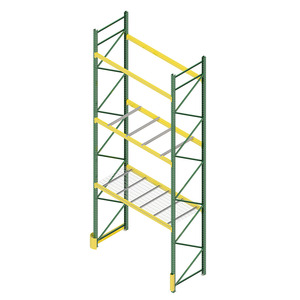
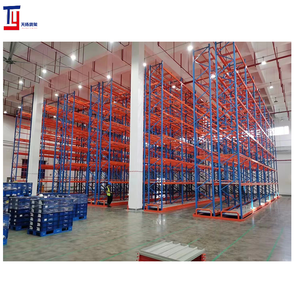
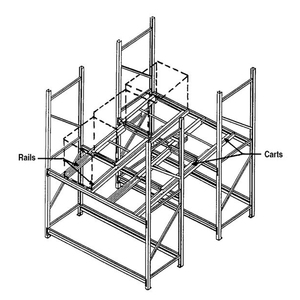
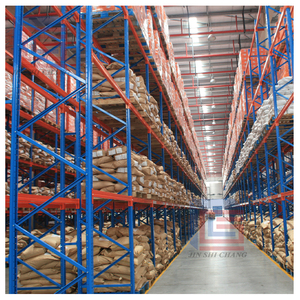
EnglishEspañolStandardized cold-rolled Q235B high-tensile steel assemblies engineered for warehouse distributions, commercial retail footprints, and heavy industrial facilities across the US market.
Manufacturing & Engineering Established
Max Tested Load Rating Per Tier Level
Turnkey Global Installations Completed
US Project Engineering Turnaround
Direct factory manufacturing transparency combined with world-class engineering guarantees low landed costs, uncompromising structural safety, and high modularity.
Operating continuously since 2001, executing thousands of multi-tier warehouse and retail structural projects across the globe.
From heavy-duty high-bay selective pallet racks to wall-mounted cantilever shelves and hybrid display fixtures from a single source.
Every bay dimension, beam elevation, baseplate footprint, and load rating is customized via parametric CAD and BIM models.
Certified Q235B cold-rolled structural steel, ultrasonic weld integrity audits, and flawless electrostatic powder finishing.
Dedicated North American project engineering support ensuring turnaround on layout revisions and quotations within 8 hours.
Understanding how localized building codes, footprint optimization imperatives, and automation workflows drive racking architecture in North American enterprise facilities.
As commercial square-foot lease rates escalate across primary logistics corridors such as the Inland Empire, North Texas, and New Jersey, facilities must expand upwards instead of outwards. Wall-mounted shelving and high-bay perimeter systems provide vital SKU consolidation.
Refrigerated warehouse cubic space commands a premium operational cost. Our cold-storage rated pallet and cantilever systems withstand temperature cycles down to -30°C without embrittlement or structural surface degradation.
Modern hybrid retail demands dual-purpose infrastructure: presenting consumer-facing goods safely while housing palletized reserve stock overhead. Wall-tied and braced selective uprights deliver critical structural rigidity.
Deployments in seismic-active Western States (California, Washington, Oregon) require calculated baseplate anchors, certified beam-to-column locking engagement, and load capacity plaques calculated under ANSI MH16.1 specifications.
Strategic shifts in manufacturing nearshoring, supply chain resilience, and automated material handling are fundamentally redefining storage equipment specifications.
With last-mile transport representing over 50% of logistics expenditures, urban micro-fulfillment centers are replacing monolithic out-of-town distribution parks. Racking frameworks must adapt to lower ceiling clearances, irregular slab geometries, and high cycle frequencies.
Autonomous Mobile Robots (AMRs) and automated pallet shuttles impose precise dimensional tolerances on racking systems. Deflection margins that were acceptable for manual forklift operations are no longer viable for automated sensor-guided retrieval systems.
Procurement teams increasingly evaluate racking not as disposable fixtures, but as amortizable real estate investments. Modular boltless connections, standardized interchangeable components, and easily sourced spare bays safeguard long-term operational viability.
Direct answers addressing building permits, engineering validation, freight consolidation, and structural load calculations.
Our structural engineers calculate upright column cross-sections, baseplate thicknesses, anchor hole configurations, and diagonal bracing geometries in alignment with the Rack Manufacturers Institute (RMI) MH16.1 design standard and International Building Code (IBC) provisions. We provide signed PE calculations and finite element analysis (FEA) reports upon request for regional municipal permit applications.
Our delivered projects range from medium-duty shelving rated at 600–1,800 lbs (300–800 kg) per shelf level, up to heavy-duty selective pallet bays verified at over 10,000 lbs (4,500 kg) per pair of beams. Cantilever systems support up to 5,500 lbs (2,500 kg) per arm level. Structural testing is conducted with physical static loads incorporating standard 1.5 to 1.95 safety factors.
Industrial wall-tied racking should never rely solely on gypsum or non-load-bearing light-gauge metal studs. Secure attachment requires chemical resin or heavy mechanical sleeve anchors drilled directly into reinforced poured concrete tilt-up panels, structural CMU walls, or tying back into primary building I-beam columns. We supply tailored wall-tie tieback brackets engineered for thermal expansion and building drift.
All upright columns, horizontal beams, and shelf supports are formed from certified Q235B cold-rolled structural steel (equivalent in mechanical yield strength to ASTM A36). After robotic welding, parts undergo multi-stage shot blasting, iron-phosphate wash, and automated electrostatic powder coating cured at 200°C. This delivers a uniform 70–90 micron finish resistant to impact, chemicals, and humidity.
All racking items are engineered with complete knock-down (KD) architecture. Uprights and beams are bundled with composite timber spacers, strapped with high-tensile steel bands, wrapped in high-density polyethylene moisture-barrier films, and reinforced with corner edge protectors. This eliminates maritime salt-fog exposure and enables rapid forklift unloading at American distribution cross-docks.
Parametric drawings, 3D renderings, and bill of materials (BOM) are delivered within 8 to 24 hours of receiving site dimensions. Factory production generally spans 15 to 25 business days depending on volume. Ocean transit to West Coast ports (Los Angeles/Long Beach) typically averages 14–18 days, while East Coast ports (Savannah/New York) run approximately 28–32 days.
Whether you are sourcing custom wall-mounted storage bays, expanding a high-density regional distribution center, or require an OEM quote for standard supply lines, our engineering desk is ready to assist with CAD layouts, load validations, and landed cost estimates.