HEDAHeavy Duty Racking
 English
 Español
EnglishEspañolDirect factory supply of heavy-duty cold-formed racking uprights, multi-tier mezzanine frameworks, selective upright frames, and picking modules manufactured to stringent structural safety tolerances.
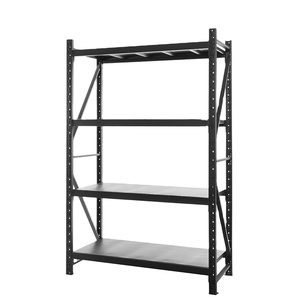
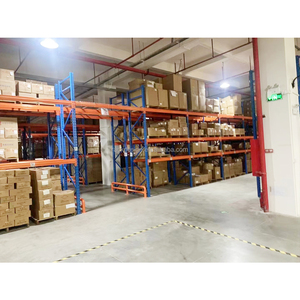
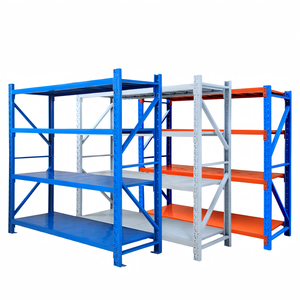
In modern intralogistics, upright frames are the primary vertical load-bearing elements responsible for transferring combined axial gravity loads, longitudinal braking forces, and lateral seismic moments down to the concrete slab foundation.
Our upright columns feature an optimized multi-bend Omega (Ω) cross-section fabricated through precision multi-stage cold roll-forming machines. These distinct return bends maximize the moment of inertia and radius of gyration ($r_x, r_y$), effectively counteracting torsional-flexural buckling and local web crippling under extreme axial compression loads exceeding 25,000 kg per bay.
All load-bearing members are manufactured using high-grade Q235B / Q355B cold-rolled steel coils, chemically and physically comparable to the Japanese Industrial Standards (JIS G3101 SS400 / SM490). With certified yield strengths reaching ≥ 235–355 N/mm² and high elongation percentages, the steel provides exceptional post-elastic ductility necessary to absorb cyclical ground motions without brittle fracture.
Seismic risk mitigation in the Kansai region demands enlarged, ductile structural steel baseplates. We supply thickened footprint plates up to 10mm–14mm with dual-anchor perforations configured for heavy-duty M16 to M20 chemical injection anchors. This engineering anchors deep into post-tensioned or reinforced industrial concrete slabs, transferring horizontal shear forces safely into ground strata.
From coastal multi-tenant logistics centers along the Osaka Bay to inland manufacturing districts, our warehouse upright solutions are engineered to solve specific regional operating constraints.
Facilities positioned around Osaka Nanko (South Port), Sakishima, and Maishima operate under high humidity and marine salinity. Upright systems deployed here demand anti-corrosion electrostatic powder coatings or hot-dip galvanizing to withstand constant condensation in sub-zero refrigerated distribution centers handling imported foodstuffs.
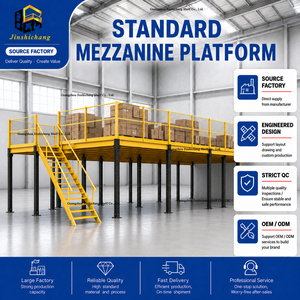
Adjacent to the Hanshin Expressway Network and Yumeshima development, large-scale 3PL distribution campuses require maximum vertical volume usage. Our high-bay uprights reaching 12m to 16m support narrow-aisle (VNA) racking systems and multi-tier mezzanine frameworks, doubling cubic pallet capacity without expanding ground lease footprints.
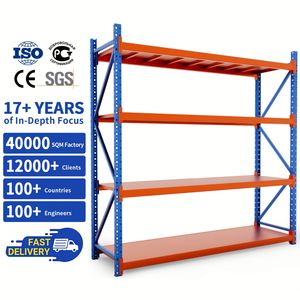
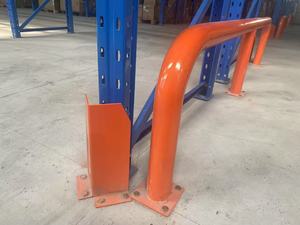
Industrial facilities in Sakai and Izumiotsu handle steel coils, automotive components, and heavy chemical supplies. These operations implement our heavy-duty selective uprights rated for 4,500 kg per beam level, fortified with structural aisle portal ties, wrap-around column protectors, and welded frame footings that absorb forklift impacts.
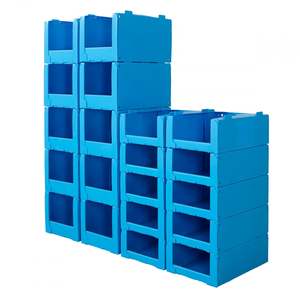
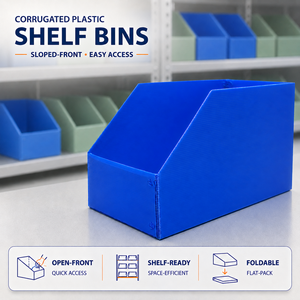
As the historic heart of Japanese precision manufacturing, Higashiosaka workshops manage tens of thousands of fast-moving fasteners, dies, and machined parts. Medium-duty adjustable uprights matched with modular picking bins and stackable PP containers streamline tight floor plans and accelerate manual assembly lines.
Japanese intralogistics is experiencing seismic regulatory and economic shifts. Procuring upright systems requires foresight into automation integration, regulatory labor changes, and structural seismic resilience.
The enforceability of statutory caps on truck driver overtime hours under Japanese labor reform laws (commonly known as the 2024 Logistics Problem) has forced shippers to establish centralized buffer depots in Osaka. Warehouses are maximizing cubic storage efficiency rather than horizontal square meterage, prioritizing taller upright frames with ultra-rigid frame bracing to handle higher inventory turn rates near regional transit terminals.
Osaka municipal planners and disaster risk committees place heavy emphasis on warehouse seismic safety ahead of predicted Nankai Trough oceanic subduction earthquakes. Industrial racking uprights must deliver exceptional ductility and energy dissipation. Buyers increasingly demand dual-tier diagonal cross bracing, widened column footprints, and structural calculations factoring dynamic acceleration coefficients ($k_h \ge 0.25–0.30$).
Rising domestic Japanese steel prices and lengthy local fabrication lead times have encouraged general contractors and 3PLs in Kansai to bypass domestic trading houses. Procuring standardized, export-grade cold-rolled steel racking directly from verified manufacturing facilities in Guangzhou ensures significant cost efficiencies while maintaining strict structural parity with JIS and FEM standards.
Operating since 2001, Guangzhou Heda Shelves Co., Ltd. combines heavy manufacturing scale with advanced structural engineering to deliver reliable, turnkey storage rack frameworks worldwide.
Established in 2001, HEDA operates high-output rolling lines located close to major shipping terminals. Having completed over 5,000 global projects across Europe, the Americas, and the Asia-Pacific, our engineering team possesses the domain expertise required to navigate international building codes and project timelines.
Upright columns are punched and rolled on high-precision automated continuous forming lines, assuring consistent slot pitch spacing without dimensional drift. Components pass through automated pre-treatment and electrostatic powder coating lines, yielding a cured surface finish that is completely free of slag, burrs, and volatile organic compounds.
Our multilingual structural engineering desk reviews architectural drawings, floor plans, and pallet loading parameters to return full 2D AutoCAD configurations, 3D structural renderings, and quotation packages within 8 hours, supporting swift decision-making cycles for general contractors and procurement teams.
Racking uprights, beams, and horizontal/diagonal frame braces are packed in modular, fully knock-down steel strap bundles wrapped with protective moisture barriers. This packing geometry maximizes 40ft High Cube container volumetric load capacity, drastically trimming ocean freight costs direct to the Port of Osaka.
Whether matching existing pitch perforations (e.g. 50mm teardrop, 75mm diamond, or metric butterfly slots) or fabricating bespoke upright heights and footplate configurations, our manufacturing plant delivers complete custom specifications with turnkey consistency across high-volume production batches.
Connect directly with our senior application engineers. Provide your bay height, clear ceiling height, pallet dimensions, and target dead/live loads for an engineered layout and factory-direct quotation within 8 hours.
Detailed technical and commercial answers addressing structural safety standards, coastal corrosion protections, import logistics through the Port of Osaka, and custom engineering parameters.
Q235B steel is the engineering equivalent of JIS G3101 SS400, offering a guaranteed yield strength (σy) ≥ 235 N/mm² and tensile strength (σb) of 370–500 N/mm². For heavy seismic zones or very tall upright columns (exceeding 10 meters) in Osaka Bay warehouses, we frequently deploy Q355B steel, equivalent to JIS SM490, which delivers a higher yield strength (≥ 355 N/mm²) to withstand elevated dynamic moment loads while maintaining high elongation ductility.
We incorporate reinforced seismic footings, heavy-gauge baseplates (up to 12–14mm thickness), doubled chemical anchor bolting, and bolted vertical X-bracing. In addition, our engineers design top-level portal aisle ties that link individual racking runs across picking aisles, transforming isolated upright frames into an interconnected moment-resisting spatial truss that prevents catastrophic lateral collapse during low-frequency seismic waves.
Yes. We supply uprights with multiple standard perforation styles, including standard 50mm pitch metric butterfly slots, 75mm pitch diamond holes, and traditional teardrop profiles. If you have an existing logistics warehouse in Osaka looking to expand existing lines without full replacement, our engineering team can fabricate custom-matched upright frame dimensions and hole pitches based on your sample measurements or CAD blueprints.
Shipments depart directly from Guangzhou (Nansha or Huangpu ports) or Shenzhen to the Port of Osaka. Pure maritime transit typically takes only 5 to 7 days. Our export operations team handles all Bill of Lading (B/L), packing lists, commercial invoices, and origin certificates to facilitate smooth clearance through Osaka Customs. The knock-down packing method guarantees optimal container packing factors to minimize ocean shipping tariffs.
Every production run undergoes strict raw-material tensile verification, coil thickness micrometer checks, weld ultrasonic testing for baseplate seams, and coating adhesion tests. We conduct routine factory destruction and full-scale bay compressive load tests simulating maximum pallet capacity plus standard engineering safety margins (typically 1.5x working load limits) according to ISO 9001 and CE / FEM specifications.
For ambient coastal warehouses, we apply an electrostatic thermoset epoxy-polyester powder coat applied to degreased and phosphate-passivated steel, delivering high scratch and humidity resistance. For high-humidity cold storage facilities (-25°C) or outdoor dock environments, we recommend continuous pre-galvanized sheet roll-forming or hot-dip galvanizing, providing lasting zinc-barrier sacrificial protection against atmospheric salt mist.