 English
 Español
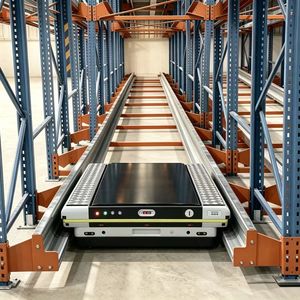
Precision High-Density Industrial Storage Systems
Explore our top-tier pallet racking, dynamic shuttle storage, and specialized industrial fixtures. Every unit is manufactured with certified Q235B high-tensile structural cold-rolled steel, custom load-tested to deliver maximum vertical cube utilization and warehouse safety.
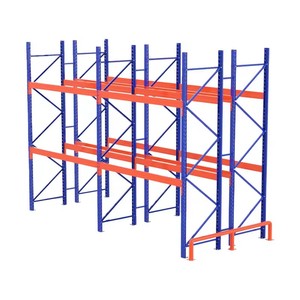
Steel Metallurgy (Q235B)
Continuous hot-rolled micro-alloyed structural coil meeting EN 10025-2 standards with optimized yield points of ≥235 MPa for seismic load resistance.
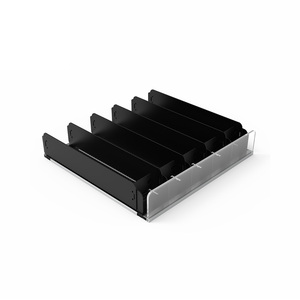
VNA Clearances (1.5m - 1.8m)
Aisle widths condensed by up to 50% compared to standard reach trucks, guided by low-profile mechanical floor rails or induction wire arrays.
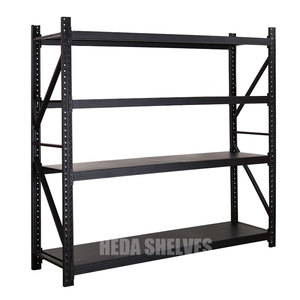
Surface Powder Coating
Automated 9-stage pre-treatment, phosphating, and electrostatic powder spray curing at 200°C for superior impact, scratch, and corrosion resistance.
FEM / RMI Compliance
Calculated strictly against FEM 10.2.02, EN 15512, and RMI standards to ensure deflection does not exceed 1/200 under dynamic multi-tier loads.
Technical Whitepaper: Engineering High-Performance Narrow Aisle Storage
As international commercial real estate prices rise and industrial land costs soar across major global logistics hubs, supply chain executives, warehouse architects, and 3PL distribution leaders face severe pressure: how to maximize pallet storage density per square meter without compromising direct SKU accessibility or material handling throughput.
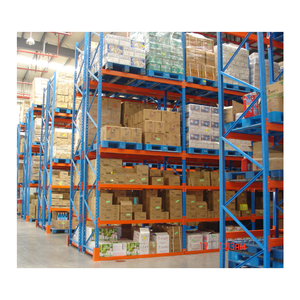
The solution lies in Heavy Duty Very Narrow Aisle (VNA) Pallet Racking Systems. By engineering racking bays that reach up to 15 meters in clear ceiling heights while squeezing operative forklift aisles down from the traditional 3.2–3.8 meters to a compact 1.5–1.8 meters, VNA architectures unlock up to 45% to 50% extra storage volume within the exact same structural warehouse envelope. However, shrinking aisle margins and pushing upright heights demands unprecedented manufacturing tolerances, finite element analysis (FEA), and strict metallurgical reliability.
Metallurgical Rigor: Why Cold-Rolled Q235B Outperforms Alternative Steels
Narrow aisle uprights bear immense structural strain, balancing heavy dead-loads of upper pallet levels with dynamic horizontal impact forces exerted during high-speed turret truck operations. At Guangzhou Heda Shelves Co., Ltd., we avoid second-tier recycled scrap steel. Every upright post, box beam, baseplate, and cross-bracing diagonal is fabricated exclusively from virgin prime-grade Q235B cold-rolled structural steel.
Our upright profiles are roll-formed through a continuous 24-station automated cold-roll forming line. This gradual progressive cold-working process enhances tensile stability, eliminates localized residual stress concentrations, and preserves microscopic grain integrity. The result is an upright column with an extraordinary yield-to-tensile ratio, capable of supporting single-frame loads exceeding 25,000 kg and beam level loads up to 4,500 kg without exceeding the allowable deflection tolerance (δ ≤ L/200).
Precision Floor Tolerance and Guidance Architectures: Wire vs. Rail
In a Very Narrow Aisle environment, operating high-reach VNA forklifts or Man-Up turret trucks leaves mere inches between the mast and the racking beam faces. At a lift height of 14 meters, a 1-millimeter deviation in floor flatness or guide clearance translates to over 100 millimeters of sway at the mast tip. A qualified Chinese heavy-duty narrow aisle racking supplier must design not just racks, but the entire kinetic interaction interface:
- Structural Floor Guide Rails: Engineered using hot-rolled equal angle steel (e.g., L100×75×8 or L125×80×10) or cold-drawn solid bar rails securely anchored into the reinforced concrete slab with chemical resin anchors at 500mm centers. These absorb horizontal lateral impact and maintain mechanical tracking accuracy for heavy reach trucks.
- Wire Induction Guidance (Wire-Guided VNA): Embedding low-frequency electromagnetic cables flush into the warehouse slab. While this provides clean floor aesthetics and seamless bidirectional aisle exits, the racking baseplates must feature ultra-flat laser-cut footings with recessed structural leveling shims to prevent accidental tire deflection.
- End-of-Aisle Heavy-Duty Crash Barriers: Solid wrap-around heavy-gauge steel upright protectors coated in high-visibility safety yellow and orange, deflecting forklift entry collisions away from load-bearing upright posts.
Procurement Evolution: How Global Buyers Are Sourcing Narrow Aisle Systems
The global intralogistics procurement landscape has fundamentally transformed over the past five years. International EPC contractors, warehouse managers, and wholesale distributors are no longer selecting suppliers based solely on metal weight or catalog commodity pricing. Engineering acumen, 3D parametric simulation, and export packaging density now dictate buying decisions.
Procurement Trend 01
Shift to BIM & 3D Digital Twin Pre-Validation
Global buyers now require complete Building Information Modeling (BIM) Revit files and 3D finite element stress simulations prior to manufacturing approval. This prevents costly on-site clashes with fire sprinkler mains, HVAC ducting, and automated guided vehicle (AGV) navigational sensors.
Procurement Trend 02
Integration of Hybrid Automation (VNA + Shuttle)
Modern distribution warehouses are transitioning from pure manual turret trucks to hybrid architectures, pairing high-density narrow aisle frameworks with radio shuttle carts and four-way autonomous automated storage and retrieval systems (AS/RS).
Procurement Trend 03
Certified Traceability & Knock-Down Packaging
With sky-high ocean freight rates, international procurement teams demand completely knock-down modular engineering. Every upright frame and cross-tie must be precision bundled to maximize 40ft High Cube container utilization without scratching delicate powder coatings.
Future Technological Horizons in Warehouse Racking Systems
As the smart warehouse revolution accelerates, narrow aisle racking suppliers in China are driving three major technological breakthroughs:
- Integrated IoT Stress & Deflection Telemetry: Embedment of miniaturized wireless fiber-optic strain gauges inside heavy-duty load beams. These sensors provide real-time alerts to the warehouse management system (WMS) whenever an accidental forklift collision occurs or an overloaded pallet threatens beam yield thresholds.
- Eco-Responsible Zero-Slag Electrostatic Powder Metallurgy: Transitioning to non-toxic, TGIC-free polyester powder formulations cured in ultra-low emission ovens, generating exceptional 1,000-hour salt spray corrosion resistance for deep-freeze (-30°C) environments.
- Parametric Seismic Dissipation Footings: Designing expanded multi-bolt anchor footings equipped with sacrificial elastomeric damping layers capable of absorbing severe lateral shear waves in high-risk seismic zones across South America, Japan, and Oceania.
Why Partner With Guangzhou Heda Shelves Co., Ltd.
Founded in 2001 in Guangzhou, China, HEDA combines two decades of manufacturing mastery with direct export capabilities across five continents.
20+ Years Track Record
Delivered over 5,000 successful commercial racking and retail installations worldwide since 2001.
Comprehensive Product Lines
Single-source supply: Pallet, VNA, shuttle, cantilever, mezzanine, wire mesh, and store fixtures.
OEM/ODM Custom Engineering
Bespoke bay clear spans, vertical beam levels, custom RAL powder finishes, and branded steel fittings.
Rigorous Quality Auditing
Full ultrasonic weld testing, tensile yield coupon tests, and pre-shipment structural trial assemblies.
8-Hour Fast Response
Bilingual structural engineers supply preliminary CAD layouts and detailed quotations in ≤8 hours.
Frequently Asked Questions for Global Buyers
Get authoritative technical answers from our senior project engineering desk to de-risk your overseas warehouse racking investment.
What specific floor slab tolerances are required for VNA racking?
Very Narrow Aisle installations require concrete slabs certified to DIN 18202 (Table 3, Line 4) or Concrete Society TR34 (Category DM1/DM2). Because VNA turret trucks lift up to 15 meters, minor slab inclinations cause significant mast vibration. If your floor doesn't meet DM1 standards, our engineers supply heavy-duty laser-calibrated leveling steel shims (1mm to 5mm) to true every upright baseplate before epoxy chemical anchor installation.
How do you calculate safe working loads (SWL) for heavy-duty beams?
Our engineering division employs ANSYS finite element stress modeling following European FEM 10.2.02 and American RMI guidelines. For standard pallet bays (e.g., 2,700mm beam length for two 1,200×1,000mm pallets), we calculate both uniform distributed load (UDL) capacity and plastic moment resistance. We guarantee a minimum structural safety factor of 1.5 against yield failure, with vertical beam deflection strictly controlled beneath 1/200th of clear span under maximum design load (up to 4,500 kg per beam pair).
Can HEDA customize narrow aisle systems for seismic and earthquake zones?
Yes. We have engineered seismic-certified heavy-duty racking projects across seismic regions including Ecuador, Chile, and Japan. For earthquake-prone projects, our engineers incorporate heavy cold-formed C-channel portal ties connecting rack rows overhead, double-welded spine bracings, upgraded floor anchor embedment depths (≥160mm), and high-ductility baseplates that safely dissipate lateral seismic acceleration energies.
How does HEDA package long uprights to prevent sea-freight transit damage?
Ocean shipping of 9-meter to 12-meter upright frames involves risk of bending or surface abrasion. HEDA utilizes a completely knock-down (CKD) packing protocol. Upright posts, diagonal bracings, and base footings are bundled with corrugated wrapping and steel banding strips with timber dunnage blocks. Beams are nested head-to-tail with protective polyethylene foam spacers, optimizing container cube utilization to pack over 24 metric tons per 40ft High Cube container while completely protecting the electrostatic powder coat.
What is the difference between mechanical guide rails and inductive wire guidance?
Mechanical guide rails (typically L100×75 angle steel) physically constrain the VNA forklift's low-mounted guide rollers. They offer maximum physical protection and prevent the truck from ever colliding with uprights, making them ideal for high-throughput, round-the-clock warehouses. Inductive wire guidance involves cutting a thin channel into the warehouse concrete slab to embed an electromagnetic guide wire. While wire guidance frees up floor space and reduces trip hazards, it requires strict adherence to slab levelness and regular sensor calibration.
What is the typical production and lead time for a 5,000-pallet VNA project?
Standard engineering layout validation and 3D approval drawings require 2 to 3 working days. Once confirmed, our automated roll-forming and powder-coating lines produce a 5,000-pallet position heavy-duty narrow aisle project (approximately 6 to 8 containers) in 18 to 22 business days. We provide comprehensive erection drawings, color-coded installation schematics, and video walk-throughs to support local contractor assembly.
Ready to Engineer Your High-Density Narrow Aisle Facility?
Consult with our senior intralogistics engineers today. Send your warehouse floor plan, ceiling clear heights, and pallet specifications to receive a complimentary 3D layout, load calculation, and factory-direct quotation within 8 hours.
Send an Inquiry