Industrial Storage Whitepaper & Procurement Directory

China Wholesale Heavy Duty Push Back Racking Factories & Exporters

Direct from Guangzhou HEDA Racking: Engineering 2-to-6 Pallet Deep Gravity Nested Cart Racks with Structural Q235B Cold-Rolled Steel for Global Supply Chains.

2001+
Founded In
5,000+
Projects Delivered
300+
Factory Specialists
3,000t
Monthly Steel Output
8h
Engineering Reply
Engineered Equipment Catalog

High-Density Push Back Racking & Complementary Storage Systems

Explore our heavy-duty warehousing systems engineered for cold rooms, distribution centers, and multi-tier picking facilities worldwide.
Engineering Authority & System Architecture

Push Back Racking Engineering: Kinematics, Load Factors & Design Criteria

A comprehensive technical deep-dive into high-density LIFO gravity nested cart storage systems manufactured in China for high-throughput supply chains.

1. Push Back Dynamic Mechanism: Physics, Bearings & Incline Math

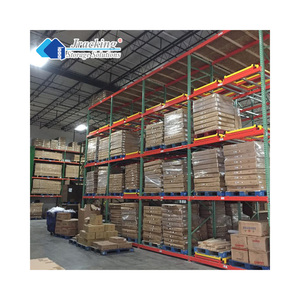
Push back pallet racking is fundamentally an inclined dynamic accumulation solution operating on a Last-In, First-Out (LIFO) inventory logic. Unlike static drive-in racks that mandate the forklift to traverse physically deep into storage lanes—exposing vertical uprights to routine vehicle collisions—push back systems confine all forklift interaction to the external pick aisle. The internal mechanism relies on a progressive telescoping nested cart assembly rolling upon precision structural inclined steel channels (pitch typically calculated between 1.5% and 2.5% depending on total pallet load, pallet bottom configuration, and environmental temperature).

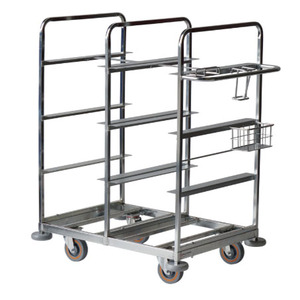
When loading the first unit load, the lift operator positions the pallet directly upon the topmost carriage. To load subsequent unit loads, the forklift gently utilizes the next pallet to push the existing pallet and its supporting nested cart backward along the inclined guide rail, exposing the underlying carriage. During retrieval, gravity autonomously pulls the trailing nested carts forward to the primary aisle face at a controlled terminal velocity, facilitated by heavy-duty sealed bearing rollers and precision safety cart-stops.

System Parameter Standard Export Specification Heavy Duty Reinforced Grade Engineering Standards Compliance
Primary Raw Material Certified Q235B Cold-Rolled Carbon Steel High-Yield Q355B Hot-Rolled Structural Channel EN 15512:2020 / RMI ANSI MH16.1 / AS 4084
Pallet Depth Profiles 2-Deep, 3-Deep, 4-Deep Modular Carts 5-Deep to 6-Deep Heavy Nested Assemblies FEM 10.2.02 / ISO 9001:2015
Maximum Bay Load Rating Up to 1,500 kg per pallet position Exceeding 2,200 kg per carriage position Certified Static & Dynamic Cyclic Test Validated
Incline Slope Gradient 1:40 (2.5%) for Ambient Logistics Warehousing 1:50 with Magnetic Eddy Retarders (Cold Stores) Newtonian Friction Dynamic Coefficient Calibration
Surface Corrosion Defense Automated Electrostatic Powder Coat (60–90µm) Hot-Dip Galvanized (HDG ISO 1461 ≥85µm) ASTM B117 Salt Spray Standard >500 Hours
Wheel Bearing Engineering Sealed Precision Roller Bearings (ZZ Shields) Low-Temp Arctic Synthetic Lubricated Bushings Continuous Sub-Zero Operation (-30°C to +40°C)

2. Comparative Kinematic Efficiency: Push Back vs. Drive-In vs. Radio Shuttle

In modern industrial logistics engineering, deciding between high-density racking variants requires assessing warehouse floor occupancy against pick-face selectivity, operator velocity, and capital expenditure (CAPEX):

  • Push Back vs. Drive-In Racks: Drive-in racking yields high theoretical density, but operational throughput is severely hindered by forklift cycle times inside long tunnels. Operators routinely inflict impact damage to structural frames. Push back racking decreases aisle maneuvering times by over 40% because drivers never cross the structural face plane, providing an immediate increase in daily pallet transactions.
  • Push Back vs. Radio Shuttle Automated Systems: While 4-way shuttles or semi-automated radio shuttles allow extreme lane depths (up to 30 pallets), they introduce recurring electronics maintenance, lithium battery degradation, complex PLC sensors, and software downtime. Push back racking operates via 100% mechanical gravity physics, delivering zero electrical energy consumption, zero PLC firmware failures, and virtually zero operational downtime across decades.
  • Push Back vs. Standard Selective Racks: Selective racking demands up to 60% of total warehouse square footage for operational forklift aisles. By converting selective rows into 4-deep or 5-deep push back banks, facility managers realize a 75% increase in pallet storage density while retaining discrete pick selectivity across every vertical level and horizontal lane.
Procurement Intelligence

Future Procurement Trends for Industrial Heavy Duty Racking

Analyzing geopolitical, technological, and architectural shifts redefining international racking procurement through 2026–2030.

1. Sub-Zero Cold Chain Expansion

Global pharmaceutical, fresh produce, and frozen food logistics are driving demand for high-density push back systems capable of operating flawlessly at -30°C. Standard bearings seize in severe freezing environments; future procurement explicitly specifies low-temperature anti-freeze lubricants, high-grade zinc galvanization, and cold-duct nested carts that optimize chilled air circulation around pallet loads.

2. Stringent Seismic Zone Compliance

Importers across the Pacific Rim, Americas, and Southern Europe now enforce certified non-linear FEA seismic modeling. Procurement mandates enlarged base plates, heavy structural anchors, and specialized floor bracing able to withstand high-magnitude lateral ground acceleration without nested cart derailment or progressive rack collapse.

3. Factory-Direct Modular Knock-Downs

Skyrocketing ocean freight rates have shifted global buyer preference toward fully knock-down (KD) nested cart designs. By precision laser cutting frames and utilizing bolt-free nesting profiles that interlock during shipping, Chinese manufacturing hubs like HEDA maximize 40HQ container volumetric filling, reducing cross-border shipping costs per pallet position by up to 35%.

Industry 4.0 & Metallurgy

Technological & Design Evolution in Push Back Racking Manufacturing

How cutting-edge Chinese steel fabrication lines are elevating structural safety and longevity.

Automated Fiber Laser Track Profiling

Traditional flame or plasma cutting creates thermal heat-affected zones that compromise rail straightness. Modern Chinese export factories deploy multi-axis CNC fiber laser cutters to fabricate guide channels with sub-millimeter tolerances, eliminating track resistance and preventing nested carts from binding under maximum asymmetric loads.

Intelligent Eddy-Current Magnetic Brakes

For deep push back runs exceeding 4 or 5 pallets, heavy loads (1,500+ kg) moving forward under gravity can generate dangerous kinetic momentum. Newly integrated non-contact eddy-current magnetic retardation units regulate cart acceleration dynamically without friction pads, eliminating component wear and ensuring silent, decelerated pallet presentation.

High-Tensile Cold-Formed Steel Grades

Advanced metallurgy has allowed the transition from standard Q235B steel to micro-alloyed, high-yield cold-rolled steel coils. This metallurgical upgrade yields thinner yet substantially stronger profile geometries, delivering higher rigidity and flexural resistance while reducing overall deadweight on structural warehouse concrete slabs.

Direct Manufacturing Authority

Why Tier-1 Importers & Contractors Partner With HEDA Racking

Headquartered beside the Canton Fair Complex in Pazhou, Guangzhou, HEDA Shelves Co., Ltd. combines two decades of manufacturing mastery with direct export capabilities.

Historical Experience

Established in 2001, providing 20+ years of dedicated engineering, fabrication, and worldwide site commissioning across 5,000+ completed installations.

Rich Product Lines

From heavy push back, cantilever, shuttle, and mezzanine platforms to supermarket displays and store fixtures, offering full-spectrum sourcing under one roof.

Bespoke Customization

Every bay span, nested carriage dimension, rail pitch angle, powder-coat color, and seismic base plate is calculated specifically for your exact forklift model.

Strict Quality Control

Certified Q235B raw steel testing, automated seam welding inspection, salt-spray powder cure checks, and certified live weight load tests prior to each container dispatch.

8-Hour Fast Response

Our multilingual structural engineering and export sales teams guarantee initial technical replies, layout proposals, and preliminary bill-of-materials within 8 hours.

Procurement & Technical Consultation

Frequently Asked Questions by Industrial Buyers & Importers

Clear, direct answers regarding structural engineering, logistics packaging, load capacities, and project execution.

What pallet load capacities can HEDA Push Back Racking systems accommodate?
Our heavy-duty push back systems are custom-engineered to handle between 500 kg to 2,000 kg per pallet position. In standard configurations, 2-deep, 3-deep, and 4-deep nested cart assemblies support typical 1,000–1,500 kg pallet loads commonly encountered in food, beverage, and industrial manufacturing. During our preliminary design phase, HEDA structural engineers calculate beam cross-sections, nested carriage wall thicknesses, and high-tensile flanged wheels against your heaviest SKU specifications to maintain safety factor compliance exceeding 1.5 according to RMI ANSI MH16.1 and EN 15512 standards.
How does push back racking compare to drive-in racking regarding maintenance and safety?
Push back racking drastically reduces warehouse damage and operating liability. In a drive-in system, forklift trucks must travel deep into the rack channels, resulting in frequent impacts with upright columns. With push back racking, forklift masts remain exclusively in the central aisle. The truck never crosses the upright face. This eliminates rack damage by up to 80%, increases loading and retrieval speed by 40%, and significantly reduces the need for frequent upright repairs and post-impact maintenance shutdowns.
Can HEDA Push Back Systems integrate smoothly into cold storage (-25°C to -30°C)?
Yes. HEDA specializes in sub-zero freezer installations. When operating in extreme cold, standard steel wheels and regular industrial grease can lock or freeze. We configure cold-chain push back systems with Arctic-grade synthetic lubricants rated to -40°C, precision stainless steel shielded bearings, and hot-dip galvanized or specialized low-temperature powder coatings that resist condensation micro-fractures, preventing nested cart stalls in sub-zero food and pharmaceutical cold stores.
What standard forklift truck models are compatible with push back racking?
No specialized narrow-aisle or turret forklifts are needed. Standard Counterbalance Forklifts, Reach Trucks, and Electric Pallet Trucks easily operate push back installations. Because loading only requires applying a steady forward push with the next pallet against the nesting cart, existing equipment fleets can be utilized immediately without reinvesting in specialized narrow-aisle handling equipment.
How are push back nested carts and rails packed for sea container shipping?
HEDA utilizes an engineered knock-down (KD) export packing protocol. Guide rails and upright profiles are bundled with protective structural timber spacers, steel strapping, and scratch-resistant PE wrapping to withstand ocean container moisture. Nested carts are nested together in compact bundles with steel banding and edge protectors, maximizing container cubing and preventing transit distortion so items arrive ready for rapid bolt-together assembly on site.
Do you provide warehouse architectural layout designs and 3D FEA simulations?
Yes. Our structural engineering department provides complimentary AutoCAD architectural layout designs, elevation drawings, and 3D photorealistic renderings prior to production quotation. For high-bay and seismic project contracts, we provide structural Finite Element Analysis (FEA) reports verifying frame deflection under static, dynamic, and seismic seismic stress combinations.
What steel grade and surface finishing methods are deployed in your Guangzhou factory?
All structural load-bearing components are cold-formed from certified Q235B carbon steel from top-tier Chinese domestic mills (with optional high-yield Q355B available). Parts pass through automated shot-blasting, chemical pre-treatment, and an automated continuous electrostatic powder-coating line cured at 180°C–200°C. This creates a resilient 60–90 micron polymer surface that resists abrasion, impact chipping, and chemical solvents.
How fast can overseas buyers receive formal engineering proposals and project quotes?
Our international project sales engineers operate across multiple time zones with an 8-hour rapid response commitment. Simply supply your building floor plan (DWG/PDF), warehouse clear height, pallet dimensions (W x D x H with cargo), total pallet weight, and forklift model to receive a comprehensive engineered solution and competitive factory-direct quote.

Accelerate Your Warehouse Storage Density & Throughput

Connect directly with HEDA's structural engineering department for project layout optimization, static load certifications, and competitive wholesale FOB/CIF factory quotations.

Inquire Now