HEDAHeavy Duty Racking
 English
 Español
EnglishEspañolDirect manufacturer deployment of heavy-duty industrial pallet racking systems, certified seismic upright configurations, and turnkey modular retail logistics fixtures.
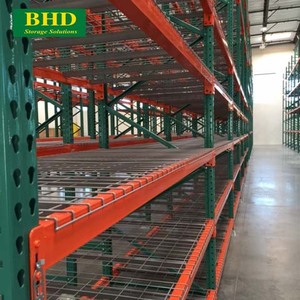
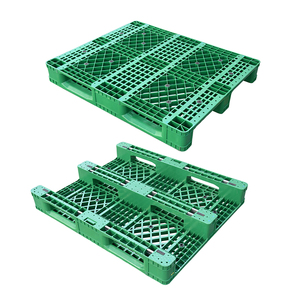
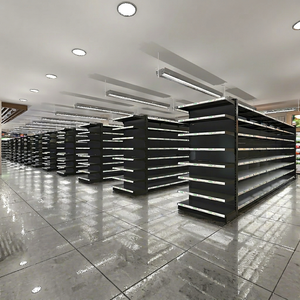
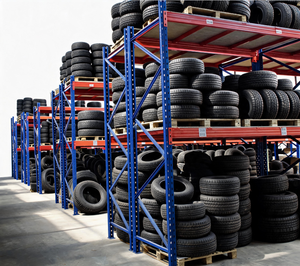
Evaluating the mechanical equilibrium between footprint utilization, load moments, and pantograph reach mechanics in heavy industrial storage.
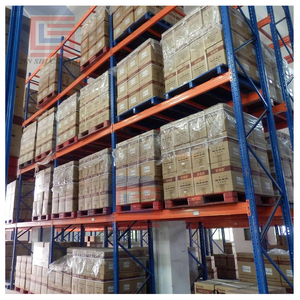
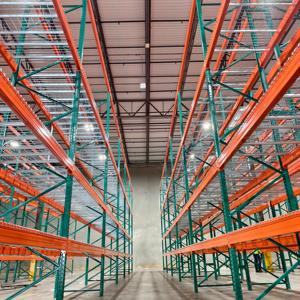
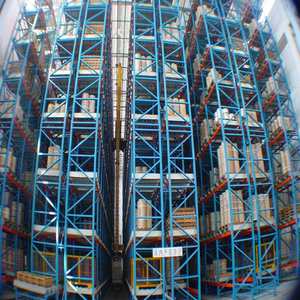
In modern industrial intralogistics, supply chain directors constantly navigate the trade-off between direct access selectivity and cube utilization efficiency. Standard selective pallet racking preserves 100% immediate accessibility at the cost of consuming over 60% of floor space in aisle thoroughfares. Conversely, drive-in systems drastically maximize density while introducing stringent First-In, Last-Out (FILO) constraints, elevating operational cycle durations, and increasing equipment impact hazards. Custom OEM Heavy Duty Double Deep Pallet Racking occupies the critical engineering sweet spot: storing pallets two-deep per aisle face (four pallets back-to-back between operating lanes), reducing total operating aisles by up to 33%, and expanding net storage capacity by 30% to 40% without compromising structural modularity.
From an applied structural mechanics perspective, double deep pallet racking demands advanced structural integrity due to the kinematics of reach truck pantograph extension. When an operator inserts or extracts a pallet located in the second deep position, the reach mechanism cantilevers the operational center of gravity outwards from the mast. This creates dynamic rotational moments, horizontal vibration loads, and localized beam deflections. Guangzhou Heda Shelves Co., Ltd. mitigates these mechanical stresses by engineering rigid upright frames utilizing certified Q235B high-tensile cold-rolled steel, continuous omega-profile column sections, multi-hook weldment connector lugs, and high-frequency roll-formed interlocking boxed step beams.
Safety Factor Integration: Every OEM double deep rack configured by HEDA includes specialized structural guide rails for deep-entry guidance, rear pallet stops to eliminate second-bay push-through, and widened footplates with chemical anchor arrays engineered against FEM 10.2.02 and RMI specifications.
| Storage Topology | Floor Space Utilization | SKU Selectivity Ratio | Required Handling Equipment | Cycle Time Impact | Investment vs. Density ROI |
|---|---|---|---|---|---|
| Standard Selective Rack | 35% – 45% Cube Density | 100% Immediate | Standard Counterbalance / Reach | Fastest Single Handling | Moderate (High Floor Footprint Cost) |
| OEM Double Deep Rack | 60% – 70% Cube Density | 50% Immediate (High-Throughput Batches) | Pantograph Deep-Reach Truck | Balanced (Minimal Repositioning) | Optimal (30%+ More Pallets per m²) |
| Drive-In Racking | 70% – 80% Cube Density | Low (FILO / Row Dependent) | Specialized Drive-in Forklift | Slower (Aisle Ingress Required) | High Structural Wear & Damage Risk |
| Radio Shuttle System | 80% – 85% Cube Density | Variable Automated Lane Access | Autonomous Shuttle Cart + Lift | Semi-Automated Continuous | High Initial Capital Outlay |
Key technological, regulatory, and architectural trends reshaping capital expenditure strategies for distribution centers worldwide.
With industrial square-footage rates rising across North America, Europe, and Asia-Pacific, procurement leaders are shifting from lateral footprint expansion to volumetric vertical intensification. Double deep racking allows facilities to achieve higher pallet counts within existing floor boundaries, avoiding lease renegotiations or expensive relocations.
Refrigerated warehouse cubic refrigeration energy represents an enormous recurring overhead. Procurement mandates for temperature-controlled cold chains increasingly specify heavy-duty double deep configurations to maximize chilled density, optimize thermal convection patterns, and minimize cubic refrigeration costs per stored metric ton.
Global supply chain logistics make container freight volume optimization vital. Global supply managers require heavy duty racking delivered as modular knock-down assemblies. Precision boltless beam-to-column connections and dismountable frame configurations maximize container pack factors while reducing ocean shipping overhead.
Procurement teams demand certified structural FEA modeling rather than static catalogue capacities. From Latin America to Oceania, racking systems must carry site-specific engineering certifications accommodating seismic ground acceleration factors, customized baseplate anchor spacing, and supplemental back-frame cross-bracing.
The convergence of advanced steel roll-forming, vision-guided automation, and smart predictive structural health monitoring.
Modern double deep racking systems are transitioning from manual reach-truck operations to autonomous deep-reach guided vehicles. Warehouses integrate optical reflectors, QR grid localization, and laser range finders directly onto the OEM upright profiles to enable millimetric automated positioning in high-bay double-deep lanes.
Cold-rolled structural steel Q235B components undergo high-pressure shot-blasting, multi-stage acid washing, and automated electrostatic powder curing. This ensures uniform dry-film thickness without weld slag or burrs, providing maximum corrosion resistance in humid tropical or sub-zero logistics operations.
High-bay upright columns are increasingly equipped with smart piezo-electric shock and deflection monitors. If a forklift impacts an upright or base protector, structural telemetry sends immediate alerts to the facility's WMS, preventing localized yielding from propagating into cascading racking failures.
Headquartered in Pazhou, adjacent to the Canton Fair Complex, HEDA delivers factory-direct engineering, custom OEM capabilities, and proven structural safety worldwide.
Over two decades of precision manufacturing, engineering calculations, and turnkey installations across 5,000+ completed projects globally.
Single-source manufacturing across heavy-duty double deep, drive-in, radio shuttle, cantilever, and mezzanine structural systems.
Tailored beam profiles, column thicknesses, row spacer clearances, custom color schemes, and private-label branding for international EPC contractors.
Comprehensive Q235B metallurgical testing, ultrasonic weld inspections, electrostatic coating thickness verification, and certified static load test protocols.
Multilingual export sales engineers provide layout reviews, static load checks, and 2D/3D CAD proposals within 8 hours across global time zones.
Clear, direct answers from our factory engineers covering layout design, forklift compatibility, load factors, and export operations.
Double deep racking requires specialized deep-reach handling equipment, commonly a pantograph reach truck, a double-reach scissor truck, or a telescopic fork forklift. These vehicles are engineered to extend the pallet load forward through the outer racking bay into the inner bay. Counterbalance forklifts cannot access the second deep pallet location without custom hydraulic attachments.
By eliminating every second operating aisle and positioning pallet bays four-deep between working aisles, double deep pallet systems increase overall warehouse storage capacity by approximately 30% to 40% compared to traditional single-row selective racking configurations on the same building footprint.
HEDA double deep racking systems are custom engineered to support project-specific requirements, routinely supporting up to 4,500 kg per beam level. Upright frames are calculated against overall tier height, seismic zone ground acceleration ratings, and concentrated static pallet weights.
All structural uprights and load beams are roll-formed from premium certified Q235B cold-rolled steel. Components undergo automated shot-blasting, chemical degreasing, and phosphating, followed by heavy-duty electrostatic epoxy polyester powder coating cured at high temperature to eliminate weld slag and offer superior durability.
Yes. HEDA regularly calculates and fabricates systems for earthquake zones across Latin America, New Zealand, Japan, and the Mediterranean. We integrate enlarged heavy-gauge footplates, chemical anchor bolt patterns, high-tensile column back-ties, and reinforced diagonal K-bracing to comply with global seismic parameters.
Uprights and beams are designed in a knock-down format, nested with protective corrugated separator layers, bundled with high-tensile PET banding, and reinforced with corner edge protectors. This layout maximizes shipping container space utilization while protecting the powder-coated finish from ocean transit abrasion.