HEDAHeavy Duty Racking
 English
 Español
EnglishEspañolExplore our high-density engineered racking series, custom cold-rolled from certified Q235B structural carbon steel and finished with high-durability electrostatic powder coating.
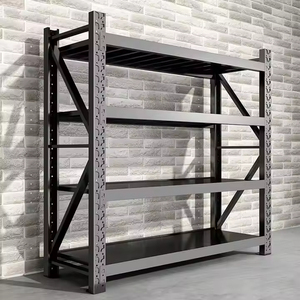
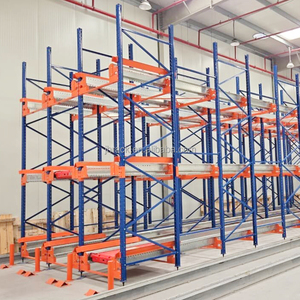
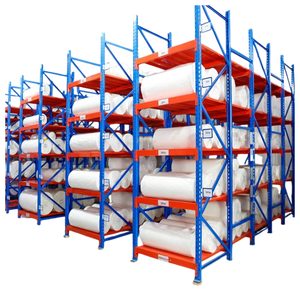
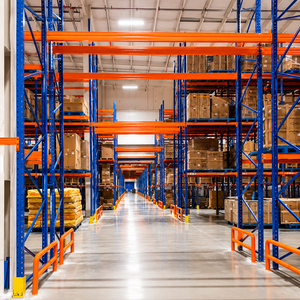
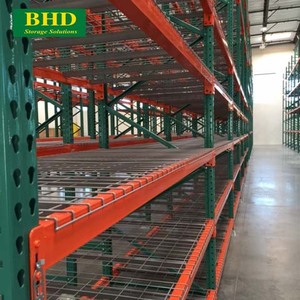
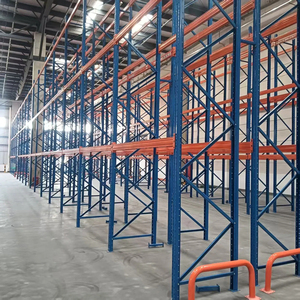
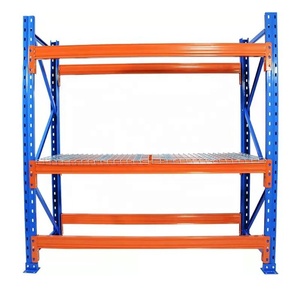
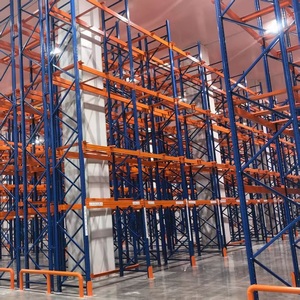
With over two decades of precision manufacturing in Haizhu District, Guangzhou, next to the Canton Fair Complex, our specialized racking infrastructure eliminates structural risk for tier-1 distributors, logistics contractors, and retail chains.
Established in 2001 with continuous technical evolution. More than 5,000 delivered projects across Southeast Asia, the Americas, Europe, Australia, and Africa.
One-stop production encompassing heavy selective pallet racks, automated radio shuttles, drive-in systems, cantilever racks, structural mezzanines, and commercial fixtures.
Custom beam spans, frame depths, metal gauge thickness, electrostatic RAL color matching, and custom brand stamping engineered for localized distributor brand lines.
Certified Shanghai Baosteel / Shougang Q235B cold-rolled profiles. Automated continuous roll forming, zero slag robotic welding, and uniform 60–80µm powder curing.
Dedicated bilingual structural engineers supply static load calculations, CAD floor layouts, and photorealistic 3D structural previews within 8 business hours.
Pallet storage racking serves as the structural spine of contemporary supply chains. When sourcing OEM pallet racking systems internationally, engineering decision-makers must look beyond primary steel tonnages and evaluate the full mechanical interplay between upright section geometries, beam-to-column connector rigidity, dynamic live-load dissipation, and localized seismic forces. As an enterprise exporter, our production lines follow stringent metallurgical standards to ensure that deflection ratios never exceed the critical L/200 limit under maximum allowable static unit loads.
Engineering Benchmark: All load evaluations performed by our technical division are cross-referenced with ANSI/RMI MH16.1 (Specifications for the Design, Testing and Utilization of Industrial Steel Storage Racks), European standard EN 15512:2020, and Australian standard AS 4084:2023. This ensures uncompromised baseline safety factors of 1.65 to 1.90 under operational conditions.
Selecting the optimal pallet racking configuration requires a calculated compromise between SKU selectivity, volumetric cubic storage density, equipment handling accessibility, and capital deployment speed. The following technical matrix provides an authoritative comparison across our core OEM structural racking categories:
| Racking Typology | Unit Load Range | Volume Utilization | Selectivity Ratio | Handling Machinery | Seismic Adaptability |
|---|---|---|---|---|---|
| Selective Pallet Racking | 1,000 – 4,500 kg / level | 40% – 50% | 100% (Direct Access) | Counterbalance, Reach Trucks | High (Standard Bracing) |
| Drive-In / Drive-Through | 800 – 2,000 kg / lane | 70% – 80% | 20% – 30% (Batch Access) | Narrow Counterbalance | Moderate (Top Braced) |
| Automated Radio Shuttle | 500 – 2,000 kg / pallet | 80% – 88% | 40% – 60% (Lane Selectivity) | Automated Carrier + Forklift | Superior (Rigid Box Channel) |
| Push-Back (Cart/Roller) | 1,000 – 1,500 kg / lane | 65% – 75% | 25% – 35% (FILO Dynamic) | Standard Reach Trucks | High (Interlocking Carts) |
| Heavy-Duty Cantilever | 500 – 2,500 kg / arm | 55% – 65% | 100% (Linear Profiles) | Side Loaders, 4-Way Trucks | Engineered Column Bases |
| Multi-Tier Mezzanine Floor | 500 – 1,000 kg / m² | Doubles/Triples Footprint | 100% (Manual/Cart Picking) | Freight Lifts, Stairways | Built-in Horizontal Ties |
The foundation of structural safety begins at the steel coil uncoiler. We exclusively procure hot-rolled and cold-rolled carbon steel coils conforming to Chinese standard GB/T 700 Q235B and Q355B, which offer tensile yields equivalent to ASTM A36 and European S235JR / S355JR. Upright frames are shaped through automated continuous roll-forming machines with 18 to 22 forming passes. This high-pass process preserves internal grain alignment and eliminates micro-fracturing along the 90-degree fold radiuses.
Upright punching profiles feature 50mm, 75mm, or 76.2mm (3-inch) pitch intervals, precision-stamped with automated CNC presses to maintain a cumulative hole-pitch tolerance under ±0.15mm across a 12-meter continuous vertical section. For North American export programs, our specialized punch sets reproduce standard teardrop configurations featuring reciprocal lock-pin indentations that seamlessly dock with legacy structural components.
Beams undergo dual automated seam welding utilizing high-rigidity twin-C profile interlocking shapes (forming an enclosed box beam) or structural step beams designed for wire decking insertion. The end connectors (beam claws) are stamped from heavy 3.5mm to 4.5mm cold-rolled steel plates with 3, 4, or 5-tooth configurations. These teeth utilize a tapered hook profile that wedges tighter into the upright slots as downward pallet gravitational force increases, radically minimizing joint deflection and torsional sway under maximum load capacity.
Corrosion failure in industrial environments or high-humidity coastal supply chain depots represents a massive structural liability. Our finishing line incorporates a comprehensive 6-stage surface preparation cycle: alkaline degreasing, twin fresh-water rinsing, micro-crystalline zinc phosphating, deionized water rinsing, and high-temperature moisture dry-off. Components then enter an automated electrostatic spray booth where lead-free TGIC polyester powder is applied uniformly to a thickness of 60 to 90 microns, followed by polymerization curing in a 200°C convection oven for 25 minutes. The resulting coating surpasses standard 500-hour neutral salt-spray exposure testing (ASTM B117) without blister formation or rust migration.
How macroeconomics, carbon emissions tracking, container consolidation, and engineering compliance are reshaping international B2B racking procurement.
Forward-looking global buyers no longer procure pallet racks solely based on FOB ex-work unit weights. With shipping container freight rates experiencing dynamic fluctuations, the focus has shifted entirely toward maximum knock-down modular packaging. Custom pallet-nested upright assemblies and optimized beam nesting profiles allow high-cube 40HQ containers to hit maximum payload limits (approaching 26–27 metric tons) without paying for air transport. Sourcing from experienced exporters ensures zero container dead-space, drastically lowering landed cost per pallet location.
Corporate ESG mandates in North America and Western Europe are pushing distribution networks toward quantifiable supply-chain carbon audits. Racking procurement contracts now increasingly require declarations of steel scrap recycling percentages, solvent-free non-VOC thermoset powder curing, and energy-efficient factory roll-forming. As an OEM manufacturer, our production incorporates scrap recovery reclamation and high-efficiency electric infrared curing, preparing import partners for strict incoming Carbon Border Adjustment Mechanisms (CBAM).
Municipal building authorities worldwide are enforcing localized seismic hazard certifications prior to issuing warehouse occupancy permits. Modern international racking RFQs mandate finite element analysis (FEA) models showing response spectra under dynamic ground acceleration. From the Pacific Rim 'Ring of Fire' to Latin American Andean seismic belts, OEM exporters must supply custom oversized base plates, specialized floor chemical anchor anchoring, and middle-tier vertical/horizontal portal bracing engineered to meet seismic zone 4 criteria.
The convergence of autonomous intralogistics robotics, automated guidance, sensor networks, and high-density racking topologies.
The rapid deployment of autonomous mobile robots (AMRs) and automatic guided vehicles (AGVs) is revolutionizing conventional floor operations. Modern pallet rack frames must feature modified bottom clearances, precision optical reflector anchor points, and widened lower portal bays. Our OEM design team develops hybrid racking layouts where bottom run elevations provide dedicated AMR transit corridors while upper levels maintain maximum heavy-duty pallet load staging.
Warehouse racking systems are transitioning from passive steel frameworks into intelligent cyber-physical infrastructure. Leading mega-distribution centers are trialing retrofitted triaxial accelerometer sensor pods along critical aisle uprights. These smart nodes detect and log forklift impact events in real-time, alert safety officers to structural deflection breaches, and evaluate cumulative structural stress cycles, preventing catastrophic rack collapses before they occur.
Traditional drive-in racking is rapidly losing market share to intelligent radio pallet shuttle systems. Shuttle systems drastically eliminate forklift aisle entry, cutting structural frame impact damage by more than 90% while doubling inventory pallet cycle speeds. Our factory specializes in high-precision cold-formed galvanized guide rails that deliver the sub-millimeter running tolerances demanded by high-speed four-way shuttle vehicles.
Clear, authoritative technical answers to assist procurement officers, system integrators, and logistics contractors in making informed sourcing decisions.