HEDAHeavy Duty Racking
 English
 Español
EnglishEspañolEngineered for extreme dynamic loads, high-throughput fulfillment, and first-in-first-out inventory rotation. Direct factory supply with precision tolerance roll-forming.
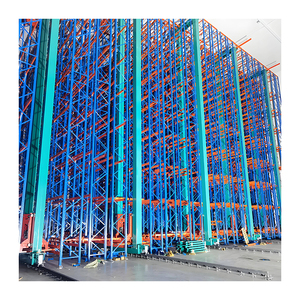
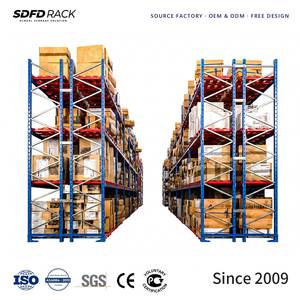
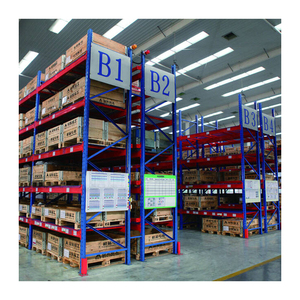
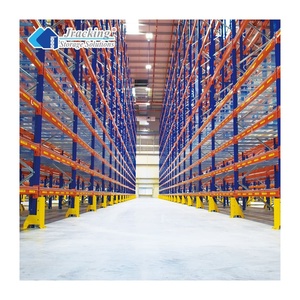
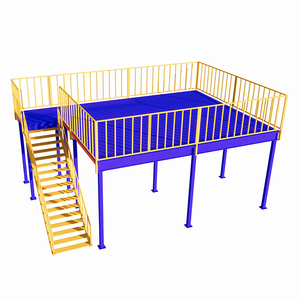
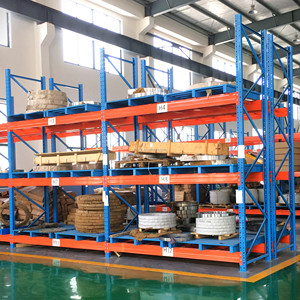
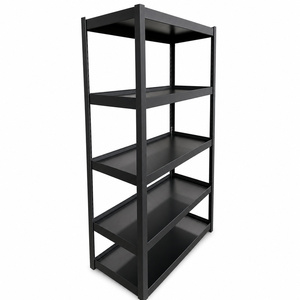
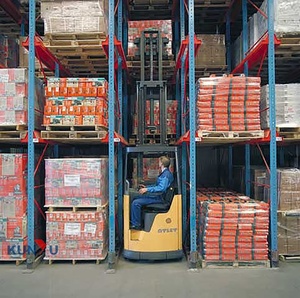
First-In, First-Out (FIFO) pallet flow racking systems represent the pinnacle of high-density, dynamic gravity-fed material handling infrastructure. Unlike conventional static selective racking or Last-In, First-Out (LIFO) drive-in systems, an engineered industrial FIFO racking assembly eliminates internal operational forklift aisles by consolidating pallet storage into continuous inclined roller channels. Operating on an engineered gradient of typically 3% to 4% (approximately 1.7° to 2.3°), unitized pallet loads roll smoothly from the rear replenishment aisle down to the front discharge picking face via gravitational acceleration, moderated strictly by internal mechanical governors.
Integrated at calculated intervals along the roller track, direct-drive centrifugal brake rollers apply proportional friction against the pallet underside. This neutralizes runaway kinetic energy, ensuring massive dynamic payloads descend under stable, safe laminar speeds without product tipping or structural shock.
Located at the discharge face, automatic pneumatic or spring-actuated pallet separation stops isolate the lead pallet from the combined hydrostatic pressure of the queue behind it. Once the retrieval forklift extracts the first unit, the separator disengages smoothly to release the next pallet without line jamming.
Roll-formed uprights and box-beams are manufactured from certified structural Q235B steel. Engineered according to European FEM 10.2.02 and American RMI specifications, our frames undergo exhaustive FEA stress analysis to safely withstand cyclic horizontal dynamic impact and severe seismic ground acceleration.
Established in 2001 in Guangzhou, China, our advanced manufacturing complex provides end-to-end OEM and ODM services for global distributors, multi-national logistics enterprises, and industrial contractors.
Over two decades of precision fabrication and project engineering across 5 continents.
From gravity FIFO and radio shuttles to multi-tier mezzanines and retail fixtures.
Custom beam profiles, roller materials, pitch spacing, powder coats, and load ratings.
Full ultrasonic weld diagnostics, tensile verification, and dynamic test bed trials.
Dedicated bilingual project engineering teams provide preliminary 2D/3D CAD layouts within 8 hours.
Selecting the ideal intralogistics system requires balancing capital expenditure against long-term operating costs and picking cycle times.
| Storage System Type | Stock Rotation | Floor Space Utilization | Forklift Travel Distance | Picking Cycle Velocity | Optimal Industry Application |
|---|---|---|---|---|---|
| Heavy Duty FIFO Pallet Flow | Strict FIFO | Up to 85% Efficiency | Minimal (Dedicated Aisles) | Ultra-Rapid (Gravity Assist) | Cold Storage, FMCG, Pharmaceuticals |
| Radio Shuttle Automation | FIFO or LIFO | Up to 88% Efficiency | Low (Aisle Pick Stations) | High (Powered Shuttle) | Beverage Processing, Raw Materials |
| Drive-In Racking | Strict LIFO | 65% - 75% Efficiency | High (Forklift Enters Lanes) | Moderate to Slow | Seasonal Bulk SKU, Non-Perishable |
| Standard Selective Rack | Mixed FIFO/LIFO | 35% - 45% Efficiency | Extensive (Every Aisle) | Standard Direct Access | High SKU Diversity, Retail Fulfillment |
| Push-Back Trolley System | Strict LIFO | 60% - 70% Efficiency | Moderate (Front Access Only) | Intermediate Dynamic | Manufacturing Staging, Medium Depth |
Procurement directors and supply chain engineers are re-evaluating traditional warehouse footprint allocation under pressure from escalating land acquisition costs and rising industrial electricity tariffs. Sourcing trends for heavy-duty gravity racking systems show significant migration toward four core technological criteria:
Because cold storage operations consume excessive refrigeration per cubic meter, maximizing building volume is vital. FIFO gravity flow eliminates wasted aisle clearance, delivering 60% higher density than standard selective racks. The non-powered gravity operation drastically cuts energy overhead compared to continuous automated conveyors.
Modern procurement specifications mandate that gravity discharge stops integrate seamlessly with Autonomous Mobile Robots (AMRs) and Automated Guided Vehicles (AGVs). Optical sensors, photo-eye targets, and laser-guided centering bevels are now standard factory add-ons, ensuring autonomous pickers extract pallets without human intervention.
In regions subject to seismic vibration (such as the Pacific Rim and Mediterranean zones), racking structures must absorb ground movement without shedding dynamic loads. HEDA designs feature reinforced dual-anchor footplates, enlarged bracing nodes, and spring-loaded roller dampeners that satisfy rigorous zone 4 seismic building codes.
Clear, engineering-backed answers addressing the complex specifications of heavy-duty FIFO pallet flow systems.
Contact our Guangzhou technical headquarters directly for tailored OEM/ODM pricing, structural calculations, and complete layout blueprints. We reply within 8 hours across all global time zones.