HEDAHeavy Duty Racking
 English
 Español
EnglishEspañolFabricated strictly with premier Q235B high-yield structural cold-rolled steel, calibrated for seismic stability, high cyclic throughput, and extreme industrial temperature ranges.
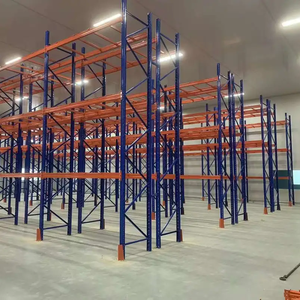
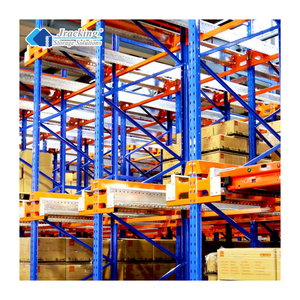
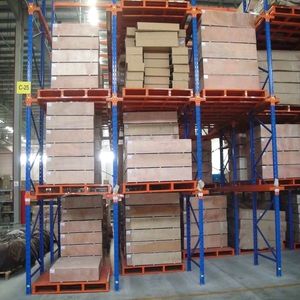
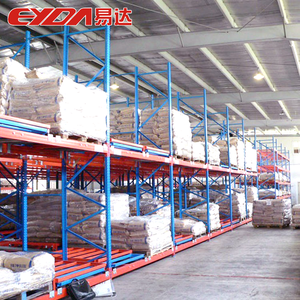
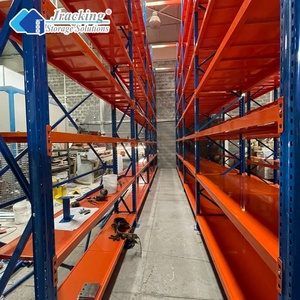
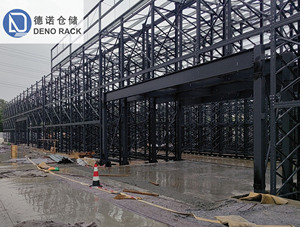
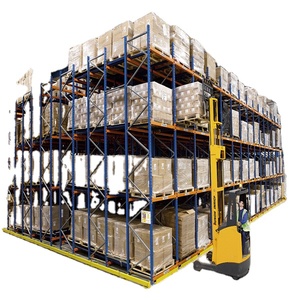
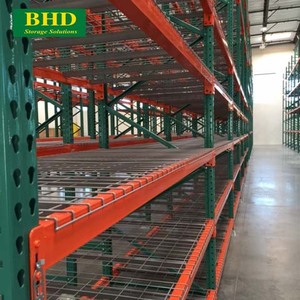
Headquartered in Pazhou, Guangzhou, next to the Canton Fair Complex, our engineering and manufacturing ecosystem delivers reliable industrial racking to over 80 countries.
Founded in 2001, we bring two decades of specialized expertise in cold-formed steel engineering and industrial storage layout design, delivering over 5,000 global projects.
Integrated manufacturing encompassing selective pallet racking, radio shuttle systems, cantilever racks, heavy drive-in configurations, mezzanine floors, and retail display shelving.
Parametric customization of column profiles, beam gauges, beam lengths, connector tabs, seismic baseplates, and architectural powder-coating matched to RAL formulas.
100% mill-certified Q235B steel validation, full-penetration welding controls, coupon tensile testing, salt-spray anti-corrosion verification, and static load test compliance.
Our dedicated bilingual structural engineers provide preliminary CAD layouts, 3D warehouse renderings, and accurate Bill of Materials (BOM) quotations within an 8-hour window.
Transitioning from static dead-load steel frames to dynamic, semi-automated intralogistics ecosystems: How cold-formed roll engineering and metallurgical science define operational longevity.
Modern warehouse logistics impose rigorous dynamic stress profiles on vertical uprights. The contemporary approach utilizes advanced Finite Element Analysis (FEA) to assess torsional buckling, axial compressive limits, and perforated hole web weaknesses under asymmetric live loads. By transitioning from generic standard open channels to multi-bend omega (Ω) cold-formed upright sections, cross-sectional inertia is magnified by up to 28% without increasing dead structural tonnage.
Standard Q235B cold-rolled structural steel undergoes controlled strain hardening during multi-station roll-forming lines. This precision process yields cold-worked yield strengths exceeding nominal thresholds, allowing maximum safe load capacities of up to 4,500 kg per beam tier with deflection ratios strictly restricted to ≤ L/200 under full load conditions.
Standard metallurgical benchmarks applied across HEDA high-bay storage fabrication lines.
| Property / Parameter | Standard Commercial Steel | HEDA Certified Q235B |
|---|---|---|
| Yield Strength ($R_eH$) | ≥ 195 - 215 MPa | ≥ 235 - 275 MPa |
| Tensile Strength ($R_m$) | 315 - 430 MPa | 370 - 500 MPa |
| Elongation at Fracture ($A_5$) | ≤ 20% | ≥ 26% (High Ductility) |
| Upright Perforation Tolerance | ± 0.50 mm | ± 0.15 mm (CNC Stamped) |
| Powder Coating Thickness | 40 - 50 μm (Single pass) | 70 - 90 μm (Electrostatic) |
| Cold Room Ductility Limit | Brittle below 0°C | Tested & Stable to -30°C |
Accelerated ISO 9227 salt spray endurance testing across finishing options.
| Surface Treatment Profile | Salt Spray (hrs) | Target Operating Environment |
|---|---|---|
| Standard Air Dry Alkyd Paint | 96 hrs | Dry ambient retail displays |
| Thermoset Epoxy-Polyester | 500 hrs | Standard dry warehouse intralogistics |
| Upgraded HEDA Zinc Pre-Coated | 750 hrs | FMCG, cold storage buffers (±2°C) |
| Hot-Dip Galvanized (HDG) EN 1461 | 1,200+ hrs | Freezer facilities (-30°C) & exterior yards |
Corrosion resistance is not merely cosmetic; in modern supply chain terminals, microscopic rust pitting creates notch effects that trigger early structural fatigue cracking. HEDA replaces outdated solvent paints with an automated 9-stage pre-treatment wash including hot alkaline degreasing, zinc phosphating, and deionized water rinsing before applying architectural-grade thermoset powder.
For sub-zero temperature cold rooms and blast-freezer warehouses, steel brittleness poses catastrophic risks. When ambient temperatures plunge below -20°C, ordinary structural carbon steel transitions from ductile to brittle behavior. HEDA's cold-room pallet rack configurations utilize modified chemical alloys with controlled carbon-manganese ratios and low trace silicon, guaranteeing high Charpy V-notch impact toughness under severe thermal cycles.
Key market forces shaping warehouse infrastructure investments over the next decade. Sourcing directors must balance density, structural adaptability, and automation readiness.
Warehouse land costs and labor constraints are driving buyers toward automated density. Procurement is transitioning from conventional wide-aisle selective racking toward dual-rail radio shuttle systems and Automated Guided Vehicle (AGV) interfaces, maximizing vertical clearance up to 30 meters.
Global warehouse operators across Latin America, the Pacific Rim, and Southern Europe now mandate stringent conformance with AS4084-2023, Eurocode 3/8, and US RMI MH16.1. Racks require enlarged baseplates, heavy chemical anchor bolting, and customized spine bracings designed for local seismic acceleration coefficients.
With pharmaceuticals and frozen foods surging globally, refrigeration operating costs demand maximum cube utilization. Procurement strategies favor drive-in and radio shuttle systems that eliminate access aisles, minimizing the refrigerated cubic volume needed per stored metric ton.
Third-party logistics (3PL) providers handle fluid SKU dimensions. Sourcing contracts prioritize 50mm and 75mm adjustability, along with teardrop beam connections, allowing facility managers to reconfigure bay elevations without specialized structural hot-work.
Corporate ESG targets mandate fully recyclable high-strength steel with documented metallurgical provenance. In response, buyers are systematically eliminating solvent-based dip paints in favor of low-emission, VOC-free electrostatic powder coatings that resist abrasion and impacts.
Importers and general logistics contractors are bypassing commercial trading intermediaries. Procuring direct from OEM manufacturers with in-house structural engineering reduces project lead times, ensures authentic steel mill certificates, and cuts container freight costs.
Authoritative answers on load limits, structural certifications, metallurgical tolerances, and overseas shipping logistics from the HEDA engineering team.
All HEDA load-carrying capacities are calculated under Uniform Distributed Load (UDL) principles, verified through physical strain-gauge destruction testing and finite element modeling (FEA). We conform strictly to the deflection criterion of ≤ L/200 (or L/250 upon engineering request), adhering to FEM 10.2.02 and ANSI MH16.1 specifications. Each beam connector includes an independent safety lock pin tested to resist vertical shear displacements exceeding 1,000 kg.
Our OEM/ODM engineering workflow begins with your specific warehouse parameters: slab load-bearing capacities, concrete compression strength (psi/MPa), seismic zone coordinates, building column grids, and forklift lift heights. We configure custom upright depths (800mm to 1200mm+), post widths (80mm to 120mm+), steel thickness gauges (1.5mm to 3.0mm), and provide certified CAD layouts alongside 3D Navisworks/Revit-compatible models within 8 business hours.
Cold storage systems operating from -10°C down to -30°C require steel with high low-temperature impact toughness to counter ductile-to-brittle transition risks. Standard hot-rolled steel can suffer brittle fractures under dynamic forklift impacts in freezers. HEDA uses custom heat-treated Q235B steel with verified Charpy impact performance. Additionally, our finishing options—such as hot-dip galvanization to EN ISO 1461 or moisture-barrier epoxy powders—prevent corrosion from constant condensation cycles.
All frames are engineered with fully knock-down bolted diagonals and horizontals, significantly reducing crating volume compared to pre-welded frames. Upright posts, box beams, and wire decks are bundled using computerized container cubing software to achieve 98%+ volumetric container utilization. Components are protected with corrugated cardboard wraps, edge protectors, heavy steel strapping, and waterproof plastic shrink film to prevent salt-fog oxidation during ocean transit.
Yes. Our high-precision CNC multi-punching presses support both North American 2-inch punch increments (universal teardrop configuration fully interchangeable with major US brands) and European 50mm / 75mm metric hook pitch standards. We regularly export teardrop systems to North America and Mexico, as well as CE-compliant metric beam systems to the EU, Middle East, and Southeast Asia.
Every commercial export order includes comprehensive documentation: Original Mill Test Certificates (MTC) verifying chemical and physical properties of the Q235B raw steel coils, dry film thickness (DFT) coating inspection records, full assembly and weld inspection certificates, static load coupon deflection test reports, and packing lists indexed to numbered installation schematics.
Connect directly with HEDA's structural engineering team in Guangzhou. Share your architectural layout, storage footprint, and load profiles—we will deliver custom 2D/3D CAD layouts and comprehensive export quotations within 8 business hours.