HEDAHeavy Duty Racking
 English
 Español
EnglishEspañolExplore our custom OEM/ODM steel storage architectures. Every structural module is calculated against pallet dimensions, ceiling clear heights, and material-handling handling throughput demands.
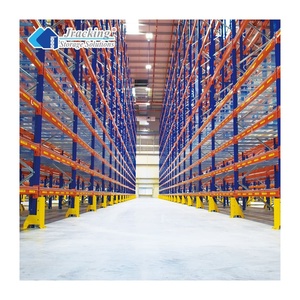
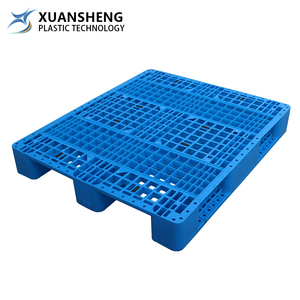
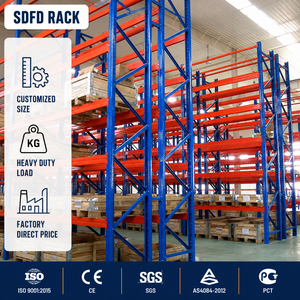
Modern intralogistics ecosystems demand exceptional structural resilience, precision load calculations, and seismic adaptability. When engineering industrial racks for manufacturing hubs, third-party logistics (3PL) fulfillment hubs, and automated factories, structural failure is never an option. High-capacity racking designs must strictly conform to finite element analysis (FEA) models, verifying elastic deformation limits, deflection indexes (typically restricted to L/200 or L/250 under maximum allowable static loads), and dynamic wind/seismic uplift loads.
Our manufacturing lines leverage primary-grade Q235B high-tensile cold-rolled structural steel, verified for carbon-manganese chemical composition and mechanical elongation properties. By employing continuous roll-forming processing for upright profiles (featuring 50mm, 75mm, or 76.2mm pitch connectivity), our upright columns deliver unmatched torsional resistance. For horizontal load distribution, beam sections utilize double-C interlocking box beams with robotically seam-welded connectors (3-claw or 4-claw safety hook attachments), eliminating weld slag and stress concentrations.
| Racking Architecture | Typical Load Threshold | Material Specification | Space Efficiency Factor | Best Practical Application |
|---|---|---|---|---|
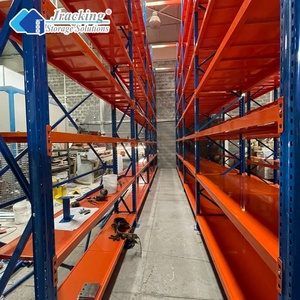
| Selective Pallet Racking | 1,000 – 4,500 kg / beam level | Q235B Cold-Rolled Carbon Steel | 40% – 50% Floor Footprint | High-SKU distribution, direct access picking |
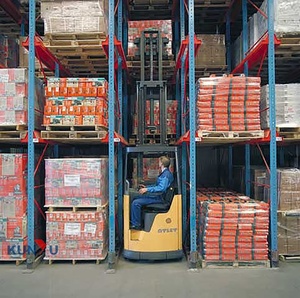
| Drive-In / Drive-Through | 1,000 – 2,000 kg / pallet space | Heavy-gauge unpunched uprights | 65% – 75% Floor Footprint | Homogeneous bulk inventory, seasonal staging |
| Automated Shuttle / ASRS | 500 – 2,000 kg / unit load | Millimeter-tolerance precision steel | 85% – 90% Floor Footprint | Automated cold chains, high-throughput fulfillment |
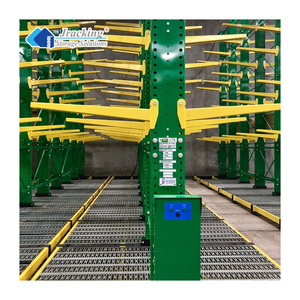
| Cantilever Beam Systems | 500 – 2,500 kg / arm tier | Hot-rolled / structural tapered arms | Open linear footprint | Structural steel tubes, PVC pipes, timber, coils |
| Multi-Tier Mezzanine Platforms | 300 – 1,000 kg / m² deck loading | I-beam structural joists + steel grating | Vertical volume doubled/tripled | Automotive spare parts, e-commerce manual picking |
Combining 20+ years of heavy metalworking fabrication with comprehensive OEM/ODM engineering capabilities for Fortune 500 retail networks and global logistics operators.
Established in 2001, delivering more than 5,000 large-scale turn-key projects across Oceania, Asia, Europe, North America, Latin America, Africa, and the Middle East.
Complete custom fabrication: custom beam spans, frame depths, specialized powder-coat chromatic standards (RAL systems), and corporate punch patterns.
Automatic electrostatic powder-coating lines operating with zero-slag phosphate washing, guaranteeing maximum corrosion barriers even in cold-store (-30°C) dampness.
Complimentary engineering layout services. Our structural engineers formulate optimized BIM/CAD warehouse layouts, aisle calculations, and 3D stress renders prior to manufacturing.
Engineered modular knockdown packaging that drastically reduces container shipping volume, cutting export logistics freight expenses by up to 35% per metric ton.
Cross-border technical project teams dedicated to returning structural quotes, seismic verification data, and container planning manifests within 8 operational hours.
Strategic procurement leaders are shifting from simple price-per-ton evaluations to total cost of lifecycle ownership (TCO), automated integration, and environmental resilience.
Manual forklift handling is transitioning rapidly toward automated deep-lane 4-way radio shuttle systems and Autonomous Mobile Robots (AMR). Modern OEM rack manufacturing mandates millimetric beam level tolerance, specialized guiding channels, and non-reflective laser target surfaces to support automated guided equipment.
Global procurement manifests now demand certified zone-specific seismic ratings (such as R-Factor compliance under FEMA 460 and Eurocode 3). Enhanced base plates, secondary cross-aisle bracing, and high-ductility anchor bolt patterns are standard requirements for heavy installations across seismic areas.
With corporate ESG targets governing international bidding, Tier-1 buyers demand scrap-recycled green steel formulations, VOC-free heavy-duty thermoset powder coatings, and thin-wall, high-yield engineered profiles that maximize payload while cutting carbon footprint.
Volatile SKU assortments driven by omni-channel retail necessitate reconfigurable architectures. Warehouse operators increasingly favor hybrid systems—such as selective lower pallet tiers topped by rack-supported mezzanine walkways—for high flexibility.
The next generation of high-bay racking systems incorporates discrete load-cell transducers and impact sensors on corner upright protectors. Real-time telemetry signals beam overloads and forklift collision impacts to prevent progressive structural collapse.
Long sea-freight transit times incentivize regional fulfillment hubs to procure globally standardized modular frames and interchangeable universal connector beams, simplifying replenishment and maintenance without custom fabrication lead times.
International purchasing managers should institute strict Factory Acceptance Tests (FAT) to verify technical conformance before shipping release. When procuring OEM/ODM structural steel racks, the following physical criteria must be systematically inspected:
Authoritative guidance regarding structural calculations, OEM customization processes, compliance standards, and global shipping logistics.