HEDAHeavy Duty Racking
 English
 Español
EnglishEspañolDirect from the manufacturing plant: engineered for structural rigidity, seismic stability, and custom volumetric integration.
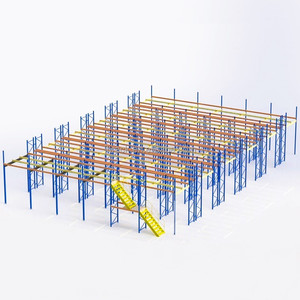
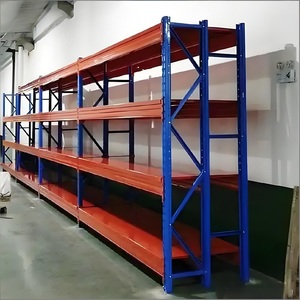
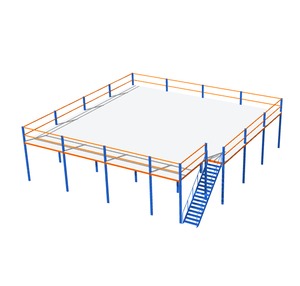
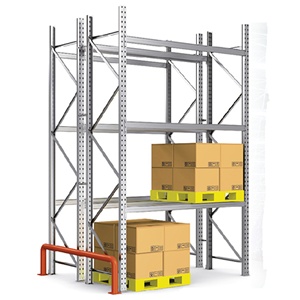
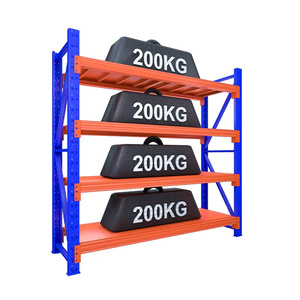
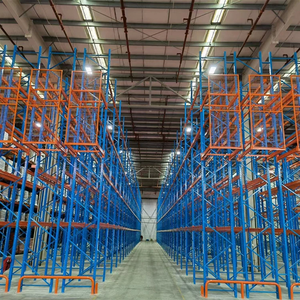
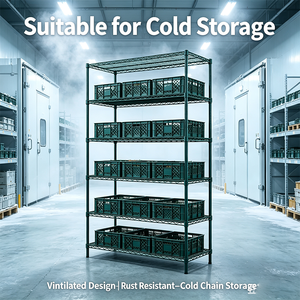
Standard vs custom OEM engineering tolerances across structural grade profiles, upright sections, and environmental coatings.
| System Architecture | Certified Steel Grade | Load Rating (Tested) | Surface Treatment | Deflection Limit | Standard Compliance |
|---|---|---|---|---|---|
| Selective Pallet Racking | Certified Q235B Cold-Rolled | 1,000 – 4,500 kg / level | Electrostatic Epoxy Powder (60-80μm) | L / 200 (Class 1) | EN 15512 / ANSI MH16.1 |
| Structural Mezzanine Floor | Q235B / Hot-Rolled I-Beam | 500 – 1,200 kg / m² | Heavy-Duty Anti-Abrasion Alkyd | L / 300 Structural | AISC 360 / AS 4084 |
| Heavy-Duty Cantilever | Q235B Solid Welded Column | Up to 2,500 kg / arm | Hot-Dip Galvanized / Polymer Coat | L / 180 Load Angle | RMI Specification |
| Cold Storage Wire Shelving | AISI 304 / Carbon Structural | 250 – 500 kg / tier | Multi-layer Chrome / Antimicrobial | L / 250 Dynamic | NSF Certified Hygiene |
Five decisive manufacturing capabilities that eliminate operational risk for volume importers, engineering firms, and supply chain operators.
Established in 2001 in Guangzhou, HEDA has accrued over two decades of engineering, custom production, and field installation experience. Having executed more than 5,000 turnkey projects across 5 continents, our engineering team comprehends structural building codes worldwide.
We operate as a single-source manufacturing base. Our portfolio spans high-density radio shuttle racks, drive-in systems, multi-tier mezzanine platforms, and cantilever systems, down to commercial display fixtures, storage cages, and complete supermarket material-handling series.
Every industrial configuration is tailored to exact specifications: upright profile gauge, load ratings per tier, clear beam span, custom RAL powder coat finishes, and floor anchoring geometry. We provide full CAD layout blueprints and 3D architectural renderings before metal fabrication.
Fabricated exclusively from certified Q235B cold-rolled steel. Our quality control regimen covers full-penetration welding inspections, laser profile dimension tracking, shot blasting, and an upgraded continuous electrostatic powder-coating line that prevents weld slag and corrosion.
Dedicated bilingual export engineers deliver layout feedback within 8 hours. We incorporate engineered seismic-resistant systems—including expanded structural baseplates, top bracing, and intermediate load-transfer ties—for clients in high-risk zones across Oceania, the Americas, and Asia.
Key shifts transforming enterprise intralogistics sourcing, structural lifecycle costing, and smart warehouse retrofits.
The modern logistics supply chain is phasing out purely manual racking. Procurement focuses on AS/RS-compatible pallet racking, radio shuttle lanes, and rack-supported building foundations. Manufacturers must provide micro-millimeter tolerance control to accommodate high-speed autonomous mobile robots (AMRs) and AGV navigation clearances.
With ocean freight volatility remaining a strategic procurement risk, OEM buyers prioritize modular, completely knock-down (CKD) racking architectures. Precision interlocking connections and nested post designs maximize 40ft HQ container cubic utilization, cutting landed logistics expenditures by up to 28% compared to pre-welded subassemblies.
Procurement teams demand lower structural tare weight paired with higher yielding tensile thresholds. Moving toward micro-alloyed cold-rolled steel grades reduces steel volume while exceeding international yield safety margins. Concurrently, zero-VOC electrostatic powder systems are supplanting solvent-borne primers to satisfy ESG corporate mandates.
How next-generation metallurgical processing, digital twinning, and structural health tracking are advancing heavy-duty storage.
Modern industrial racks are transitioning from passive steel frameworks into instrumented assets. Strain-gauge sensors and fiber-optic displacement monitors embedded into critical upright joints transmit real-time deflection alerts, flagging overload incidents or undetected forklift collisions before progressive collapse can occur.
Factory CAD engineering workflows are now deeply integrated with Building Information Modeling (BIM Level 2/3). Facility managers can simulate live clearance paths, HVAC thermal circulation within cold-storage racking, and sprinkler discharge patterns directly within native REVIT models prior to structural steel cutting.
Automated continuous CNC roll-forming lines allow progressive profiling of heavy-gauge uprights up to 2.5mm thickness without micro-cracking at structural bends. Paired with nano-ceramic zirconium pretreatment before powder coating, salt-spray corrosion resistance is extended beyond 1,000 continuous hours.
Authoritative engineering and trade responses to questions frequently raised by EPC contractors, procurement directors, and warehouse owners.
Load calculation requires precise input data: unit pallet dimensions (width × depth × overall loaded height), maximum gross load per pallet, dead load distribution, vertical beam pitch, ceiling clear clearance, and floor slab bearing capacity (kN/m²). Furthermore, seismic zone spectral accelerations (Ss, S1) and the dynamic turning radii of the intended material handling equipment (counterbalance vs. reach trucks) dictate column gauge, baseplate dimensions, and aisle widths.
Our raw material is exclusively certified Q235B high-tensile cold-rolled steel sourced from premier steel producers, verified through heat-batch mill test certificates (MTC) detailing yield strength, elongation, and carbon chemistry. Welding complies strictly with international AWS standards using automated robotic pulse-MAG setups that guarantee uniform penetration without micro-porosity, slag, or excessive HAZ (Heat Affected Zone) embrittlement.
Yes. Customization is the core of our OEM/ODM operations. We engineer non-standard post heights (up to 12 meters in single continuous sections), irregular bay spans, heavy-duty mezzanine spans spanning up to 8 meters between structural columns, and tailored picking shelves. All configurations are validated via 3D finite element stress analysis (FEA) prior to serial manufacturing.
For standard dry ambient warehousing, our upgraded 4-stage pretreatment and electrostatic epoxy-polyester powder-coating system (60–90 microns) delivers superior impact and scratch resistance. For continuous cold chain (-30°C) or coastal installations exposed to ambient condensation, we supply hot-dip galvanized components (minimum 85 microns zinc coating conforming to ISO 1461) or marine-grade AISI 304/316 stainless steel shelving.
To eliminate maritime transport damage and eliminate container demurrage risks, components are packaged using engineered heavy-duty timber skids, steel strapping, corrugated corner protectors, and heavy plastic shrink wrapping. Uprights and beams are bundled with high-density foam spacers that prevent paint abrasion. Components are packed in logical installation sequence to accelerate destination uncrating.
Engineering drawings, structural statics calculations, and 3D warehouse layout models are produced within 8 to 24 hours from initial project brief submission. Standard container production cycles require 15 to 25 calendar days, contingent on steel coil availability, structural profile complexity, and surface finish specifications.
Submit your warehouse architectural drawings, floor plans, or SKU specifications. HEDA’s senior structural design team will return a certified layout design, load assessment, and direct factory quotation within 8 hours.
Send an Inquiry