3,000kg Rated
 English
 Español
Explore precision-rolled structural steel cantilever systems, selective pallet architectures, drive-in lanes, and high-density automated racks fabricated to European FEM and North American RMI standards.
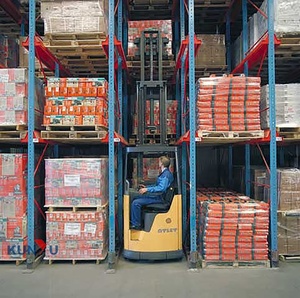
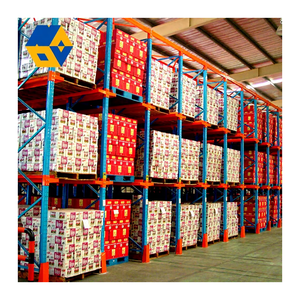
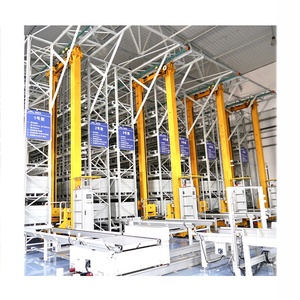
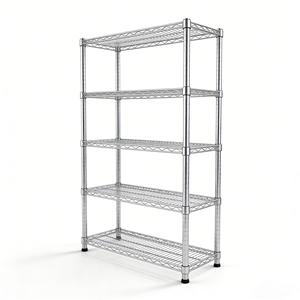
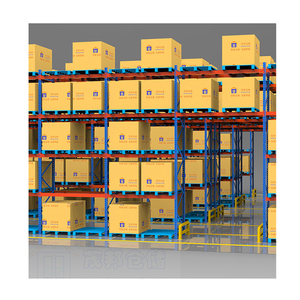
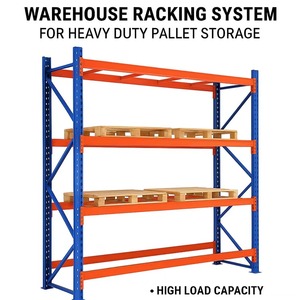
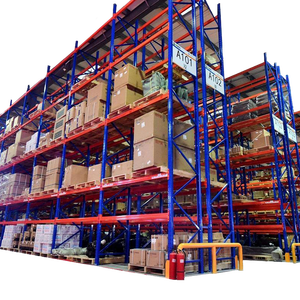
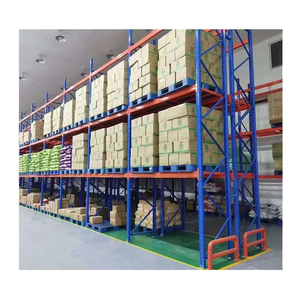
Material handling logistics within heavy manufacturing, timber processing, piping distribution, and construction material warehousing require robust, non-standardized storage architectures. While conventional selective pallet racks excel in storing uniform cube pallets, items with abnormal aspect ratios—such as steel tubing, structural extrusions, lumber packs, aluminum profiles, and bar stocks—generate severe structural challenges when forced into standard upright frames.
This is where Cantilever Racking Systems provide an unmatched mechanical advantage. Featuring free-standing vertical columns with horizontal cantilever arms extending outwardly without front upright obstructions, cantilever systems offer continuous horizontal storage levels. Selecting from the top 10 cantilever pallet racking manufacturers requires understanding the metallurgical engineering, static load deflection formulas, robotic welding standards, and seismic stability verifications that differentiate reliable suppliers from generic steel fabricators.
Professional engineering procurement teams must distinguish between two primary structural paradigms when specifying cantilever racks:
1. Roll-Formed High-Tensile Steel (Q235B to Q355B): Ideal for light-to-medium industrial loads (ranging from 300 kg to 1,000 kg per arm). Columns and arms are roll-formed into specialized C-profiles with precise punching. This approach minimizes tare weight, optimizes shipping container cube utilization, and lowers capital investment for hardware suppliers, automotive parts depots, and light piping wholesalers.
2. Heavy Structural Hot-Rolled Steel (H-Beam / IPE Columns & Profiles): Essential for extreme heavy-duty environments (1,500 kg to beyond 4,500 kg per arm level). By utilizing solid hot-rolled steel profiles, these racks withstand high forklift impact energy, extreme load bending moments, and open-air yard installations exposed to severe wind shear and cyclic thermal fluctuations.
| Structural Metric | Roll-Formed Cantilever Rack | Structural Hot-Rolled Cantilever Rack | Selective Heavy-Duty Pallet Rack |
|---|---|---|---|
| Standard Load Capacity | 300 – 1,200 kg / arm | 1,500 – 4,500+ kg / arm | 1,000 – 4,500 kg / level beam |
| Handling Capability | Light PVC pipes, conduits, furniture | Structural steel, solid timber, heavy coils | Standardized Euro / GMA Pallets |
| Column Height Reach | Up to 6.0 meters | Up to 12.0+ meters | Up to 14.0+ meters |
| Impact Resilience | Moderate (Requires guide protectors) | Ultra-High (Absorbs heavy forklift shear) | Moderate (Prone to front-post impact) |
| Freight Efficiency | Optimal (Knock-down nested profiles) | Medium (Dense weight / bulk profiles) | High (Flat-pack nested frames) |
A crucial factor evaluated by certified warehouse safety inspectors is the arm-to-column mechanical joint. Budget fabricators often weld arms rigidly or use under-engineered bolt clusters. Top exporters utilize articulated pin-lock connection pivots or graduated hook wedges. When an errant reach truck or side-loader fork strikes an arm from below during vertical hoisting, an articulated arm swings freely upward rather than transmitting concentrated torsional forces into the main vertical column. This mechanical safeguard prevents column buckling, catastrophic frame collapse, and operational downtime.
Leading global manufacturers conform strictly to international structural codes. In Europe, engineering adherence to EN 15512 (Steel static storage systems) and EN 15635 (Application and maintenance of storage equipment) is mandatory. For North American distribution, structural designs must comply with RMI (Rack Manufacturers Institute) MH16.1 and AISC 360 specifications. High-tier Chinese manufacturers operating on the global stage—such as Guangzhou Heda Shelves Co., Ltd.—combine high-grade Q235B cold-rolled steel with automated submerged arc welding, non-destructive weld testing, and pre-shipment static test assemblies rated to 1.5x safe working load margins.
Procurement directors in 3PL fulfillment, aerospace fabrication, cold chain, and building material retail face evolving supply-chain demands. Sourcing racking is no longer merely a metric of steel tonnage pricing; it is an integrated structural decision driven by automation, sustainability, and spatial optimization.
Traditional manual handling of long profiles via four-way directional forklifts requires broad aisles ranging from 3.5 to 5.0 meters. The newest logistics paradigm pairs narrow-aisle cantilever setups with automated stacker cranes and laser-guided AGVs. Cantilever AS/RS systems reduce required aisle clearance to under 2.2 meters while tripling picking velocity. Upright column verticality tolerances for AS/RS installations must meet strict precision standards of 1:1000 deflection, requiring CNC manufacturing lines.
With major logistics hubs expanding across seismically active zones in Latin America (Ecuador, Chile, Mexico), Southeast Asia, and the Mediterranean Basin, demand for seismic-grade cantilever structures has risen sharply. Modern engineering teams employ non-linear dynamic FEA modeling to simulate ground accelerations. These systems feature expanded baseplate anchors, reinforced cross-aisle X-bracing, and ductile energy-dissipating joints that prevent harmonic column resonance during seismic events.
To reduce expensive indoor warehousing footprints, industrial firms increasingly utilize outdoor staging yards. Hot-dip galvanization conforming to ISO 1461 / ASTM A123 delivers minimum 85-micron zinc coatings that resist corrosion for over 25 years in harsh outdoor, marine, or chemical environments. Racking engineering now integrates integrated roof canopy arms, snow-load calculations, and wind-uplift baffling to transform open lots into sheltered, multi-tier storage hubs.
Modern warehouse logistics incorporate IoT strain gauges within critical base plates and column joins. These wireless sensors track live bending moments and alert maintenance teams to structural overloads or unrecorded fork truck collisions, integrating real-time telemetry into enterprise warehouse management systems (WMS).
Provide your warehouse dimensions, ceiling clear heights, and material load profiles for customized 2D/3D CAD layouts and load stress calculations.
Over two decades of structural engineering expertise backed by advanced production infrastructure, direct Canton Fair connectivity, and international installations across five continents.
Founded in Guangzhou in 2001, Guangzhou Heda Shelves Co., Ltd. has delivered over 5,000 turn-key industrial storage and commercial display installations across North America, Europe, Australia, and the Middle East.
Single-source manufacturing coverage spanning heavy cantilever racks, selective and double-deep pallet racks, drive-in systems, radio shuttle platforms, ASRS, mezzanines, and retail supermarket equipment.
From custom arm lengths, taper-profile arm designs, and load capacities to specialized upright heights up to 12 meters, our dedicated engineering team designs systems tailored to your material handling profile.
Fabricated exclusively with certified Q235B structural cold-rolled steel. Automatic multi-stage pre-treatment, shot-blasting, and electrostatic powder coating deliver clean surfaces free of weld slag or voids.
Our multilingual export engineering department reviews architectural DWG layouts, provides load margin calculations, and delivers comprehensive commercial quotations within 8 hours worldwide.
Authoritative guidance on load capacities, structural steel specifications, seismic verifications, and overseas container consolidation.
Our custom-engineered systems support a wide spectrum of industrial weight classifications:
Arm deflection is controlled through precision manufacturing and structural engineering:
Yes. OEM and ODM engineering are central to our manufacturing process. We configure column center spacing, arm reach lengths, deck surface types (solid steel decks, wire mesh waterfall grids, or open bearer bars), overall vertical reaches up to 12 meters, and electrostatic color coding to match existing warehouse fleets.
For standard dry indoor warehousing, we use an automated multi-stage pre-wash, shot-blasting, and thermoset epoxy-polyester powder coating cured at 180°C to 200°C. For humid, cold storage, chemical, or outdoor lumber yard installations, components receive full hot-dip galvanization (ISO 1461 / ASTM A123) with 70–85+ micron coating thickness for long-term corrosion resistance.
Before manufacturing begins, our engineering department provides comprehensive technical submittals, including 2D CAD warehouse floor layouts, 3D spatial clearances, baseplate anchoring specifications, static load calculations, arm deflection allowances, and cross-bracing structural layouts for engineering review.
All upright columns, cantilever arms, and beam structures are designed as complete knock-down (CKD) assemblies. Components are bundled with protective corrugated wraps, heavy plastic banding, corner edge protectors, and custom timber dunnage. This packaging prevents cosmetic and structural transit damage while maximizing ocean container cube density to minimize per-unit freight costs.
Connect with an export sales engineer for direct factory pricing, structural calculations, and CAD layout designs.