EURO EN 15512
 English
 Español
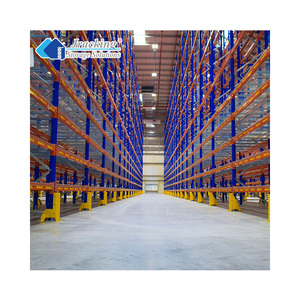
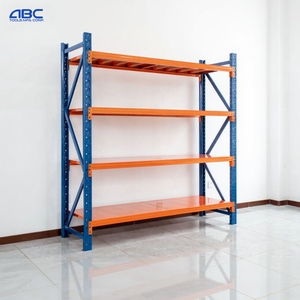
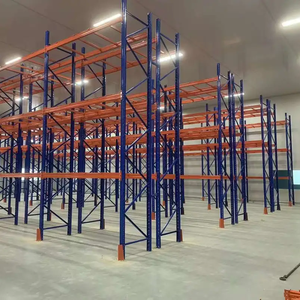
Heavy-duty, precision-rolled upright profiles and box beams configured specifically for standard EUR-pallet (1200×800 mm) and industrial shipping specifications. Structural stability verified for high-turnover logistics centers.
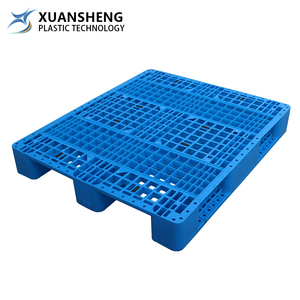
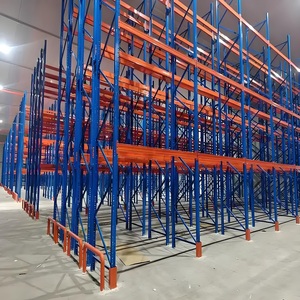
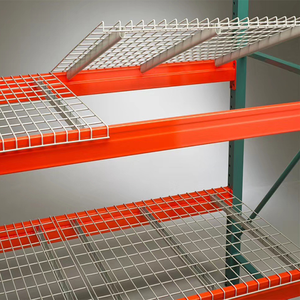
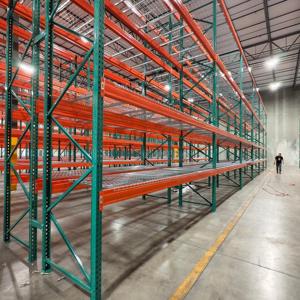
Hungary's central geography within the European Union has made it a focal transit gateway. Positioned along major Trans-European Transport Network (TEN-T) corridors, the country connects Western European consumer markets with the emerging manufacturing supply chains of Central and Southeastern Europe. In recent years, substantial Foreign Direct Investment (FDI)—notably in electric vehicle (EV) battery mega-plants (CATL, Eve Energy, Samsung SDI) around Debrecen and Göd, automotive manufacturing around Győr (Audi) and Kecskemét (Mercedes-Benz), and regional e-commerce fulfillment rings along the Budapest M0 motorway—has reshaped regional warehousing specifications.
| Application Cluster | Primary Hungarian Locations | Predominant Racking Architecture | Standard Structural Specification |
|---|---|---|---|
| EV Battery & Chemical Storage | Debrecen, Komárom, Iváncsa | Heavy-Duty Selective / Automated ASRS | Q355B Steel, Anti-corrosion Epoxy, Seismically braced to EN 16681 |
| Automotive Just-In-Sequence (JIS) | Győr, Kecskemét, Miskolc | Double Deep, Flow Racks & Cantilever | Load classes 1,500–3,000 kg per beam level; specialized long-span arms |
| Central European E-Commerce / 3PL | Budapest Logistics Ring (Biatorbágy, Üllő) | Multi-Tier Racking Mezzanines & Shuttles | Multi-tier mezzanine floor with picking levels (800–1000 kg/m² decking) |
| Cold Chain & Agri-Food Logistics | Szeged, Székesfehérvár, Dunaföldvár | High-Density Radio Shuttle & Drive-In | Low-temperature powder coatings rated to -30°C, high volume utilization |
Procuring industrial pallet racking within Hungary mandates strict adherence to the European Committee for Standardization (CEN) frameworks. Under Hungarian designation, these are harmonized under MSZ EN 15512 (Racking structural design principles), MSZ EN 15620 (Tolerances, deformations, and clearances for manual and automated storage), MSZ EN 15629 (Specification of storage equipment), and MSZ EN 15635 (Application and maintenance of storage equipment).
Because industrial facilities in areas such as the Pannonian Basin must evaluate seismic accelerations, installations requiring building permits demand dynamic calculation under EN 16681. HEDA's structural design protocols utilize finite element analysis (FEA) to verify upright column stability, cross-aisle and down-aisle frame stiffness, base-plate floor pressure limits on industrial slab concrete (C20/25 to C30/37), and beam-end connector deflection ratios under full design capacity.
Every warehouse configuration addresses specific material handling speeds, SKU profiles, and structural envelope constraints.
Standardized on 1200×800 mm EUR-pallets with reach trucks and VNA (Very Narrow Aisle) automated guided equipment. Allows 100% immediate selectivity for dynamic third-party cross-docking operations along Hungary’s major highway arteries.
Integrating heavy-duty cantilever racks and double-deep frameworks to handle oversized metal stampings, engine blocks, and wire harness bins. Designed to withstand intensive multi-shift forklift cycles common in Western Hungarian automotive clusters.
Shelving-supported structural platforms that double or triple usable square meters within high clear-height facilities. Frequently integrated with pick-to-light chutes, spiral carton conveyors, and automated mini-load cranes.
Direct-from-manufacturer supply chains engineered to mitigate international project risk, control raw material quality, and guarantee structural longevity.
Operating continuously since 2001 with more than 5,000 major storage system projects completed across 5 continents.
From standard selective pallet racks and drive-in lanes to radio shuttle systems, cantilever arrays, and supermarket retail displays.
Complete tailor-made profiling: customized upright cross-sections, powder-coating RAL hues, seismic tie-backs, and automated interfaces.
Batch-verified Q235B/Q355B cold-rolled steel, uniform robotic welding lines, and electrostatic powder coating free from weld slag.
Dedicated bilingual project engineers reviewing architectural layout drawings, load data, and generating 3D CAD models within 8 hours.
Technical, structural, and import considerations for warehouse directors, general contractors, and logistics procurement managers.
Connect directly with experienced storage systems engineers. Receive layout optimizations, structural load verification, and competitive factory-direct pricing tailored for your facility.