Heavy Duty
 English
 Español
Precision-manufactured structural cold-rolled steel systems, European standard load-tested components, and integrated warehouse racking solutions direct from our Guangzhou manufacturing headquarters.
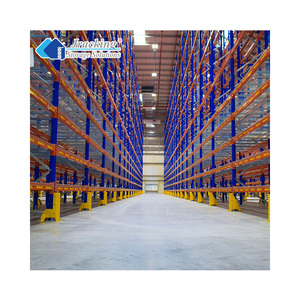
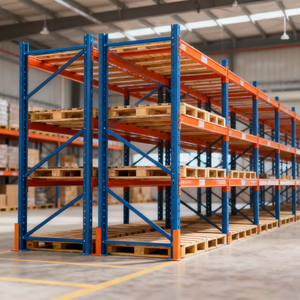
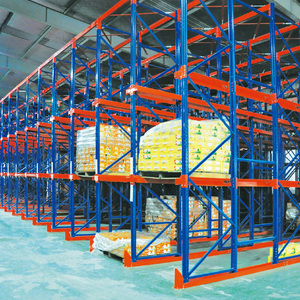
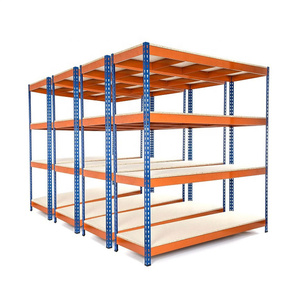
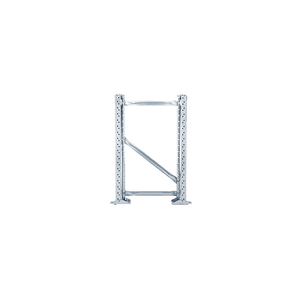
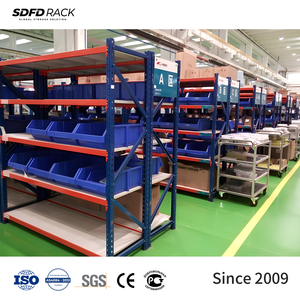
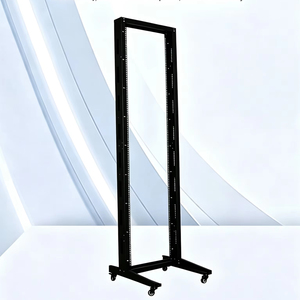
Technical analysis on material tensile properties, limit state engineering, European standard harmonization, and cold-formed profile yield optimization.
Procuring industrial pallet racks for mission-critical logistics facilities requires moving far beyond basic dimensional fitment. In modern automated and high-bay distribution centers, storage racks function as unbraced or semi-rigid structural frameworks subject to combined compressive axial loads, eccentric bending moments, seismic accelerations, and cyclic dynamic fatigue. Under the European standard harmonization framework, compliance with EN 15512:2020 (Steel static storage systems – Adjustable pallet racking systems – Principles for structural design) and the Construction Products Regulation (CPR 305/2011/EU) is the mandatory baseline separating verified industrial equipment from hazardous warehouse failures.
The structural spine of any CE-marked racking system lies in its steel grade specification. While generic storage racks often rely on non-standardized secondary hot-rolled carbon steel, certified systems demand premium cold-rolled coils (EN 10025-2 S235JR/S355JR or GB/T standard Q235B/Q355B). Yield strength ($f_y$) is the decisive variable preventing local web buckling and flange distortion across perforated vertical upright columns.
For applications where bay clear heights exceed 8 meters or level design loads surpass 3,000 kg, our engineering department specifies modified high-tensile Q355B steel, which offers a minimum yield strength of 355 MPa and tensile strength of 470–630 MPa. This allows a 22% structural weight reduction compared to Q235B while substantially increasing torsional stiffness, crucial for narrow-aisle turret truck and automated reach forklift operating zones.
Pallet rack beams operate under combined flexural shear and torsional twist. Inferior welded angle beams or single roll-formed profiles frequently distort under non-uniformly distributed pallet loads (UDL). Our manufacturing framework employs continuous seam-welded dual-C box beams interlocking into heavy-gauge 3, 4, or 5-claw connectors forged from 3.5mm thick structural plate.
By coupling continuous seam GMAW (Gas Metal Arc Welding) robotics with cold-formed stepped shoulders, the beam profile creates a rigid structural bridge between columns. This eliminates the risk of connector tab fracture under impact loading. In factory test cells, each batch undergoes cyclic loading exceeding 1.5 times the rated Safe Working Load (SWL), assuring global logistics operators zero structural deformation over decades of uninterrupted distribution operation.
Capitalizing on 20+ years of industrial rack manufacturing, modern automated infrastructure, and precision engineering guarantees.
Founded in 2001, Guangzhou Heda Shelves Co., Ltd. has delivered over 5,000 heavy-duty warehouse racking and retail shelving projects across 130+ nations. Located in Pazhou adjacent to the Canton Fair Complex, we provide immediate factory audits and live showroom verification for overseas corporate buyers.
From selective pallet racks, drive-in systems, and radio shuttles to heavy cantilever racks, multi-tier mezzanine platforms, supermarket gondolas, and custom retail display stands, we engineer complete turnkey material handling and storage workflows from an integrated, single-source factory.
Every bay is engineered to bespoke floor profiles, clear mast heights, seismic zoning, and forklift turning radii. Our engineers supply comprehensive CAD layout drawings and photorealistic 3D structural simulations prior to manufacturing, tailored for heavy machinery, cold stores, and spare parts.
Operating under ISO9001 certified protocols, structural members are cold roll-formed from premium certified steel. Upgraded automatic powder-coating lines produce slag-free, uniform finishes. Each run is audited with ultrasonic weld inspections, salt-spray durability tests, and destructive load testing.
Our dedicated structural export engineers deliver verified engineering feedback, load calculation matrices, and formal commercial quotations within an 8-hour window across worldwide time zones. High-density knock-down crating designs maximize ocean container volume—lowering international shipping expenses by up to 35% while fully safeguarding components against maritime transit corrosion and physical scuffing.
Key shifts modern supply chain directors, industrial architects, and third-party logistics (3PL) executives must evaluate before executing long-term rack procurement.
Manual warehouses are transitioning to Autonomous Mobile Robot (AMR) and AS/RS operations. Future-proof pallet racking requires ultra-tight EN 15620 Class 300 tolerances, eliminating beam deflection drift and floor slab settling issues that cause optical guidance failure on automated equipment.
Procurement teams prioritize total cost of ownership (TCO) over raw upfront equipment price. Buyers demand low-VOC electrostatic powder coatings, traceable low-carbon scrap-electric-arc-furnace (EAF) steel coils, and modular bolted assemblies engineered for end-of-life circular disassembly and facility relocation.
With booming refrigerated cold chain infrastructure (-30°C) and logistics hubs situated in earthquake fault lines (e.g., Latin America, Southeast Asia, Oceania), procurement specs mandate continuous cold-tough steel grades resistant to brittle martensitic transition and enlarged anchor footplates.
In-depth technical clarifications addressing regulatory compliance, mechanical stress verification, packaging logistics, and project scheduling.
Authentic CE certification for static steel racking necessitates verification under the Construction Products Regulation (CPR 305/2011/EU) combined with structural design calculation compliant with EN 15512:2020 and manufacturing control certified to EN 1090-1 / EN 1090-2 (Execution Class EXC2). Beware of vendors issuing CE certificates derived merely from the Machinery Directive; racking is a stationary structural framework requiring strict verification of steel yield strength, load capacity plates, and formal Declaration of Performance (DoP) documentation.
Every heavy-duty beam level is engineered according to both Ultimate Limit State (ULS against yield or plastic collapse) and Serviceability Limit State (SLS for elastic deflection). Under EN 15512 guidelines, the maximum allowable vertical deflection ($\delta$) under uniformly distributed pallets must not exceed 1/200th of the clear beam span ($L/200$). For example, a 2,700mm beam carrying two 1,500kg pallets (3,000kg total) is restricted to a maximum deflection of 13.5mm, ensuring forklift forks enter and exit pallet pockets cleanly without binding.
Q235B steel provides a minimum yield point of 235 N/mm² and is standard for light-to-medium pallet runs below 6 meters. Q355B (equivalent to European S355JR) provides a yield point of 355 N/mm²—a 51% increase in elastic load capacity. In high-bay warehouses, automated AS/RS channels, or seismic-active territories, specifying Q355B upright profiles prevents local buckling at bottom post tiers without mandating overly heavy gauge profiles, maintaining optimal freight weights and structural stability.
Uprights and frames are shipped completely knocked-down (bolted on-site), with diagonal and horizontal bracing bundled compactly inside column voids. Beams are stacked with interlocking nested orientations using custom steel strapping and timber dunnage blocks. This approach maximizes container weight utilization up to the 26-ton maritime payload limit per 40ft High Cube container, achieving shipping density savings of 30–40% compared to pre-welded ladder assemblies.
Standard indoor powder coating can suffer micro-cracking and subsequent condensation-driven sub-surface oxidation when subjected to deep freeze cycles. For blast freezers and cold storage down to -30°C, we provide hot-dip galvanized (HDG) steel components according to ISO 1461, or Sendzimir pre-galvanized cold-formed steel. This creates an impermeable zinc-iron metallurgical barrier that completely resists thermal shock, high humidity, and ice crystallization.
To deliver an accurate static structural calculation and bill of materials within our 8-hour SLA, our engineering group requires: (1) Warehouse architectural layout with column grid spacing, building clear heights, and door locations; (2) Pallet dimensions (W x D x H) including overhang and gross unit load weight; (3) Forklift model, maximum mast lift elevation, and operating aisle turning radius (AST); (4) Operating temperature and geographic seismic seismic coefficient.
Connect immediately with HEDA's certified export engineering department. Submit warehouse CAD drawings or pallet specifications to receive free 3D layout renderings, structural limit state assessments, and factory-direct pricing within 8 hours.