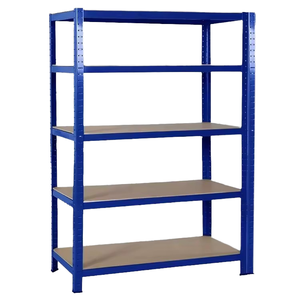
Heavy Duty Steel Selective Pallet Racks Corrosion Protection Adjustable High Load Capacity 10 Year Warranty CE Certified
CE Certified
View Detail
 English
 Español
Engineered for high structural stability, variable aisle configurations, and extreme weight tolerances (300kg – 4,500kg per level). Manufactured strictly from certified Q235B cold-rolled structural steel.
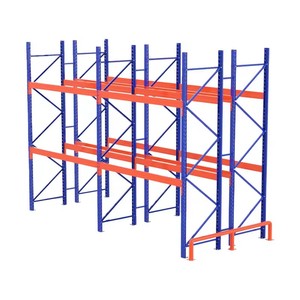
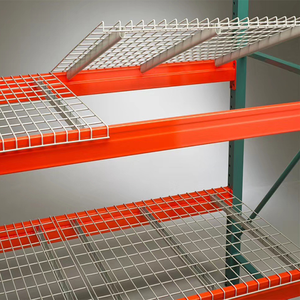
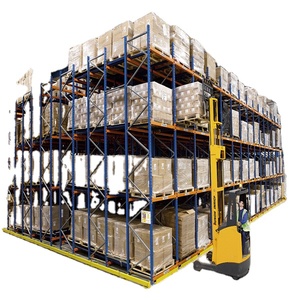
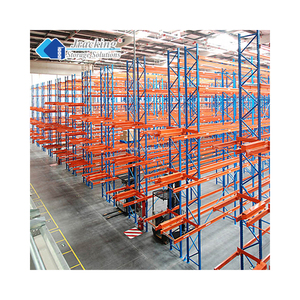
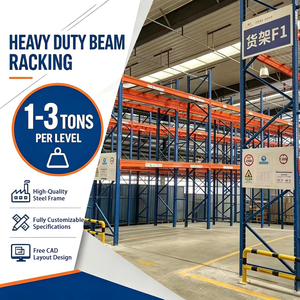
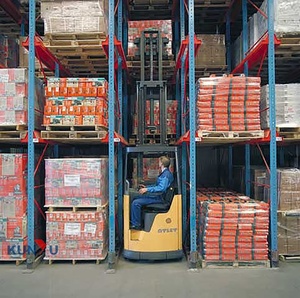
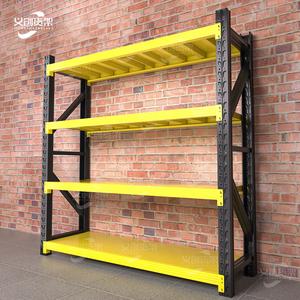
In modern industrial logistics, selecting between selective pallet racks, drive-in systems, and push-back cart racking represents a decisive capital allocation choice. A push-back rack utilizes nested rolling carts riding over inclined structural channel rails (typically engineered at an incline of 1.5% to 3.0%). When loading, the forklift pushes back previously deposited unit loads along the inclined steel tracks. When retrieving, the removal of the outer pallet causes the subsequent carts behind it to gently coast forward to the front aisle face governed by controlled kinetic friction and gravity.
This dynamic Last-In-First-Out (LIFO) architectural layout yields an operational volume footprint increase of over 75% compared with conventional selective shelving. Forklift drivers do not enter the internal structural rack lanes (as is mandatory in Drive-In setups), drastically mitigating vertical column impacts, upright structural deflection, and hazardous frame fatigue.
| System Type | Storage Density Index | SKU Selectivity Profile | Forklift Travel Infiltration | Structural Impact Risk | Ideal Inventory Rotation |
|---|---|---|---|---|---|
| Push-Back Racks (2–6 Deep) | High (Up to 75% footprint gain) | 1 SKU per lane (Multi-lane access) | Zero (Stays in operational aisle) | Extremely Low (External bumper protection) | Medium to High Velocity LIFO |
| Selective Pallet Racking | Low (Requires 50%+ aisle area) | 100% Immediate Direct Selectivity | Zero (External aisle maneuvering) | Low to Moderate | Unrestricted FIFO / LIFO |
| Drive-In Pallet Racks | Very High (Dense structural block) | Poor (Full row per specific SKU) | High (Forklift drives inside lanes) | High (Frequent upright collision) | Batch-level Bulk Seasonality |
| Gravity Pallet Flow | Maximum (Full throughput flow) | High (Separate entry & exit faces) | Zero (Dedicated loading/unloading) | Low (Brake roller controlled) | Strict FIFO Expiration Management |
OEM/ODM Technical Insight: Guangzhou Heda Shelves utilizes certified Q235B cold-rolled structural steel, treated via automatic continuous shot-blasting, multi-stage degreasing, and electrostatic thermoplastic epoxy powder-coating. Our custom-machined rolling carts are equipped with sealed stainless steel double-shielded precision bearings to guarantee faultless rolling performance even in -30°C ultra-low temperature cold rooms.
Global warehouse real estate appreciation, coupled with cold chain expansion and automated robotic forklift compatibility, is actively redefining OEM/ODM push-back and selective racking procurement specifications.
Refrigerated and blast-freezing warehousing incurs electrical utility costs up to five times greater than dry warehousing. Importers and third-party cold logistics operators are shifting away from energy-inefficient wide-aisle systems to 4-deep and 5-deep push-back cart configurations. This maximizes thermal volume density without sacrificing the SKU selectivity demanded by cold pharmaceutical and frozen grocery distribution.
The acceleration of driverless material handling demands millimetric manufacturing accuracy in cart travel slopes and front entry beam stops. Modern OEM manufacturing contracts require optical reflector integration, laser guide target cutouts on upright columns, and reinforced guide rails to ensure seamless interfacing between autonomous counterbalanced forklifts and push-back lane mouths.
Cross-border distributors across seismically active zones (such as South America, Southeast Asia, and New Zealand) mandate certified seismic baseplates, heavy cross-bay back bracing, and boltless beam connector security clips. Specifiers consistently choose modular upright profiles (such as 76.2mm pitch configurations) to allow effortless retrofitting without structural welding.
Push-back racking engineering has transitioned from primitive angle-iron track assemblies to precision roll-formed tubular steel frameworks equipped with self-centering nested carriage wheels. Older systems regularly experienced pallet skewing, cart binding, and friction lockup. At Guangzhou Heda Shelves Co., Ltd., our engineering R&D division has resolved historical mechanical bottlenecks through three major hardware innovations:
Our nesting carts utilize heavy-duty flanged steel wheels running along proprietary stepped cold-rolled rails. The dual-flange tracking layout prevents carriage drift, ensuring that pallets weighing up to 1,500kg move smoothly along their trajectory without lateral deviation or wheel-bearing seizure.
The front aisle discharge zone features integrated polyurethane-cushioned end stops and structural catch-locks. These buffer dynamic inertia when an operator extracts a pallet, eliminating rebound jolts and protecting both product packaging and lift truck masts from shock loading.
Utilizing high-adhesion thermoplastic polyester powder coatings applied across a multi-stage continuous processing line, every upright, beam, and nesting cradle achieves superior resistance to humidity, chemical fumes, and thermal shock (-40°C to +50°C operational spectrum).
Headquartered in Pazhou, Guangzhou, adjacent to the Canton Fair Complex, HEDA delivers factory-direct turnkey warehouse storage racking and retail equipment across 5 continents.
Founded in 2001, backing over 5,000 global warehouse installations, retail distribution hubs, and automated parcel distribution centers worldwide.
Every proposal begins with comprehensive structural calculations, floor beam span layouts, and 3D architectural renderings tailored to your pallet size, roof height, and forklift models.
All frames, beams, and carriages are fabricated as precision boltless or knock-down sub-assemblies. This preserves finishes during long oceanic transit while maximizing ocean container cube utilization.
Prior to export dispatch, structural lots undergo continuous weld penetrant testing, tensile steel verification, and static load-level deflection benchmarks up to 4,500kg per level.
Experienced technical sales engineers review architectural floorplans and provide detailed OEM/ODM engineering quotes within 8 hours across all international time zones.
From custom beam color pigmentation and laser-cut buyer branding to non-standard pallet nesting geometries, our factory accommodates custom distributor programs.
In-depth technical answers addressing load parameters, incline geometry, container packaging, and factory testing.
Our engineered systems support medium-duty shelving from 300–800kg per shelf up to heavy-duty selective pallet racks and push-back lanes rated at 1,000kg to 1,500kg per cart and up to 4,500kg per beam level. Cantilever racking configurations handle 2,500kg per arm level, and structural mezzanine floors support 800–1,000kg/m². Every project is structurally simulated against your pallet footprint and forklift mast heights.
Push-back systems can be configured for 2-deep, 3-deep, 4-deep, 5-deep, and 6-deep pallet storage. Deep-lane push-back operations maximize floor utilization along wall boundaries or back-to-back configurations, converting up to 75% of wasted aisle space into productive inventory positions.
All structural frame components are manufactured from high-tensile Q235B cold-rolled steel. The components undergo automatic shot-blasting, chemical degreasing, and electrostatic thermoplastic epoxy powder-coating, producing a durable, anti-rust surface free of weld spatter or pinholes.
Yes. Push-back cart systems are ideal for blast-freezers and cold distribution centers. For sub-zero operations (down to -30°C), we configure low-temperature synthetic lubricants, hermetically sealed stainless-steel bearings, and cold-ductile structural steels to eliminate low-temperature embrittlement and freeze-jamming.
Components feature an engineered knock-down design. Uprights and horizontal beams are bound in strapped steel crates with protective corner protectors and vapor-corrosion-inhibiting (VCI) films. Rolling carriages and hardware boxes are timber-crated to prevent deflection, preserve powder coating, and maximize ocean container payload.
Yes. Our engineering division delivers comprehensive layout schematics, pallet aisle clearance analyses, and full 3D visual renderings prior to production. For earthquake-prone zones, we supply seismic baseplates, anchor calculations, and cross-bracing frameworks adhering to regional seismic safety standards.
Send your warehouse dimensions, pallet specifications, and target load capacity. Our engineering team will return complete 2D/3D CAD layouts and comprehensive factory-direct quotations within 8 hours.
Get Catalog